
Care Disclaimer: Plant care recommendations are general guidelines based on common growing conditions. Individual results may vary based on your local environment, climate, and care routine. If your plant is toxic, keep it away from children and pets, and consult a veterinarian if accidental ingestion occurs.
1.Chinese Money Plant — Overview
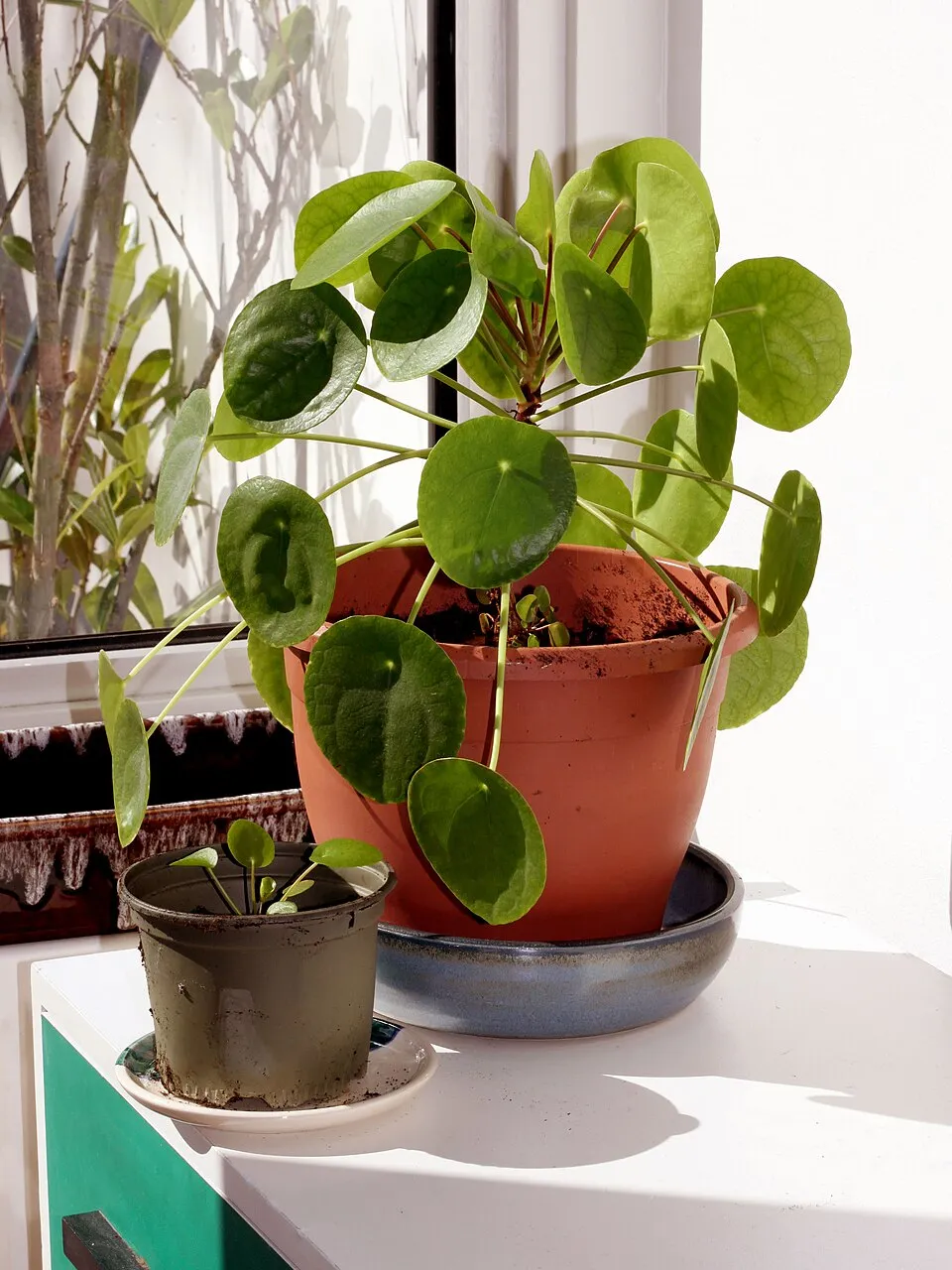
The Chinese Money Plant, scientifically known as Pilea peperomioides, is a highly sought-after perennial herb renowned for its distinctive, nearly perfectly circular, glossy green leaves. Native to the cool, damp, and shaded mountainous regions of Yunnan and Sichuan provinces in Southwest China, particularly at elevations ranging from 1500 to 3000 meters (5000 to 10000 feet), it thrives in environments where it often grows on shaded rocks within forest understories. This captivating species belongs to the Urticaceae family, which also encompasses a wide array of nettle species.
Its botanical journey to global recognition is quite unique; first documented by Scottish botanist George Forrest in 1906, it remained largely obscure outside its native habitat until its 'rediscovery' in the 1940s by Norwegian missionary Agnar Espegren, who subsequently shared cuttings among his network, earning it the affectionate moniker 'Missionary Plant.' The plant's popularity first surged in Scandinavia before becoming a global houseplant sensation in the 2010s due to its aesthetic appeal and ease of propagation. Morphologically, Pilea peperomioides features a slender, upright stem that typically reaches heights of up to 30 cm (12 inches). Its most striking characteristic is its peltate leaves, measuring 5-10 cm in diameter, which are attached to long petioles radiating from the central stem, creating a playful, clustered appearance often likened to coins or pancakes.
While primarily cultivated for its foliage, mature plants can produce tiny, inconspicuous greenish-white flowers arranged in tight panicles, though this is rare in typical indoor settings.
Trusted Scientific References
1. Authoritative external sources for Pilea peperomioides
1.1 Wikipedia — Pilea peperomioides
1.2 Kew POWO (Plants of the World Online)
1.3 PubMed — peer-reviewed research
1.4 NCBI Taxonomy Browser
1.5 GBIF — Global Biodiversity
1.6Chinese Money Plant should be interpreted through verified botanical identity, practical care, and responsible safety language. This recovery note adds the missing context needed for a complete profile: match light to the plant's habit, use well-drained soil, water according to season, and avoid unsupported medicinal or edible claims. For publishing, the plant can be presented as a source-backed indoor plant with clear care guidance, common problem diagnosis, and conservative safety wording.
1.1.Chinese Money Plant — Key Features
- ✓ <strong>Distinctive Coin</strong> — Shaped Leaves — Its signature perfectly round, glossy green foliage is instantly recognizable.
- ✓ <strong>Easy to Propagate</strong> — Produces numerous 'pups' or offsets that can be easily separated and grown into new plants.
- ✓ <strong>Non</strong> — Toxic for Pets and Children — A safe houseplant choice for homes with animals and young children.
- ✓ <strong>Fast Growth Rate</strong> — Under optimal conditions, the plant can grow relatively quickly, producing new leaves and pups regularly.
- ✓ <strong>Compact, Upright Growth Habit</strong> — Typically grows to about 8-12 inches tall, maintaining a tidy and attractive form.
- ✓ <strong>Belongs to the Urticaceae Family</strong> — Part of the nettle family, though Pilea peperomioides lacks stinging hairs.
- ✓ <strong>Prefers Bright, Indirect Light</strong> — Thrives in well-lit spots away from harsh, direct sun exposure.
- ✓ <strong>Requires Well</strong> — Draining Soil — Essential for preventing root rot and ensuring healthy growth.
- ✓ <strong>Originates from Mountainous Regions of China</strong> — Adapted to cool, shady, and damp environments.
- ✓ <strong>Popular for Sharing</strong> — Widely known as the 'Friendship Plant' due to its ease of sharing propagated offspring.
1.2.Chinese Money Plant — Quick Summary
- ✓ Pilea peperomioides is a popular ornamental houseplant with distinctive coin-shaped leaves.
- ✓ Native to the mountainous regions of Southwest China and belongs to the Urticaceae family.
- ✓ Known for its easy care requirements, thriving in bright, indirect light and well-draining soil.
- ✓ It is non-toxic to both pets and children, making it a safe addition to any home.
- ✓ Easily propagated from 'pups' or offsets, earning it the nickname 'Friendship Plant.'
- ✓ There are no extensively documented traditional or modern medicinal uses for this specific plant.
2.Chinese Money Plant — Scientific Identity
3.Chinese Money Plant — Quick Facts
4.Chinese Money Plant — Appearance & Identification
5.Chinese Money Plant — Native Habitat
6.Chinese Money Plant — Water Requirements
- ✓ Light Requirement — Provide bright, indirect sunlight; too much direct sun can scorch leaves, while too little leads to leggy growth.
- ✓ Watering Schedule — Allow the top inch or two of soil to dry out between waterings; avoid keeping the soil consistently damp to prevent root rot.
- ✓ Soil Mix — Use a well-draining potting mix, ideally a blend of houseplant compost and perlite (e.g., 2/3 compost, 1/3 perlite) to ensure proper aeration.
- ✓ Humidity — Pilea peperomioides tolerates average household humidity but appreciates higher levels, especially in dry environments; no special humidification is usually required.
- ✓ Repotting — Repot annually in spring or summer, increasing pot size by only a few centimeters to provide fresh nutrients and room for growth.
- ✓ Fertilization — Feed every 2-3 weeks during the active growing seasons of spring and summer with a balanced liquid houseplant fertilizer; cease feeding in winter.
- ✓ Propagation — Easily propagate by removing the 'pups' or offsets that grow at the base of the mother plant; these can be potted directly into their own containers.
- ✓ Rotation — Regularly rotate the plant to ensure even growth on all sides, preventing it from leaning towards the light source.
Reviewed by the Flora Medical Global Botanical Review Panel
Multi-disciplinary editorial group · Botany · Ethnobotany · Herbal-medicine literature
Who reviewed this: This page was checked by the Flora Medical Global Botanical Review Panel — an in-house editorial group of botany graduates, ethnobotany researchers, and horticulture practitioners who collectively maintain our 7,000+ plant encyclopedia. Meet the team.
Our 4-step verification process
1. Taxonomic verification
Scientific names and synonyms cross-checked against Kew POWO, World Flora Online, and The Plant List.
2. Phytochemical & medicinal cross-reference
Active compounds, traditional uses, and reported activities are cross-referenced with PubMed, USDA Dr. Duke's database, and peer-reviewed ethnobotanical literature.
3. Conservation & distribution check
Distribution, ecology, and conservation status confirmed against GBIF occurrence records and the IUCN Red List.
4. Editorial & safety review
Every entry passes an editorial pass for clarity, originality, and safety notices (toxicity, contraindications, dosage caveats) before publication.
Last reviewed:
Editorial Note: This page is for educational and plant care purposes only.
Written by: Flora Medical Global Editorial Team
Reviewed by: Flora Medical Global Botanical Review Panel
Last Updated: June 16, 2026







Chinese Money Plant — Comments & Community Reviews
Rate this plant