


Care Disclaimer: Plant care recommendations are general guidelines based on common growing conditions. Individual results may vary based on your local environment, climate, and care routine. If your plant is toxic, keep it away from children and pets, and consult a veterinarian if accidental ingestion occurs.
1.Coral Berry — Overview

Ardisia crenata is commonly known as Coral Berry, Coral Ardisia, Christmas Berry, or Hen's-Eyes. It is an elegant evergreen subshrub in the Primulaceae family, though it was historically classified under Myrsinaceae. The plant is native to the subtropical forests and hillsides of East Asia, including Japan, Korea, China, India, and the Philippines. It has adapted to thrive in the understory. It prefers dappled light, consistent moisture, and well-draining, slightly acidic to neutral loam. It reached Western horticulture in the 19th century, mainly because of its striking looks. Its vibrant, persistent red berries adorn the plant throughout winter, making it a popular choice for festive decorations.
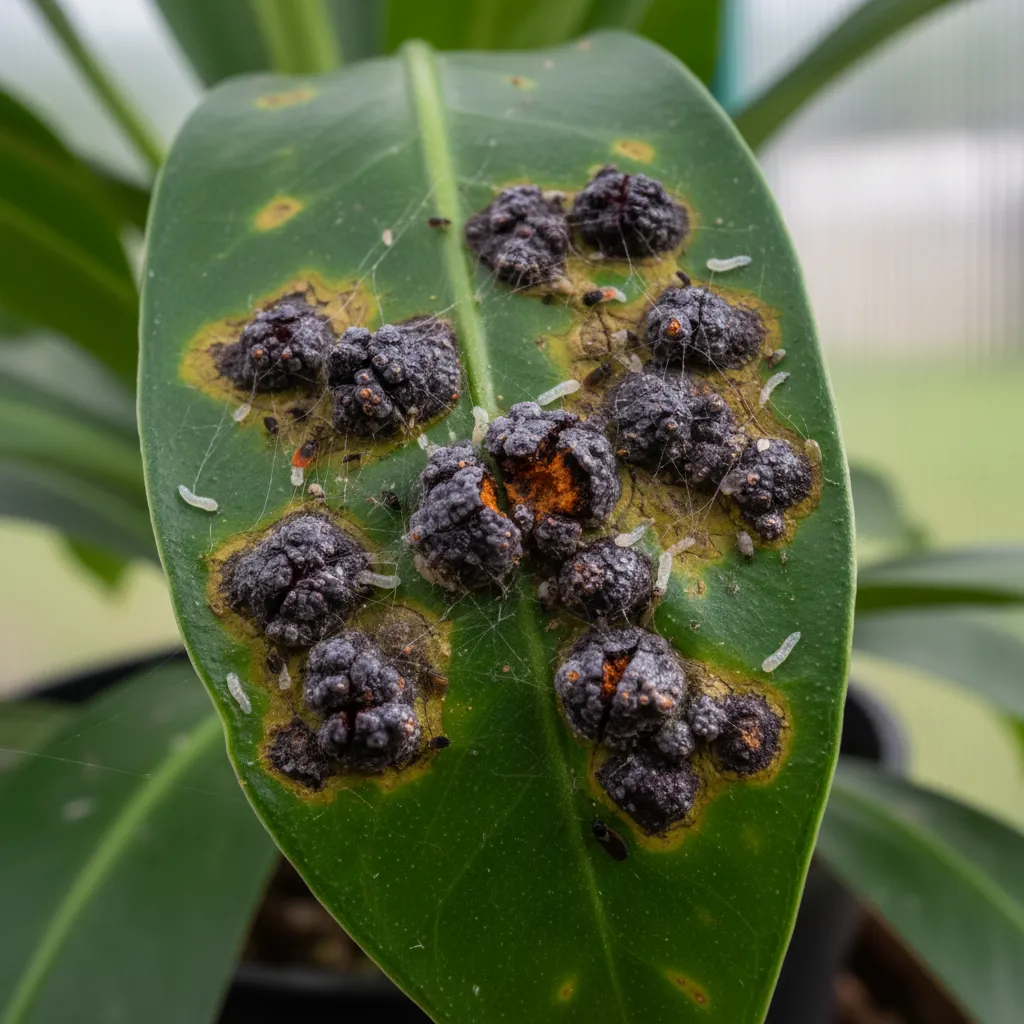
Morphologically, Ardisia crenata typically grows between 0.5 and 1.5 meters (2 to 6 feet) tall. It features glossy, dark green, leathery leaves. A distinctive trait of its foliage is the wavy or 'crenate' margins, often punctuated by tiny, dark, symbiotic nodules. These nodules are crucial. They house nitrogen-fixing bacteria that contribute significantly to the plant's hardiness and its ability to flourish in diverse soil conditions. Small, star-shaped flowers, ranging from white to pale pink, emerge in late spring to early summer. They precede the development of its iconic drupes.
These berries gradually ripen from green to a brilliant, glossy coral-red by autumn, and they endure on the shrub for many months. Gardeners cherish it as an ornamental, yet it has shown an aggressive and invasive nature in certain regions. This is notably true in parts of Florida, Georgia, Alabama, and Texas, where it can dominate the understory. Authorities there classify it as a noxious weed, which makes it quite challenging to manage once established. The genus name 'Ardisia' comes from Greek and means 'point,' referring to the pointed anthers. The name 'crenata' is Latin for 'with blunt teeth,' describing its unique leaf margins.
Trusted Scientific References
1. Authoritative external sources for Ardisia crenata
1.1 Wikipedia — Ardisia crenata
1.2 Kew POWO (Plants of the World Online)
1.3 PubMed — peer-reviewed research
1.4 NCBI Taxonomy Browser
1.5 GBIF — Global Biodiversity
1.1.Coral Berry — Key Features
- ✓ <strong>Evergreen ornamental shrub</strong> — Evergreen ornamental shrub with persistent red berries.
- ✓ <strong>Native to East</strong> — Native to East Asia, thriving in subtropical understories.
- ✓ <strong>Characterized by glossy,</strong> — Characterized by glossy, dark green leaves with crenate margins and symbiotic nodules.
- ✓ <strong>Traditionally used in</strong> — Traditionally used in Traditional Chinese Medicine (TCM) for various ailments.
- ✓ <strong>Contains significant bioactive</strong> — Contains significant bioactive compounds including triterpenoid saponins and flavonoids.
- ✓ <strong>Exhibits anti</strong> — inflammatory, analgesic, and antioxidant properties.
- ✓ <strong>Berries are visually</strong> — Berries are visually appealing but considered potentially toxic if consumed.
- ✓ <strong>Classified as an</strong> — Classified as an invasive species in parts of the southeastern United States.
- ✓ <strong>Prefers partial shade, consistent moisture, and well</strong> — draining, acidic to neutral soil.
- ✓ <strong>Cultivated as a festive holiday plant due to its long</strong> — lasting winter berries.
1.2.Coral Berry — Quick Summary
- ✓ Ardisia crenata is an evergreen subshrub known for its vibrant red berries and traditional medicinal uses.
- ✓ Traditionally employed in TCM for anti-inflammatory, analgesic, and antitussive properties.
- ✓ Rich in bioactive compounds like ardisin, bergenin, flavonoids, and polyphenols.
- ✓ Can be an invasive species in certain subtropical regions, requiring careful management.
- ✓ Berries are attractive but potentially toxic if ingested, especially by children and pets.
- ✓ Research continues to explore its antioxidant, antimicrobial, and potential anticancer activities.
2.Coral Berry — Scientific Identity
3.Coral Berry — Quick Facts
4.Coral Berry — Appearance & Identification
5.Coral Berry — Native Habitat
6.Coral Berry — Water Requirements
- ✓ Site Selection — Prefers partial to full shade (dappled light) in a location protected from intense, direct sunlight, which can scorch leaves.
- ✓ Soil Requirements — Thrives in well-draining, rich, organic soil with a slightly acidic to neutral pH (6.0-7.0).
- ✓ Watering — Requires consistent moisture; keep soil evenly damp but never waterlogged, as it does not tolerate flooding.
- ✓ Temperature and Humidity — Best in subtropical climates; can tolerate mild winters but is sensitive to frost.
- ✓ Fertilization — Apply a balanced, slow-release fertilizer in spring to support healthy growth and berry production.
- ✓ Propagation — Can be propagated from seeds (which require stratification) or semi-hardwood cuttings taken in late summer.
- ✓ Pruning — Prune lightly after berries drop to maintain shape and encourage bushier growth.
- ✓ Container Growing — Excellent as a houseplant or in containers in cooler climates, allowing for protection from harsh weather.
Reviewed by the Flora Medical Global Botanical Review Panel
Multi-disciplinary editorial group · Botany · Ethnobotany · Herbal-medicine literature
Who reviewed this: This page was checked by the Flora Medical Global Botanical Review Panel — an in-house editorial group of botany graduates, ethnobotany researchers, and horticulture practitioners who collectively maintain our 7,000+ plant encyclopedia. Meet the team.
Our 4-step verification process
1. Taxonomic verification
Scientific names and synonyms cross-checked against Kew POWO, World Flora Online, and The Plant List.
2. Phytochemical & medicinal cross-reference
Active compounds, traditional uses, and reported activities are cross-referenced with PubMed, USDA Dr. Duke's database, and peer-reviewed ethnobotanical literature.
3. Conservation & distribution check
Distribution, ecology, and conservation status confirmed against GBIF occurrence records and the IUCN Red List.
4. Editorial & safety review
Every entry passes an editorial pass for clarity, originality, and safety notices (toxicity, contraindications, dosage caveats) before publication.
Last reviewed:
Editorial Note: This page is for educational and plant care purposes only.
Written by: Flora Medical Global Editorial Team
Reviewed by: Flora Medical Global Botanical Review Panel
Last Updated: June 21, 2026







Coral Berry — Comments & Community Reviews
Rate this plant
No reviews yet. Be the first!