
Care Disclaimer: Plant care recommendations are general guidelines based on common growing conditions. Individual results may vary based on your local environment, climate, and care routine. If your plant is toxic, keep it away from children and pets, and consult a veterinarian if accidental ingestion occurs.
1.Corn Plant — Overview
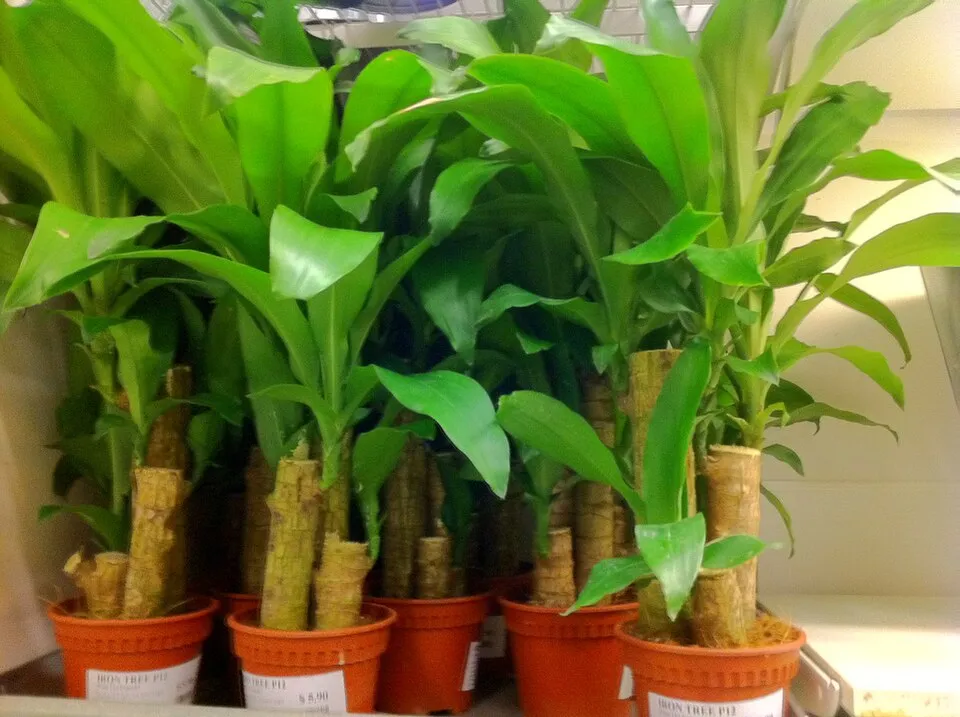
Dracaena fragrans, widely recognized as the Corn Plant or Mass Cane, is an evergreen perennial shrub belonging to the Asparagaceae family. Native to the lush tropical regions of Africa, this resilient plant has become a globally popular indoor ornamental. Its distinctive morphology features sturdy, woody stems from which emerge striking rosettes of arching, glossy green leaves. These leaves, often variegated with vibrant yellow or light green stripes, bear a resemblance to cornstalks, hence its common name. In its natural African habitat, Dracaena fragrans can attain impressive heights exceeding 6 meters, developing a robust, branched structure.
When cultivated indoors, it typically maintains a more manageable size, usually between 1 to 3 meters, making it highly adaptable for various interior spaces. The plant produces small, delicate, white to pale pink flowers arranged in dense, terminal panicles, although flowering is a rare occurrence in indoor settings. These blossoms are notable for their intensely sweet, jasmine-like fragrance, particularly potent at night, which inspired the species epithet 'fragrans.' Successful pollination can lead to the formation of small, orange-red berries. Ecologically, D. fragrans contributes to the biodiversity of its native forests.
In modern applications, extensive scientific research, notably the NASA Clean Air Study, has highlighted the Corn Plant's exceptional capacity for air purification. It efficiently removes harmful volatile organic compounds (VOCs) such as formaldehyde, benzene, and trichloroethylene from indoor air. This scientifically validated benefit has significantly bolstered its popularity, contributing to healthier indoor environments. Despite its aesthetic appeal and air-purifying prowess, it is important to note that Dracaena fragrans contains saponins and is moderately toxic to pets if ingested.
Trusted Scientific References
1. Authoritative external sources for Dracaena fragrans
1.1 Wikipedia — Dracaena fragrans
1.2 Kew POWO (Plants of the World Online)
1.3 PubMed — peer-reviewed research
1.4 NCBI Taxonomy Browser
1.5 GBIF — Global Biodiversity
1.1.Corn Plant — Key Features
- ✓ <strong>Proven Air Purifying Capabilities</strong> — Effectively removes VOCs like formaldehyde and benzene from indoor air.
- ✓ <strong>Distinctive Foliage</strong> — Features glossy, arching, strap-like leaves, often variegated with stripes.
- ✓ <strong>Sturdy Cane</strong> — Like Stems — Develops thick, woody stems, resembling cornstalks, supporting its upright growth.
- ✓ <strong>Fragrant Nocturnal Flowers</strong> — Produces small, intensely sweet-scented flowers, though infrequently indoors.
- ✓ <strong>Evergreen Perennial Shrub</strong> — Maintains its foliage year-round, providing continuous greenery.
- ✓ <strong>Adaptable Indoor Plant</strong> — Thrives in a range of indoor light conditions and is relatively easy to care for.
- ✓ <strong>Numerous Cultivars Available</strong> — Offers a variety of leaf patterns and growth habits, including 'Mass Cane' and 'Janet Craig'.
- ✓ <strong>Native to Tropical Africa</strong> — Originates from the warm, humid regions of its native continent.
- ✓ <strong>Low Maintenance Requirement</strong> — Generally forgiving and suitable for beginners in plant care.
- ✓ <strong>Pet Toxicity Warning</strong> — Contains saponins, making it moderately toxic to household pets.
1.2.Corn Plant — Quick Summary
- ✓ Exceptional indoor air purifier, removing common VOCs.
- ✓ Popular ornamental houseplant with striking foliage.
- ✓ Contains saponins, moderately toxic to cats and dogs if ingested.
- ✓ Relatively low maintenance and adaptable to indoor conditions.
- ✓ Produces highly fragrant nocturnal flowers, though rarely indoors.
- ✓ Native to tropical Africa, valued for both aesthetics and health benefits.
2.Corn Plant — Scientific Identity
3.Corn Plant — Quick Facts
4.Corn Plant — Appearance & Identification
5.Corn Plant — Native Habitat
6.Corn Plant — Water Requirements
- ✓ Light — Provide bright to moderate, filtered light; direct sunlight can scorch foliage, while insufficient light may cause leaves to narrow and variegation to fade.
- ✓ Watering — Keep soil consistently moist during the active growing season (spring and summer), but significantly reduce watering frequency in winter to prevent root rot.
- ✓ Soil — Use a well-draining commercial potting mix, ideally peat-based, in a pot with adequate drainage holes to avoid waterlogging.
- ✓ Temperature — Maintain indoor temperatures between 70-80°F (21-27°C); avoid exposure to temperatures below 50°F (10°C) which can cause cold damage.
- ✓ Humidity — Prefers moderate to high humidity; low humidity can lead to brown leaf tips, so consider using a humidifier or pebble tray, especially in heated homes.
- ✓ Repotting — Repot into a slightly larger container when the plant becomes root-bound, typically every 2-3 years, or when roots emerge from drainage holes.
- ✓ Fertilization — Feed with a balanced liquid houseplant fertilizer diluted to half strength every 2-4 weeks during the growing season, abstaining in winter.
- ✓ Propagation — Easily propagated by stem cuttings; allow cuttings to callus for a day or two before planting in moist potting mix or water.
Reviewed by the Flora Medical Global Botanical Review Panel
Multi-disciplinary editorial group · Botany · Ethnobotany · Herbal-medicine literature
Who reviewed this: This page was checked by the Flora Medical Global Botanical Review Panel — an in-house editorial group of botany graduates, ethnobotany researchers, and horticulture practitioners who collectively maintain our 7,000+ plant encyclopedia. Meet the team.
Our 4-step verification process
1. Taxonomic verification
Scientific names and synonyms cross-checked against Kew POWO, World Flora Online, and The Plant List.
2. Phytochemical & medicinal cross-reference
Active compounds, traditional uses, and reported activities are cross-referenced with PubMed, USDA Dr. Duke's database, and peer-reviewed ethnobotanical literature.
3. Conservation & distribution check
Distribution, ecology, and conservation status confirmed against GBIF occurrence records and the IUCN Red List.
4. Editorial & safety review
Every entry passes an editorial pass for clarity, originality, and safety notices (toxicity, contraindications, dosage caveats) before publication.
Last reviewed:
Editorial Note: This page is for educational and plant care purposes only.
Written by: Flora Medical Global Editorial Team
Reviewed by: Flora Medical Global Botanical Review Panel
Last Updated: June 16, 2026







Corn Plant — Comments & Community Reviews
Rate this plant