
Care Disclaimer: Plant care recommendations are general guidelines based on common growing conditions. Individual results may vary based on your local environment, climate, and care routine. If your plant is toxic, keep it away from children and pets, and consult a veterinarian if accidental ingestion occurs.
1.Crassula Ovata Hobbit — Overview
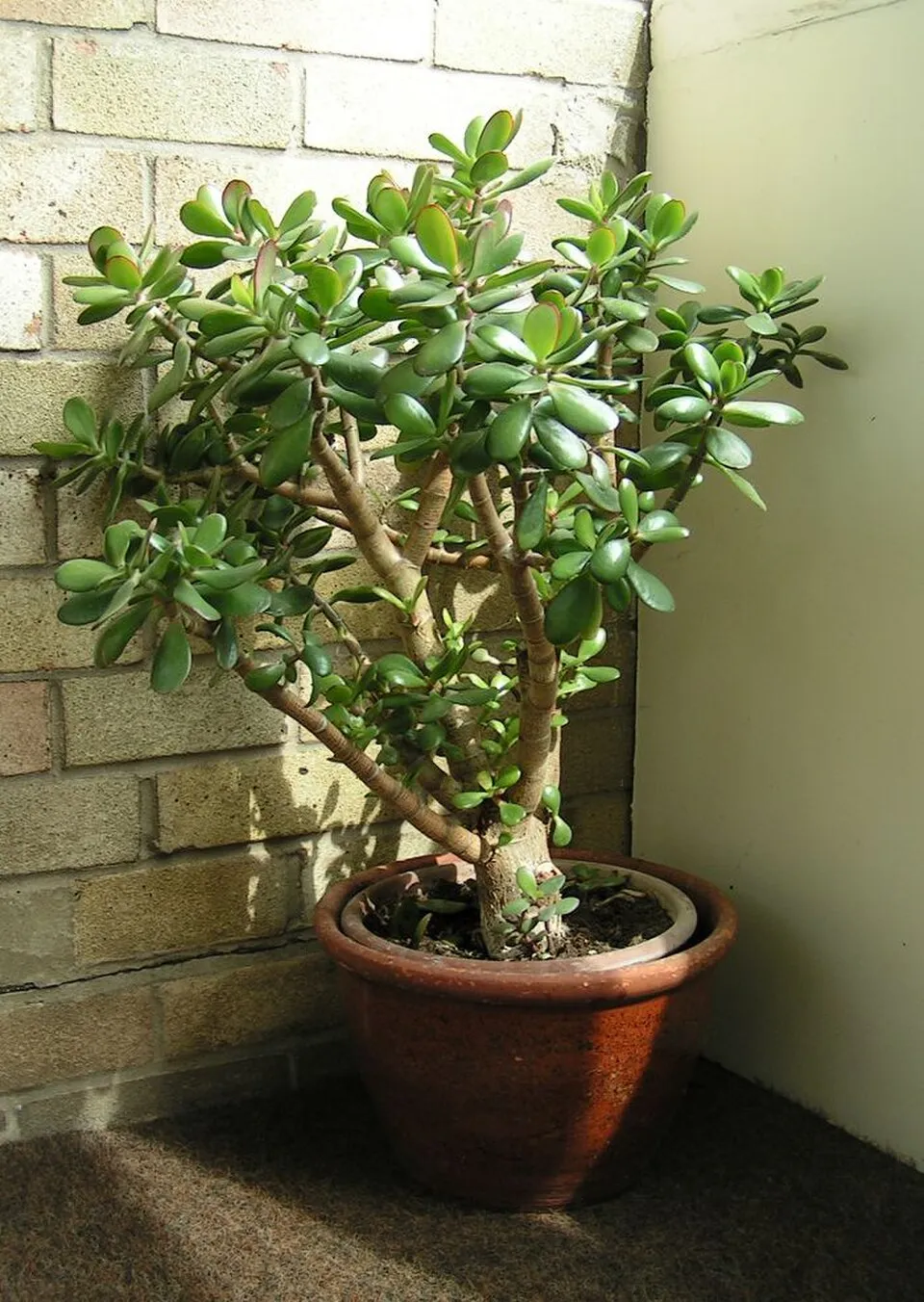
Crassula ovata 'Hobbit', often affectionately known as the 'Hobbit Jade' or 'Shrek's Ears', is a captivating cultivar of the widely recognized jade plant, Crassula ovata. This distinctive succulent, belonging to the Crassulaceae family, stands out due to its unique, tubular, and often curled leaves, which strikingly resemble the iconic ears of mythical hobbits. Unlike the flat, oval leaves of its parent species, 'Hobbit' exhibits a fascinating genetic mutation resulting in foliage with a rolled or spoon-like configuration, frequently adorned with attractive reddish margins when exposed to ample sunlight.
While the 'Hobbit' cultivar itself is a product of horticultural selection and not found in the wild, its ancestral lineage traces back to Crassula ovata, which is indigenous to the arid and semi-arid regions of South Africa (specifically the Eastern Cape and KwaZulu-Natal) and Mozambique. These native habitats are characterized by dry, rocky landscapes with seasonal rainfall patterns, conditions to which the entire jade plant family is exquisitely adapted through its water-storing succulent leaves and stems. The 'Hobbit' cultivar thrives under similar environmental conditions and has become a highly prized ornamental houseplant globally, cherished for its sculptural form and ease of care.
Culturally, jade plants, including their various cultivars, are widely regarded as symbols of good luck, prosperity, wealth, and enduring friendship, making them popular gifts and decorative elements in homes and offices worldwide.
Trusted Scientific References
1. Authoritative external sources for Crassula ovata hobbit
1.1 Wikipedia — Crassula ovata hobbit
1.2 Kew POWO (Plants of the World Online)
1.3 PubMed — peer-reviewed research
1.4 NCBI Taxonomy Browser
1.5 GBIF — Global Biodiversity
1.6Crassula Ovata Hobbit should be interpreted through verified botanical identity, practical care, and responsible safety language. This recovery note adds the missing context needed for a complete profile: match light to the plant's habit, use well-drained soil, water according to season, and avoid unsupported medicinal or edible claims. For publishing, the plant can be presented as a source-backed indoor plant with clear care guidance, common problem diagnosis, and conservative safety wording.
1.1.Crassula Ovata Hobbit — Key Features
- ✓ <strong>Unique Tubular Leaves</strong> — Distinctive rolled or spoon-like foliage, often tipped with red.
- ✓ <strong>Low Maintenance</strong> — Requires minimal care, making it ideal for beginners and busy individuals.
- ✓ <strong>Succulent Nature</strong> — Stores water in its leaves and stems, highly drought-tolerant.
- ✓ <strong>Ornamental Value</strong> — Highly prized for its sculptural form and aesthetic appeal in homes and gardens.
- ✓ <strong>Air Purifying Qualities</strong> — Contributes to cleaner indoor air, typical of many houseplants.
- ✓ <strong>Cultural Significance</strong> — Symbolizes good luck, prosperity, and friendship in many cultures.
- ✓ <strong>Easy Propagation</strong> — Readily roots from stem or leaf cuttings.
- ✓ <strong>Longevity</strong> — Can live for many decades with proper care, becoming a cherished heirloom.
- ✓ <strong>Adaptable to Containers</strong> — Grows well in pots, making it suitable for indoor environments.
- ✓ <strong>Bonsai Potential</strong> — Excellent choice for training into miniature tree forms.
1.2.Crassula Ovata Hobbit — Quick Summary
- ✓ Crassula ovata 'Hobbit' is a unique, tubular-leafed jade plant cultivar.
- ✓ Valued primarily as an ornamental houseplant for its distinctive appearance and ease of care.
- ✓ Shares ancestral medicinal properties with Crassula ovata, including antioxidant and wound-healing potential.
- ✓ Toxic to pets if ingested, but generally low risk for humans externally.
- ✓ Thrives in bright light and well-drained soil, requiring minimal watering.
- ✓ Culturally significant as a symbol of prosperity and friendship.
2.Crassula Ovata Hobbit — Scientific Identity
3.Crassula Ovata Hobbit — Quick Facts
4.Crassula Ovata Hobbit — Appearance & Identification
5.Crassula Ovata Hobbit — Native Habitat
6.Crassula Ovata Hobbit — Water Requirements
- ✓ Light Requirements — Provide at least four hours of direct sun daily; bright, indirect light is acceptable, but less light may lead to leggy growth and reduced leaf coloration.
- ✓ Watering Schedule — Allow the soil to dry out completely between thorough waterings; water sparingly in winter when the plant is semi-dormant to prevent root rot.
- ✓ Soil Composition — Use a well-drained, high-porosity potting mix specifically formulated for succulents or cacti, optionally amended with extra perlite or sharp sand.
- ✓ Temperature and Humidity — Tolerates a wide range of temperatures and humidity typical of most homes; protect from frost, as freezing conditions are lethal.
- ✓ Pruning and Shaping — Prune in spring to maintain a compact shape, encourage branching, and develop a thicker, gnarled trunk, making it an excellent candidate for bonsai.
- ✓ Propagation — Easily propagated from stem or leaf cuttings; allow cuttings to callus for a few days before planting in dry, well-drained soil to prevent rot.
- ✓ Fertilization — Fertilize every two months during active growth (spring and summer) with a dilute, balanced liquid fertilizer.
- ✓ Pest Management — Monitor for common pests like mealybugs and spider mites; treat infestations by wiping with rubbing alcohol or using appropriate insecticidal soaps.
Reviewed by the Flora Medical Global Botanical Review Panel
Multi-disciplinary editorial group · Botany · Ethnobotany · Herbal-medicine literature
Who reviewed this: This page was checked by the Flora Medical Global Botanical Review Panel — an in-house editorial group of botany graduates, ethnobotany researchers, and horticulture practitioners who collectively maintain our 7,000+ plant encyclopedia. Meet the team.
Our 4-step verification process
1. Taxonomic verification
Scientific names and synonyms cross-checked against Kew POWO, World Flora Online, and The Plant List.
2. Phytochemical & medicinal cross-reference
Active compounds, traditional uses, and reported activities are cross-referenced with PubMed, USDA Dr. Duke's database, and peer-reviewed ethnobotanical literature.
3. Conservation & distribution check
Distribution, ecology, and conservation status confirmed against GBIF occurrence records and the IUCN Red List.
4. Editorial & safety review
Every entry passes an editorial pass for clarity, originality, and safety notices (toxicity, contraindications, dosage caveats) before publication.
Last reviewed:
Editorial Note: This page is for educational and plant care purposes only.
Written by: Flora Medical Global Editorial Team
Reviewed by: Flora Medical Global Botanical Review Panel
Last Updated: June 16, 2026







Crassula Ovata Hobbit — Comments & Community Reviews
Rate this plant