
Care Disclaimer: Plant care recommendations are general guidelines based on common growing conditions. Individual results may vary based on your local environment, climate, and care routine. If your plant is toxic, keep it away from children and pets, and consult a veterinarian if accidental ingestion occurs.
1.Dwarf ZZ Plant — Overview
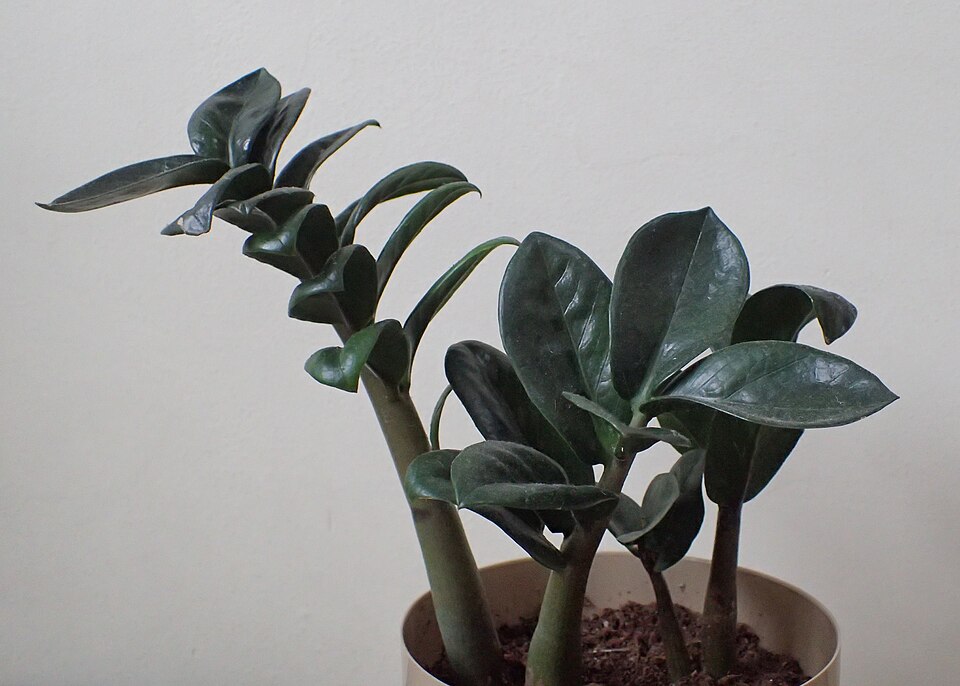
The Dwarf ZZ Plant, scientifically known as Zamioculcas zamiifolia 'Zenzi', is a highly distinctive cultivar within the Araceae family. This compact perennial herb typically reaches a modest height of 12 to 24 inches, distinguishing it from the larger standard Zamioculcas zamiifolia. Its most striking features are the thick, succulent, and intensely glossy dark green leaves, which are oval to almost round in shape, often reaching 2-3 inches in length.
These leaflets are tightly arranged along robust, upright, and somewhat zig-zagging stems, giving the 'Zenzi' its characteristic bushy and dense appearance, making it particularly suitable for smaller indoor spaces. The stems themselves are smooth and possess a subtle sheen, contributing to the plant's overall robust and sculptural presence. While the standard ZZ plant can produce small, yellowish-brown spathes, the 'Zenzi' variety rarely flowers indoors; any infrequent blooms are more curious than visually prominent, emerging from the base of the foliage.
Native to the arid and semi-arid regions of East Africa, spanning from Kenya to South Africa, Zamioculcas zamiifolia 'Zenzi' is exceptionally well-adapted to environments with infrequent rainfall and fluctuating light conditions. Its natural habitat often consists of well-drained, sandy soils, and it thrives in the understory where light is indirect or dappled. Taxonomically, it belongs to the monotypic genus Zamioculcas, a unique member of the Araceae, which is otherwise known for a diverse range of ornamental and food plants.
A key adaptation to its drought-prone native environment is the presence of fleshy, potato-like rhizomes located underground, which efficiently store water and nutrients, allowing the plant to endure prolonged periods of drought. This physiological trait, combined with its tolerance for low light and general neglect, underscores its immense popularity as an exceptionally resilient and low-maintenance houseplant.
Trusted Scientific References
1. Authoritative external sources for Zamioculcas zamiifolia zenzi
1.1 Wikipedia — Zamioculcas zamiifolia zenzi
1.2 Kew POWO (Plants of the World Online)
1.3 PubMed — peer-reviewed research
1.4 NCBI Taxonomy Browser
1.5 GBIF — Global Biodiversity
1.1.Dwarf ZZ Plant — Key Features
- ✓ <strong>Compact 'Zenzi' Cultivar</strong> — Smaller, bushier form than typical ZZ Plant.
- ✓ <strong>Glossy Dark Green Foliage</strong> — Thick, succulent, and highly reflective leaves.
- ✓ <strong>Exceptional Drought Tolerance</strong> — Stores water in rhizomes and thick petioles.
- ✓ <strong>Low Light Adaptability</strong> — Thrives in a wide range of indirect light conditions.
- ✓ <strong>Low Maintenance</strong> — Ideal for beginners and busy individuals.
- ✓ <strong>Air Purification Properties</strong> — Purported to remove VOCs from indoor air.
- ✓ <strong>Striking Architectural Form</strong> — Adds a modern, sculptural element to decor.
- ✓ <strong>Pest Resistant</strong> — Generally not prone to common houseplant pests.
- ✓ <strong>Longevity</strong> — Can live for many years with minimal care.
- ✓ <strong>Toxic (Calcium Oxalates)</strong> — All parts are poisonous if ingested.
1.2.Dwarf ZZ Plant — Quick Summary
- ✓ Hardy, low-maintenance ornamental houseplant.
- ✓ Contains toxic calcium oxalate crystals in all parts.
- ✓ Purported indoor air purifier, enhancing aesthetics and well-being.
- ✓ Thrives in low to bright indirect light with infrequent watering.
- ✓ Not for ingestion; keep away from children and pets.
- ✓ Excellent drought tolerance due to water-storing rhizomes.
2.Dwarf ZZ Plant — Scientific Identity
3.Dwarf ZZ Plant — Quick Facts
4.Dwarf ZZ Plant — Appearance & Identification
5.Dwarf ZZ Plant — Native Habitat
6.Dwarf ZZ Plant — Water Requirements
- ✓ Light Requirements — Thrives in bright, indirect light but tolerates low light conditions; direct sunlight can scorch leaves.
- ✓ Watering Schedule — Water thoroughly but infrequently, allowing the soil to dry out completely between waterings to prevent rhizome rot. Overwatering is the most common cause of decline.
- ✓ Soil Preference — Prefers a well-draining potting mix, ideally a blend designed for succulents or cacti, to ensure adequate aeration and prevent waterlogging.
- ✓ Temperature & Humidity — Best grown in average room temperatures (65-80°F or 18-27°C) and can tolerate average to low humidity levels.
- ✓ Fertilization — Fertilize sparingly, once or twice during the growing season (spring/summer) with a balanced liquid fertilizer diluted to half strength.
- ✓ Repotting — Repot only when root-bound, typically every 2-3 years, into a pot only slightly larger than the previous one, as they prefer to be snug.
- ✓ Propagation — Can be propagated from leaf cuttings or by dividing the rhizomes, though leaf propagation is slow, taking several months to form new rhizomes and shoots.
- ✓ Pest Management — Generally pest-resistant; occasionally check for common houseplant pests like spider mites or mealybugs, treating with neem oil or insecticidal soap if detected.
Reviewed by the Flora Medical Global Botanical Review Panel
Multi-disciplinary editorial group · Botany · Ethnobotany · Herbal-medicine literature
Who reviewed this: This page was checked by the Flora Medical Global Botanical Review Panel — an in-house editorial group of botany graduates, ethnobotany researchers, and horticulture practitioners who collectively maintain our 7,000+ plant encyclopedia. Meet the team.
Our 4-step verification process
1. Taxonomic verification
Scientific names and synonyms cross-checked against Kew POWO, World Flora Online, and The Plant List.
2. Phytochemical & medicinal cross-reference
Active compounds, traditional uses, and reported activities are cross-referenced with PubMed, USDA Dr. Duke's database, and peer-reviewed ethnobotanical literature.
3. Conservation & distribution check
Distribution, ecology, and conservation status confirmed against GBIF occurrence records and the IUCN Red List.
4. Editorial & safety review
Every entry passes an editorial pass for clarity, originality, and safety notices (toxicity, contraindications, dosage caveats) before publication.
Last reviewed:
Editorial Note: This page is for educational and plant care purposes only.
Written by: Flora Medical Global Editorial Team
Reviewed by: Flora Medical Global Botanical Review Panel
Last Updated: June 16, 2026







Dwarf ZZ Plant — Comments & Community Reviews
Rate this plant