
Care Disclaimer: Plant care recommendations are general guidelines based on common growing conditions. Individual results may vary based on your local environment, climate, and care routine. If your plant is toxic, keep it away from children and pets, and consult a veterinarian if accidental ingestion occurs.
1.Fern Staghorn Superbum — Overview
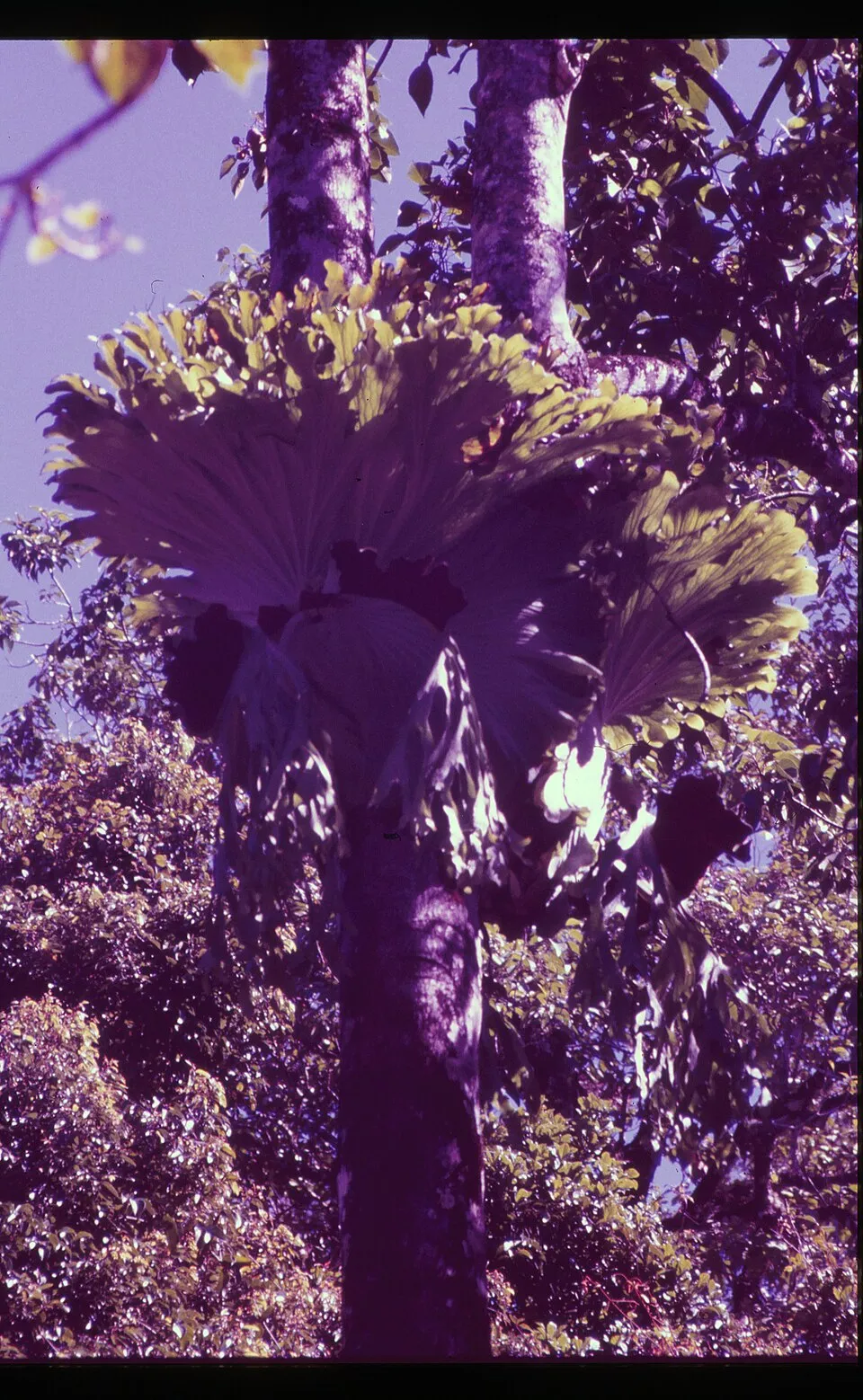
Platycerium superbum, universally recognized as the Giant Staghorn Fern, is a magnificent epiphytic fern belonging to the Polypodiaceae family. It is celebrated for its dramatically large, antler-shaped fronds that can span over a meter in width and extend up to two meters in length. These distinctive fronds are deeply bifurcated at their tips, creating a striking resemblance to a stag's antlers, which gives the plant its common name. The foliage typically presents a vibrant, lush green hue, making it a captivating ornamental feature in various indoor and tropical garden settings.
The plant develops from a robust, central rhizome, often several centimeters in diameter, from which its fronds emerge. Its short stipes, or stems, are characteristically covered in a fine layer of pale, velvety hairs. Native to the humid tropical rainforests of New Guinea and certain islands, including Eastern Australia, Platycerium superbum naturally thrives by attaching itself to large trees or rocks, demonstrating its epiphytic growth habit. Taxonomically, it is classified within the order Polypodiales.
Unlike flowering plants, this fern reproduces through sporophyte structures that develop on the undersides of its mature fertile fronds, contributing to its unique life cycle and botanical interest. Its ease of care under appropriate conditions further enhances its appeal as a cherished addition to plant collections worldwide.
Trusted Scientific References
1. Authoritative external sources for Platycerium superbum
1.1 Wikipedia — Platycerium superbum
1.2 Kew POWO (Plants of the World Online)
1.3 PubMed — peer-reviewed research
1.4 NCBI Taxonomy Browser
1.5 GBIF — Global Biodiversity
1.6Fern Staghorn Superbum should be interpreted through verified botanical identity, practical care, and responsible safety language. This recovery note adds the missing context needed for a complete profile: match light to the plant's habit, use well-drained soil, water according to season, and avoid unsupported medicinal or edible claims. For publishing, the plant can be presented as a source-backed indoor plant with clear care guidance, common problem diagnosis, and conservative safety wording.
1.1.Fern Staghorn Superbum — Key Features
- ✓ <strong>Frond Size</strong> — Fronds can grow over 1 meter in width and up to 2 meters in length, creating a dramatic visual impact.
- ✓ <strong>Lobed Appearance</strong> — Features unique, deeply bifurcated fronds that distinctly resemble the antlers of a stag.
- ✓ <strong>Central Rhizome</strong> — Grows from a robust, central rhizome that can reach several centimeters in diameter.
- ✓ <strong>Textured Stipes</strong> — Short stems are covered in fine, pale hairs, providing a distinctive velvety texture.
- ✓ <strong>Vibrant Green Leaves</strong> — Foliage offers a rich, lush green coloration, ideal for enhancing indoor aesthetics.
- ✓ <strong>Epiphytic Growth Habit</strong> — Naturally grows on trees or rocks, showcasing its adaptability to non-soil growing conditions.
- ✓ <strong>Non</strong> — Toxic Nature — Considered safe for pets and humans when grown as an ornamental plant.
- ✓ <strong>Sporophyte Development</strong> — Reproduces by forming sporophytes on the undersides of mature fertile fronds, rather than producing flowers.
- ✓ <strong>Tropical Origin</strong> — Thrives in high humidity and filtered light, characteristic of its native rainforest habitat.
- ✓ <strong>Ornamental Value</strong> — Highly prized for its unique architectural form and dramatic presence in plant collections.
1.2.Fern Staghorn Superbum — Quick Summary
- ✓ Platycerium superbum, known as the Giant Staghorn Fern, is a large epiphytic fern admired for its dramatic, antler-shaped fronds.
- ✓ Native to tropical rainforests of New Guinea and Eastern Australia, it thrives in high humidity and bright, indirect light.
- ✓ While primarily an ornamental, traditional uses include topical application for wound healing and skin conditions.
- ✓ Its unique foliage and relatively easy care make it a popular and striking indoor plant.
- ✓ Reproduction occurs via sporophytes on fertile fronds, not traditional flowers.
- ✓ Scientific research on its medicinal properties is limited, relying mostly on ethnobotanical accounts.
2.Fern Staghorn Superbum — Scientific Identity
3.Fern Staghorn Superbum — Quick Facts
4.Fern Staghorn Superbum — Appearance & Identification
5.Fern Staghorn Superbum — Native Habitat
6.Fern Staghorn Superbum — Water Requirements
- ✓ Light — Prefers bright, indirect light; direct sun can scorch fronds. Ideal near an east or north-facing window.
- ✓ Water — Requires consistent moisture but hates soggy conditions. Water thoroughly when the top layer of growing medium feels dry, allowing excess to drain.
- ✓ Humidity — Thrives in high humidity, mimicking its native rainforest environment. Mist regularly or place on a pebble tray with water.
- ✓ Temperature — Best grown in warm conditions, typically between 18-29°C (65-85°F), avoiding sudden temperature fluctuations.
- ✓ Growing Medium — As an epiphyte, it prefers to be mounted on a board or grown in a well-draining, coarse medium like sphagnum moss, orchid bark, or a mix of both.
- ✓ Fertilizer — Feed sparingly during the growing season (spring and summer) with a diluted, balanced liquid fertilizer, typically once a month.
- ✓ Air Circulation — Good air circulation is important to prevent fungal issues, especially in high humidity environments.
- ✓ Repotting/Mounting — Only repot or remount when the plant has significantly outgrown its current setup, as they prefer to be somewhat root-bound.
Reviewed by the Flora Medical Global Botanical Review Panel
Multi-disciplinary editorial group · Botany · Ethnobotany · Herbal-medicine literature
Who reviewed this: This page was checked by the Flora Medical Global Botanical Review Panel — an in-house editorial group of botany graduates, ethnobotany researchers, and horticulture practitioners who collectively maintain our 7,000+ plant encyclopedia. Meet the team.
Our 4-step verification process
1. Taxonomic verification
Scientific names and synonyms cross-checked against Kew POWO, World Flora Online, and The Plant List.
2. Phytochemical & medicinal cross-reference
Active compounds, traditional uses, and reported activities are cross-referenced with PubMed, USDA Dr. Duke's database, and peer-reviewed ethnobotanical literature.
3. Conservation & distribution check
Distribution, ecology, and conservation status confirmed against GBIF occurrence records and the IUCN Red List.
4. Editorial & safety review
Every entry passes an editorial pass for clarity, originality, and safety notices (toxicity, contraindications, dosage caveats) before publication.
Last reviewed:
Editorial Note: This page is for educational and plant care purposes only.
Written by: Flora Medical Global Editorial Team
Reviewed by: Flora Medical Global Botanical Review Panel
Last Updated: June 16, 2026







Fern Staghorn Superbum — Comments & Community Reviews
Rate this plant