

Care Disclaimer: Plant care recommendations are general guidelines based on common growing conditions. Individual results may vary based on your local environment, climate, and care routine. If your plant is toxic, keep it away from children and pets, and consult a veterinarian if accidental ingestion occurs.
1.Hoya Compacta — Overview
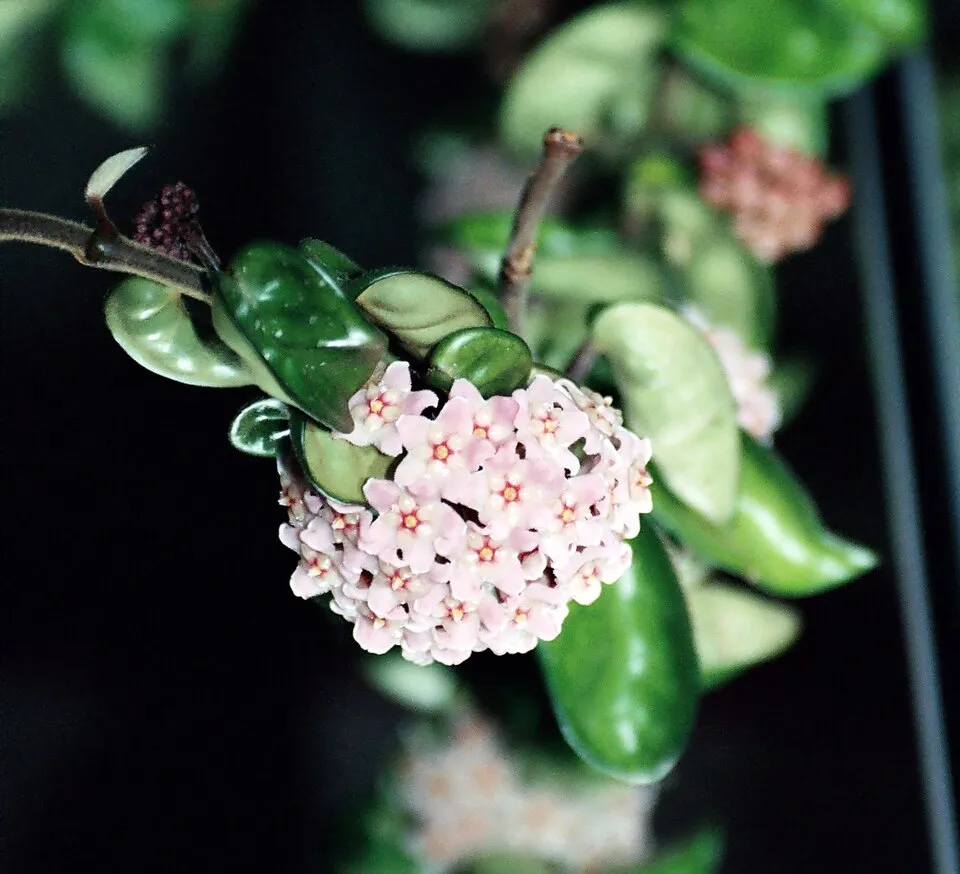
Hoya Compacta, widely recognized as the Hindu Rope Plant or Krinkle Kurl, is a distinctive epiphytic succulent originating from the tropical and subtropical regions of Southeast Asia, particularly thriving in the dappled light of the understory beneath larger trees. This unique member of the Apocynaceae family is celebrated for its highly ornamental and unusual morphology. Its growth habit is typically trailing or vining, reaching lengths of 30 to 60 cm (1 to 2 feet) or more when cultivated indoors, with its stems becoming thick and woody with age. The most striking feature of Hoya Compacta is its foliage: thick, fleshy, and intensely curled leaves, giving them a 'roped' or 'crinkled' appearance.
These dark green, glossy leaves, typically 5 to 10 cm (2 to 4 inches) long, grow densely along the stems, often overlapping and creating a sculptural effect. The waxy texture of the leaves is a xerophytic adaptation, aiding in water retention in its native humid but sometimes dry-spelled environments. Hoya Compacta produces clusters of delicate, star-shaped flowers that emerge from peduncles, which should not be removed as they re-bloom from the same point. These fragrant blossoms, usually pink or white with a darker pink or red corona at the center, typically appear in summer and are known to secrete a sticky, sweet nectar, attracting nocturnal pollinators in their natural habitat.
The inflorescence forms an umbel, a characteristic floral arrangement within the genus. The root system is fibrous and adapted for epiphytic growth, often anchoring to tree bark or crevices rather than deep soil. Taxonomically, Hoya Compacta belongs to the genus Hoya, which is part of the extensive Apocynaceae family, renowned for its diverse floral structures and often milky sap.
Trusted Scientific References
1. Authoritative external sources for Hoya compacta
1.1 Wikipedia — Hoya compacta
1.2 Kew POWO (Plants of the World Online)
1.3 PubMed — peer-reviewed research
1.4 NCBI Taxonomy Browser
1.5 GBIF — Global Biodiversity
1.1.Hoya Compacta — Key Features
- ✓ <strong>Crinkled Foliage</strong> — Thick, waxy, dark green leaves are intensely curled, resembling a twisted rope or braid, giving it its common names.
- ✓ <strong>Epiphytic Nature</strong> — Naturally grows on other plants or surfaces, not in soil, adapting its root system for anchoring.
- ✓ <strong>Trailing Growth Habit</strong> — Develops long, cascading vines that can reach significant lengths, ideal for hanging displays.
- ✓ <strong>Star</strong> — shaped Flowers — Produces clusters of fragrant, waxy, star-shaped blossoms, often pink or white with a darker center.
- ✓ <strong>Low Maintenance</strong> — Known for its resilience and ability to thrive on minimal care, tolerating infrequent watering.
- ✓ <strong>Pet</strong> — Safe — Classified as non-toxic to household pets, making it a popular choice for pet owners.
- ✓ <strong>Air Purifying</strong> — Contributes to a healthier indoor environment by aiding in air purification.
- ✓ <strong>Succulent Leaves</strong> — Its fleshy leaves store water, an adaptation for survival in periods of drought.
- ✓ <strong>Southeast Asian Origin</strong> — Native to tropical and subtropical regions of Southeast Asia and Australia.
- ✓ <strong>Apocynaceae Family Member</strong> — Belongs to a diverse plant family known for its unique floral structures and milky sap.
1.2.Hoya Compacta — Quick Summary
- ✓ Distinctive Appearance — Features uniquely curled, rope-like foliage, making it a striking ornamental plant.
- ✓ Easy Care — A low-maintenance houseplant, ideal for both beginners and experienced plant enthusiasts.
- ✓ Pet-Friendly — Considered non-toxic to cats and dogs, ensuring safety in homes with pets.
- ✓ Air Purifier — Contributes to improved indoor air quality by absorbing pollutants and releasing oxygen.
- ✓ Trailing Growth — Perfect for hanging baskets and shelves, showcasing its cascading vines.
- ✓ Fragrant Blooms — Produces delicate, star-shaped, sweet-smelling flowers under optimal conditions.
2.Hoya Compacta — Scientific Identity
3.Hoya Compacta — Quick Facts
4.Hoya Compacta — Appearance & Identification
5.Hoya Compacta — Native Habitat
6.Hoya Compacta — Water Requirements
- ✓ Light Requirements — Thrives in bright, indirect sunlight; direct harsh sun can scorch leaves, while insufficient light may hinder flowering and slow growth.
- ✓ Temperature Preferences — Prefers warm conditions, ideally between 21-27°C (70-80°F) during the day and no lower than 15°C (60°F) at night, consistent with its tropical origin.
- ✓ Humidity Needs — Requires moderate to high humidity (40-60%); consider using a pebble tray or humidifier in dry indoor environments to prevent leaf crisping.
- ✓ Watering Schedule — Water thoroughly when the top 2-3 inches of soil are dry; its succulent leaves store water, making it tolerant to infrequent watering, but susceptible to root rot from overwatering.
- ✓ Soil Composition — Best grown in a well-draining, airy potting mix, typically an orchid bark, perlite, and peat moss blend, to mimic its epiphytic nature and prevent waterlogging.
- ✓ Potting and Repotting — Prefers to be slightly root-bound; repot only when roots are compacted or soil quality degrades, using a pot just 2 inches larger in spring or summer, avoiding flowering periods.
- ✓ Fertilization — Fertilize sparingly, once a month during the growing season (spring and summer) with a diluted, balanced liquid houseplant fertilizer (e.g., 1/2 strength).
- ✓ Pruning — Generally requires minimal pruning; remove any dead or yellowing leaves with sterilized shears to maintain plant health and appearance, but avoid cutting off flower peduncles.
Reviewed by the Flora Medical Global Botanical Review Panel
Multi-disciplinary editorial group · Botany · Ethnobotany · Herbal-medicine literature
Who reviewed this: This page was checked by the Flora Medical Global Botanical Review Panel — an in-house editorial group of botany graduates, ethnobotany researchers, and horticulture practitioners who collectively maintain our 7,000+ plant encyclopedia. Meet the team.
Our 4-step verification process
1. Taxonomic verification
Scientific names and synonyms cross-checked against Kew POWO, World Flora Online, and The Plant List.
2. Phytochemical & medicinal cross-reference
Active compounds, traditional uses, and reported activities are cross-referenced with PubMed, USDA Dr. Duke's database, and peer-reviewed ethnobotanical literature.
3. Conservation & distribution check
Distribution, ecology, and conservation status confirmed against GBIF occurrence records and the IUCN Red List.
4. Editorial & safety review
Every entry passes an editorial pass for clarity, originality, and safety notices (toxicity, contraindications, dosage caveats) before publication.
Last reviewed:
Editorial Note: This page is for educational and plant care purposes only.
Written by: Flora Medical Global Editorial Team
Reviewed by: Flora Medical Global Botanical Review Panel
Last Updated: June 16, 2026







Hoya Compacta — Comments & Community Reviews
Rate this plant