
Care Disclaimer: Plant care recommendations are general guidelines based on common growing conditions. Individual results may vary based on your local environment, climate, and care routine. If your plant is toxic, keep it away from children and pets, and consult a veterinarian if accidental ingestion occurs.
1.Lemon Lime Dracaena — Overview
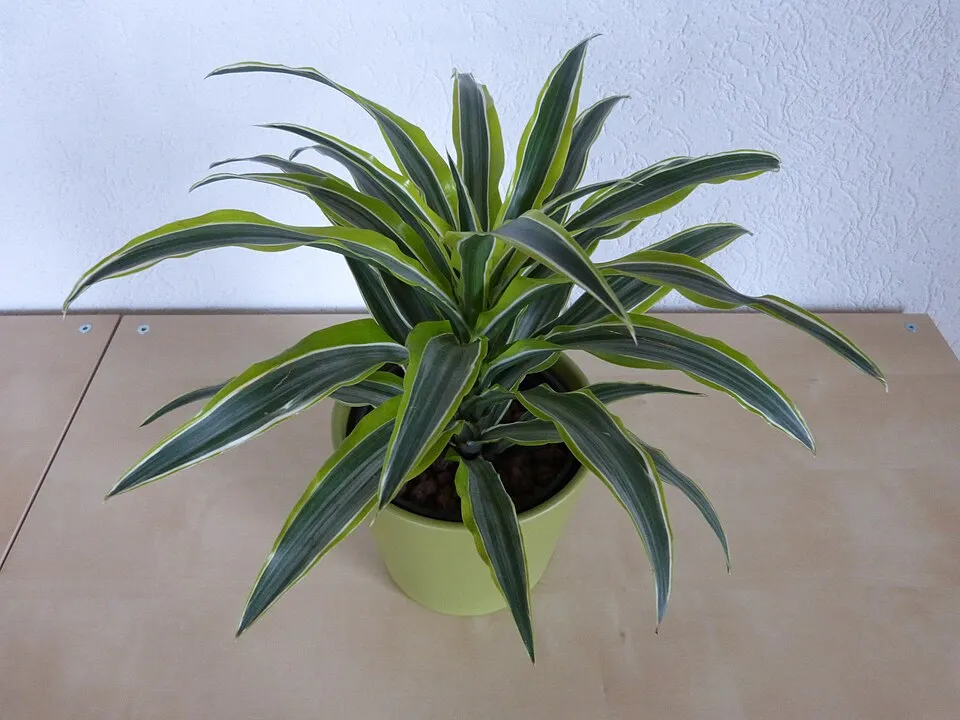
Dracaena deremensis 'Lemon Lime', a popular cultivar within the Asparagaceae family, is renowned for its striking ornamental appeal and robust nature as an indoor plant. This cultivar typically grows as an upright, cane-forming shrub, reaching mature heights of approximately 0.9 to 1.8 meters (3 to 6 feet) in indoor environments, although it can grow taller in optimal outdoor conditions. Its most distinguishing feature lies in its elongated, lanceolate leaves, which measure about 2.5 to 7.5 centimeters (1 to 3 inches) in width and extend up to 60 centimeters (2 feet) in length.
These vibrant leaves showcase a brilliant green margin framing a broad central stripe of cheerful yellow and white, creating the 'Lemon Lime' effect that gives the plant its common name. The sturdy stems, which can develop a subtle brown or grayish bark-like texture at the base over time, provide a strong structural contrast to the bright foliage.
While Dracaena deremensis 'Lemon Lime' is primarily cultivated for its foliage, it may produce small, inconspicuous white or pale yellow flowers, often fragrant, under ideal growing conditions, although this is infrequent in typical indoor settings. These flowers are usually borne on a tall, slender stalk. Native to tropical regions of Africa, specifically East Africa, this species thrives in warm, humid climates, adapting remarkably well to indoor cultivation due to its resilience and tolerance to a range of light conditions, from low to bright indirect light.
Taxonomically, its placement within the Asparagaceae family connects it to a diverse group of monocotyledonous plants, including many other popular ornamental and some economically important species. Beyond its aesthetic value, Dracaena deremensis 'Lemon Lime' is also recognized for its capacity to contribute to improved indoor air quality, making it a functional as well as decorative addition to interior spaces.
Trusted Scientific References
1. Authoritative external sources for Dracaena deremensis Lemon Lime
1.1 Wikipedia — Dracaena deremensis Lemon Lime
1.2 Kew POWO (Plants of the World Online)
1.3 PubMed — peer-reviewed research
1.4 NCBI Taxonomy Browser
1.5 GBIF — Global Biodiversity
1.1.Lemon Lime Dracaena — Key Features
- ✓ <strong>Striking 'Lemon Lime'</strong> — Striking 'Lemon Lime' variegated leaves.
- ✓ <strong>Effective indoor air</strong> — Effective indoor air purifier, targeting VOCs.
- ✓ <strong>Low maintenance and</strong> — Low maintenance and adaptable to various indoor conditions.
- ✓ <strong>Enhances psychological well</strong> — being and productivity.
- ✓ <strong>Upright, cane</strong> — forming growth habit.
- ✓ <strong>Native to tropical</strong> — Native to tropical Africa, thrives in warm, humid settings.
- ✓ <strong>Excellent choice for</strong> — Excellent choice for office spaces and home decor.
- ✓ <strong>Non</strong> — flowering indoors typically, focus on foliage.
- ✓ <strong>Resilient and long</strong> — lived houseplant.
- ✓ <strong>Contributes to a</strong> — Contributes to a greener, healthier indoor environment.
1.2.Lemon Lime Dracaena — Quick Summary
- ✓ Vibrant 'Lemon Lime' variegated foliage makes it an attractive indoor plant.
- ✓ Recognized for its ability to filter indoor air pollutants, including VOCs.
- ✓ Contributes to reduced stress, improved focus, and enhanced creativity in indoor environments.
- ✓ Easy to care for, making it suitable for beginners and busy individuals.
- ✓ Non-medicinal; primarily an ornamental plant with indirect well-being benefits.
- ✓ Toxic to pets if ingested, requiring careful placement in homes with animals.
2.Lemon Lime Dracaena — Scientific Identity
3.Lemon Lime Dracaena — Quick Facts
4.Lemon Lime Dracaena — Appearance & Identification
5.Lemon Lime Dracaena — Native Habitat
6.Lemon Lime Dracaena — Water Requirements
- ✓ Light Requirement — Prefers bright, indirect light; direct sunlight can scorch its distinctive foliage. Tolerates lower light, but growth may be slower and variegation less pronounced.
- ✓ Watering — Water thoroughly when the top 2-3 inches of soil feel dry. Allow excess water to drain completely to prevent root rot. Avoid overwatering.
- ✓ Soil Preference — Thrives in a well-draining, peat-based potting mix rich in organic matter. A mix amended with perlite or sand enhances drainage.
- ✓ Humidity — Appreciates moderate to high humidity, mimicking its tropical origins. Consider misting regularly or placing on a pebble tray.
- ✓ Temperature — Ideal temperatures range between 18-27°C (65-80°F). Protect from sudden temperature drops and cold drafts.
- ✓ Fertilization — Feed with a balanced liquid fertilizer every 2-4 weeks during the growing season (spring and summer). Reduce or cease feeding in fall and winter.
- ✓ Potting — Repot every 2-3 years or when root-bound, choosing a pot only slightly larger than the previous one to avoid excess moisture retention.
- ✓ Pruning — Prune to maintain desired size and shape, or to encourage bushier growth, by cutting back stems just above a leaf node.
Reviewed by the Flora Medical Global Botanical Review Panel
Multi-disciplinary editorial group · Botany · Ethnobotany · Herbal-medicine literature
Who reviewed this: This page was checked by the Flora Medical Global Botanical Review Panel — an in-house editorial group of botany graduates, ethnobotany researchers, and horticulture practitioners who collectively maintain our 7,000+ plant encyclopedia. Meet the team.
Our 4-step verification process
1. Taxonomic verification
Scientific names and synonyms cross-checked against Kew POWO, World Flora Online, and The Plant List.
2. Phytochemical & medicinal cross-reference
Active compounds, traditional uses, and reported activities are cross-referenced with PubMed, USDA Dr. Duke's database, and peer-reviewed ethnobotanical literature.
3. Conservation & distribution check
Distribution, ecology, and conservation status confirmed against GBIF occurrence records and the IUCN Red List.
4. Editorial & safety review
Every entry passes an editorial pass for clarity, originality, and safety notices (toxicity, contraindications, dosage caveats) before publication.
Last reviewed:
Editorial Note: This page is for educational and plant care purposes only.
Written by: Flora Medical Global Editorial Team
Reviewed by: Flora Medical Global Botanical Review Panel
Last Updated: June 16, 2026







Lemon Lime Dracaena — Comments & Community Reviews
Rate this plant