

Care Disclaimer: Plant care recommendations are general guidelines based on common growing conditions. Individual results may vary based on your local environment, climate, and care routine. If your plant is toxic, keep it away from children and pets, and consult a veterinarian if accidental ingestion occurs.
1.Mammillaria Gracilis — Overview
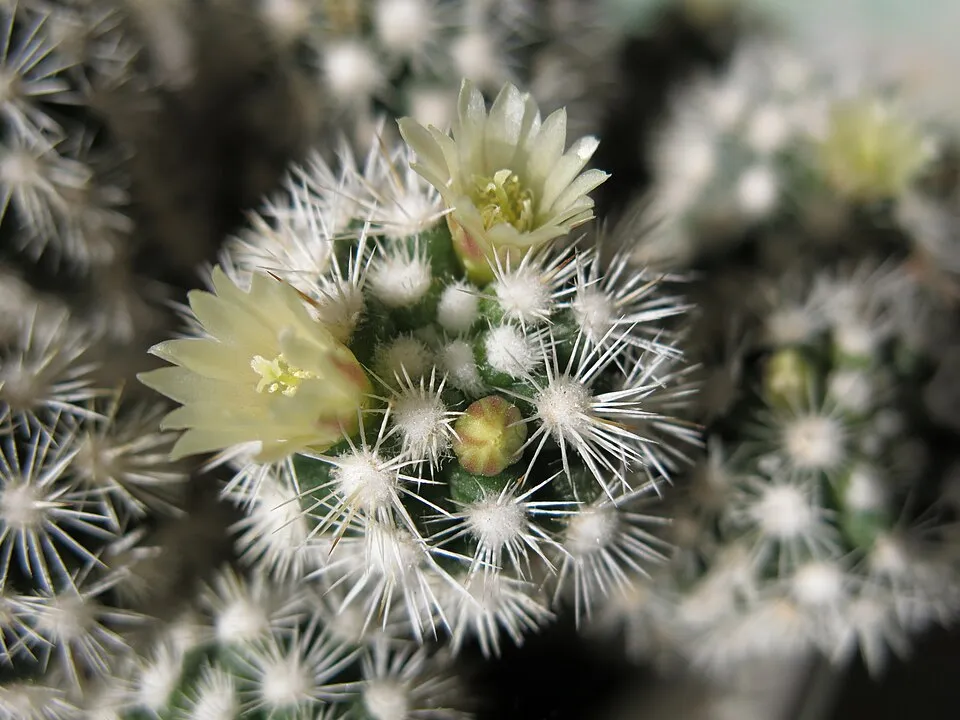
Mammillaria gracilis, widely recognized as the 'Ladyfinger Cactus' or 'Thimble Cactus,' is an enchanting and diminutive succulent species belonging to the extensive Cactaceae family, within the order Caryophyllales. This charming plant is characterized by its dense clustering habit, forming cylindrical stems that typically reach a height of 12-24 cm, with individual stems growing up to 12 cm long and approximately 5 cm in diameter. The stems are a vibrant deep green, intricately covered with small, conical tubercles, which are a defining feature of the Mammillaria genus.
Each tubercle is adorned with delicate, thin, white radial spines that interweave, creating a striking, almost fuzzy appearance that beautifully contrasts with the underlying green epidermis. Unlike many cacti, Mammillaria gracilis lacks prominent central spines, emphasizing its soft, thimble-like texture. In the cooler months, typically from early spring to winter, this species produces delightful funnel-shaped flowers, which emerge in a ring around the crown of each stem.
These blooms can vary in color from creamy white to pale pink or yellow, further enhancing its significant ornamental appeal. Native to the semi-arid regions of Mexico, particularly thriving in states such as San Luis Potosi and Coahuila, Mammillaria gracilis naturally occurs in rocky soils that provide exceptional drainage, adapting perfectly to its arid environment. Its unique morphology and ease of cultivation make it a favored addition to indoor plant collections and greenhouses globally.
Trusted Scientific References
1. Authoritative external sources for Mammillaria gracilis
1.1 Wikipedia — Mammillaria gracilis
1.2 Kew POWO (Plants of the World Online)
1.3 PubMed — peer-reviewed research
1.4 NCBI Taxonomy Browser
1.5 GBIF — Global Biodiversity
1.6Mammillaria Gracilis should be interpreted through verified botanical identity, practical care, and responsible safety language. This recovery note adds the missing context needed for a complete profile: match light to the plant's habit, use well-drained soil, water according to season, and avoid unsupported medicinal or edible claims. For publishing, the plant can be presented as a source-backed indoor plant with clear care guidance, common problem diagnosis, and conservative safety wording.
1.1.Mammillaria Gracilis — Key Features
- ✓ <strong>Cylindrical, clustering stems with a 'thimble</strong> — like' appearance.
- ✓ <strong>Distinctive interwoven white</strong> — Distinctive interwoven white radial spines, giving a soft, fuzzy texture.
- ✓ <strong>Produces small, funnel</strong> — shaped flowers in white, pink, or yellow hues.
- ✓ <strong>Native to the semi</strong> — arid regions of Mexico, adapted to rocky, well-draining soils.
- ✓ <strong>Highly drought</strong> — tolerant due to its succulent nature and CAM photosynthesis.
- ✓ <strong>Considered a low</strong> — maintenance and beginner-friendly cactus species.
- ✓ <strong>Propagates very easily</strong> — Propagates very easily from offsets, forming dense clumps over time.
- ✓ <strong>Traditional uses include</strong> — Traditional uses include topical application for inflammation and skin irritations.
- ✓ <strong>Possesses high water</strong> — Possesses high water content, contributing to its purported hydrating effects.
- ✓ <strong>Exhibits winter dormancy,</strong> — Exhibits winter dormancy, requiring reduced watering during cooler months.
1.2.Mammillaria Gracilis — Quick Summary
- ✓ Mammillaria gracilis is an ornamental and traditionally recognized medicinal cactus.
- ✓ Native to Mexico, known for its clustering cylindrical stems and white spines.
- ✓ Traditionally used for its cooling, anti-inflammatory, and digestive support properties.
- ✓ An easy-to-grow succulent, ideal for beginners and indoor cultivation.
- ✓ Propagates readily from small offsets, making it excellent for ground cover.
- ✓ Requires well-draining soil and ample sunlight to thrive.
2.Mammillaria Gracilis — Scientific Identity
3.Mammillaria Gracilis — Quick Facts
4.Mammillaria Gracilis — Appearance & Identification
5.Mammillaria Gracilis — Native Habitat
6.Mammillaria Gracilis — Water Requirements
- ✓ Sunlight — Requires full sun to partial shade, ideally receiving at least 6 hours of direct sunlight daily; indoors, a south-facing window is optimal.
- ✓ Watering — Employ the 'soak and dry' method, allowing the soil to dry out completely between waterings to prevent root rot, especially during its winter dormancy.
- ✓ Soil — Plant in a well-draining cactus or succulent potting mix, often incorporating perlite or pumice to ensure excellent aeration and drainage.
- ✓ Temperature — Not cold hardy; best grown in USDA zones 10a and above, or brought indoors if temperatures drop below 30°F (-1.1°C).
- ✓ Propagation — Easily propagated from offsets; simply remove the small pups using a sterile knife, allow them to callus for several days, then replant in dry soil.
- ✓ Container Growing — Ideal for containers, which allows for easy relocation indoors during colder months and precise control over soil conditions.
- ✓ Dormancy — Experiences winter dormancy, during which watering should be significantly reduced or ceased entirely until active growth resumes in spring.
- ✓ Fertilization — Fertilize sparingly with a diluted, balanced liquid succulent fertilizer during the active growing season (spring and summer), typically once a month.
Reviewed by the Flora Medical Global Botanical Review Panel
Multi-disciplinary editorial group · Botany · Ethnobotany · Herbal-medicine literature
Who reviewed this: This page was checked by the Flora Medical Global Botanical Review Panel — an in-house editorial group of botany graduates, ethnobotany researchers, and horticulture practitioners who collectively maintain our 7,000+ plant encyclopedia. Meet the team.
Our 4-step verification process
1. Taxonomic verification
Scientific names and synonyms cross-checked against Kew POWO, World Flora Online, and The Plant List.
2. Phytochemical & medicinal cross-reference
Active compounds, traditional uses, and reported activities are cross-referenced with PubMed, USDA Dr. Duke's database, and peer-reviewed ethnobotanical literature.
3. Conservation & distribution check
Distribution, ecology, and conservation status confirmed against GBIF occurrence records and the IUCN Red List.
4. Editorial & safety review
Every entry passes an editorial pass for clarity, originality, and safety notices (toxicity, contraindications, dosage caveats) before publication.
Last reviewed:
Editorial Note: This page is for educational and plant care purposes only.
Written by: Flora Medical Global Editorial Team
Reviewed by: Flora Medical Global Botanical Review Panel
Last Updated: June 16, 2026







Mammillaria Gracilis — Comments & Community Reviews
Rate this plant