


Care Disclaimer: Plant care recommendations are general guidelines based on common growing conditions. Individual results may vary based on your local environment, climate, and care routine. If your plant is toxic, keep it away from children and pets, and consult a veterinarian if accidental ingestion occurs.
1.Maranta Red Prayer Plant — Overview
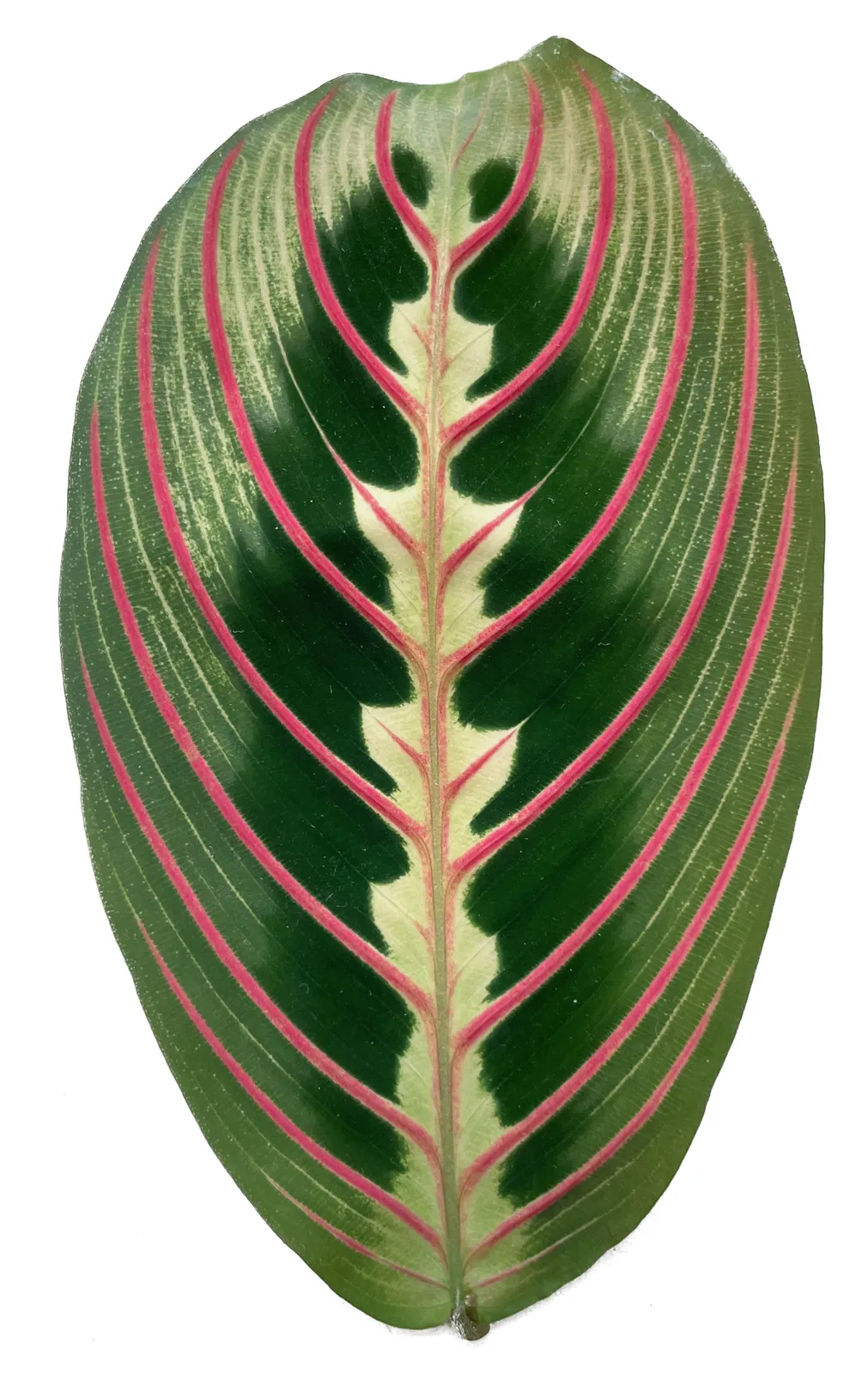
The Maranta Red Prayer Plant, scientifically designated as Maranta leuconeura erythroneura, is a captivating herbaceous perennial celebrated for its distinctive foliar display and nyctinastic movement. Typically reaching a modest height of 12 to 18 inches with an equivalent spread, this species forms a lush, compact mound. Its ovate to elliptical leaves, measuring approximately 4 to 7 inches in length, are a rich dark green, dramatically veined with prominent, vibrant red lines that create a striking contrast against the lamina.
The undersides of the leaves present a lighter green or purplish hue, enhancing its visual appeal. A hallmark of the Marantaceae family, Maranta leuconeura erythroneura exhibits a unique circadian rhythm where its leaves fold upwards at night, resembling hands clasped in prayer, and unfurl again with the dawn. This fascinating phenomenon contributes significantly to its popular common name.
Native to the warm, humid understory of the Brazilian tropical rainforests, this plant thrives in filtered light and consistently moist, well-draining soil, mimicking its natural habitat. While primarily cultivated for its ornamental foliage, small, tubular white flowers with a yellowish tint may occasionally emerge on slender stalks from the plant's base, though flowering is infrequent in indoor settings. Its creeping growth habit and smooth stems further contribute to its dense, verdant appearance, establishing it as a cherished houseplant among enthusiasts globally for its beauty and symbolic tranquility.
Trusted Scientific References
1. Authoritative external sources for Maranta leuconeura erythroneura
1.1 Wikipedia — Maranta leuconeura erythroneura
1.2 Kew POWO (Plants of the World Online)
1.3 PubMed — peer-reviewed research
1.4 NCBI Taxonomy Browser
1.5 GBIF — Global Biodiversity
1.6Maranta Red Prayer Plant should be interpreted through verified botanical identity, practical care, and responsible safety language. This recovery note adds the missing context needed for a complete profile: match light to the plant's habit, use well-drained soil, water according to season, and avoid unsupported medicinal or edible claims. For publishing, the plant can be presented as a source-backed indoor plant with clear care guidance, common problem diagnosis, and conservative safety wording.
1.1.Maranta Red Prayer Plant — Key Features
- ✓ <strong>Distinctive red</strong> — veined foliage on dark green leaves.
- ✓ <strong>Unique nyctinastic leaf</strong> — Unique nyctinastic leaf movement, folding upwards at night.
- ✓ <strong>Compact, creeping growth</strong> — Compact, creeping growth habit, ideal for indoor containers.
- ✓ <strong>Native to the</strong> — Native to the tropical rainforests of Brazil.
- ✓ <strong>Considered non</strong> — toxic to humans and household pets.
- ✓ <strong>Prefers high humidity</strong> — Prefers high humidity and bright, indirect light conditions.
- ✓ <strong>Symbolizes tranquility and</strong> — Symbolizes tranquility and prayer, popular for biophilic design.
- ✓ <strong>Enhances indoor air</strong> — Enhances indoor air quality through natural processes.
- ✓ <strong>Relatively low</strong> — maintenance with proper care.
- ✓ <strong>Belongs to the</strong> — Belongs to the Marantaceae family, known for ornamental foliage.
1.2.Maranta Red Prayer Plant — Quick Summary
- ✓ Maranta Red Prayer Plant is a popular, non-toxic ornamental houseplant.
- ✓ Known for its striking red-veined leaves that fold up at night.
- ✓ Thrives in high humidity and indirect light, mimicking its rainforest origin.
- ✓ Traditionally used for minor ailments and promoting tranquility.
- ✓ Offers potential benefits like air purification and stress reduction.
- ✓ Generally safe for households with pets and children.
2.Maranta Red Prayer Plant — Scientific Identity
3.Maranta Red Prayer Plant — Quick Facts
4.Maranta Red Prayer Plant — Appearance & Identification
5.Maranta Red Prayer Plant — Native Habitat
6.Maranta Red Prayer Plant — Water Requirements
- ✓ Light Requirements — Provide bright, indirect light; direct sunlight will scorch the leaves and fade their vibrant coloration, leading to stress and reduced vigor.
- ✓ Soil Preference — Thrives in a well-draining, loamy, and slightly acidic potting mix, ideally composed of peat moss, perlite, and a rich organic component to ensure aeration and nutrient retention.
- ✓ Watering Schedule — Keep the soil consistently moist but never waterlogged; water once the top inch of soil feels dry to the touch, reducing frequency significantly in winter months.
- ✓ Humidity Needs — Requires high humidity (60-80%); utilize a humidifier, place the pot on a pebble tray filled with water, or mist regularly to prevent leaf crisping and promote lush growth.
- ✓ Temperature Range — Ideal temperatures are consistently between 65-80°F (18-27°C); avoid sudden drops below 60°F (15°C) which can shock the plant and lead to leaf drop.
- ✓ Fertilization Regimen — Fertilize every 2-4 weeks during the active growing season (spring to fall) with a balanced liquid houseplant fertilizer diluted to half strength to prevent root burn.
- ✓ Repotting Frequency — Repot every 1-2 years in early spring, or when the plant becomes visibly root-bound, choosing a pot only slightly larger than the previous one to avoid overwatering issues.
- ✓ Pruning Techniques — Regularly prune leggy stems or remove any yellowing or damaged leaves to encourage bushier growth, maintain an attractive shape, and redirect energy to healthy new foliage.
Reviewed by the Flora Medical Global Botanical Review Panel
Multi-disciplinary editorial group · Botany · Ethnobotany · Herbal-medicine literature
Who reviewed this: This page was checked by the Flora Medical Global Botanical Review Panel — an in-house editorial group of botany graduates, ethnobotany researchers, and horticulture practitioners who collectively maintain our 7,000+ plant encyclopedia. Meet the team.
Our 4-step verification process
1. Taxonomic verification
Scientific names and synonyms cross-checked against Kew POWO, World Flora Online, and The Plant List.
2. Phytochemical & medicinal cross-reference
Active compounds, traditional uses, and reported activities are cross-referenced with PubMed, USDA Dr. Duke's database, and peer-reviewed ethnobotanical literature.
3. Conservation & distribution check
Distribution, ecology, and conservation status confirmed against GBIF occurrence records and the IUCN Red List.
4. Editorial & safety review
Every entry passes an editorial pass for clarity, originality, and safety notices (toxicity, contraindications, dosage caveats) before publication.
Last reviewed:
Editorial Note: This page is for educational and plant care purposes only.
Written by: Flora Medical Global Editorial Team
Reviewed by: Flora Medical Global Botanical Review Panel
Last Updated: June 16, 2026







Maranta Red Prayer Plant — Comments & Community Reviews
Rate this plant