
Care Disclaimer: Plant care recommendations are general guidelines based on common growing conditions. Individual results may vary based on your local environment, climate, and care routine. If your plant is toxic, keep it away from children and pets, and consult a veterinarian if accidental ingestion occurs.
1.Nephrolepis Cordifolia Duffii — Overview
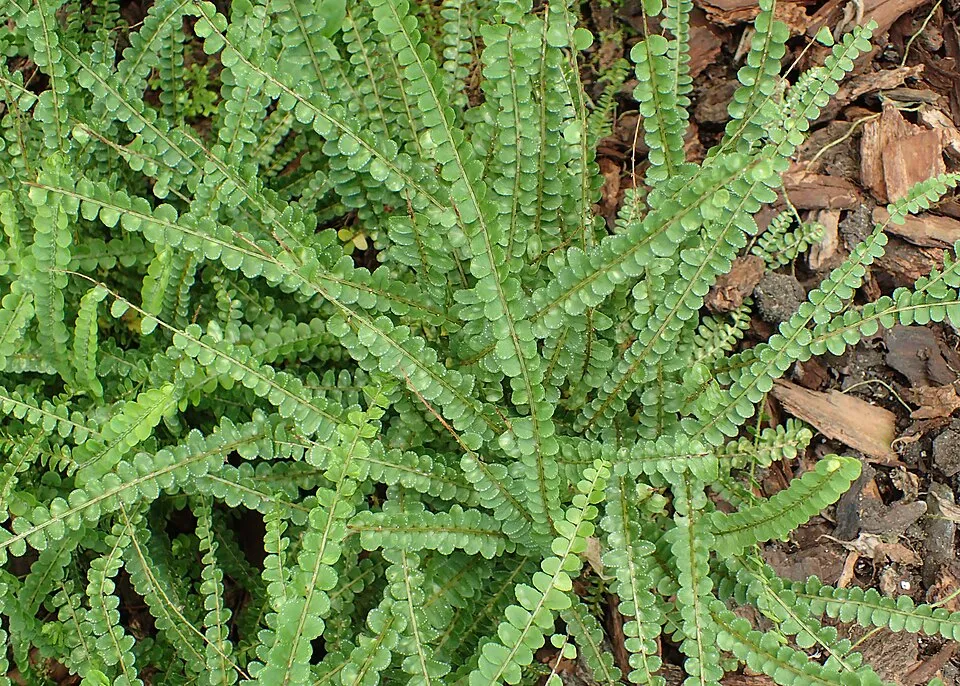
Nephrolepis cordifolia Duffii, commonly known as the Lemon Button Fern, is a captivating and compact cultivar of the widely distributed sword fern, belonging to the family Nephrolepidaceae. This charming plant is characterized by its diminutive stature, typically reaching a modest height of 30 to 45 centimeters (12 to 18 inches), making it an exceptional choice for indoor cultivation, terrariums, and small garden spaces. Its most striking feature is the profusion of small, distinctly orbicular, button-like leaflets, which are densely arranged along delicate, arching fronds.
Each frond can extend up to 20 to 30 centimeters (8 to 12 inches) in length, with individual leaflets measuring approximately 1 to 3 centimeters (0.4 to 1.2 inches) wide. The vibrant green foliage, often exhibiting a slightly lighter hue on nascent growth, creates a lush, full, and highly ornamental appearance. A key sensory attribute that distinguishes the Lemon Button Fern from other Nephrolepis species and cultivars is the subtle, refreshing lemon-like fragrance emitted when its fronds are gently brushed or crushed.
This fern cultivar originates from the broader species, Nephrolepis cordifolia, which is native to tropical and subtropical regions across the globe, including parts of Africa, Asia, Australia, and the Americas. It typically thrives as a terrestrial or epiphytic plant in humid forests, often establishing itself in tree crevices or among rocks, flourishing in environments with consistent moisture and dappled light. The 'Duffii' cultivar, while inheriting the general resilience of its parent species, has been selectively bred for its compact habit and distinctive foliage.
The plant's root system comprises a short, sturdy, light-green rhizome from which the fronds emerge. Like other ferns, Nephrolepis cordifolia Duffii reproduces via spores, which are produced in sori (clusters of sporangia) located on the undersides of mature fronds.
Trusted Scientific References
1. Authoritative external sources for Nephrolepis cordifolia Duffii
1.1 Wikipedia — Nephrolepis cordifolia Duffii
1.2 Kew POWO (Plants of the World Online)
1.3 PubMed — peer-reviewed research
1.4 NCBI Taxonomy Browser
1.5 GBIF — Global Biodiversity
1.1.Nephrolepis Cordifolia Duffii — Key Features
- ✓ <strong>Diminutive Size</strong> — Typically grows 30-45 cm tall, perfect for small spaces and terrariums.
- ✓ <strong>Orbicular Leaflets</strong> — Distinctive small, round, button-like fronds arranged densely.
- ✓ <strong>Lemon Scent</strong> — Emits a subtle, refreshing lemon fragrance when fronds are brushed.
- ✓ <strong>Tropical Origins</strong> — Native to humid tropical and subtropical regions globally.
- ✓ <strong>Rhizomatous Growth</strong> — Spreads via short, sturdy light-green rhizomes.
- ✓ <strong>Spore Reproduction</strong> — Reproduces through sori (spore clusters) on the underside of mature fronds.
- ✓ <strong>Low Maintenance</strong> — Considered a resilient and relatively easy-to-care-for houseplant.
- ✓ <strong>Indirect Light Preference</strong> — Thrives in medium, indirect light, avoiding direct sun.
- ✓ <strong>High Humidity Lover</strong> — Prefers consistently moist soil and elevated atmospheric humidity.
- ✓ <strong>Pet</strong> — Friendly — Non-toxic to common household pets like cats and dogs.
1.2.Nephrolepis Cordifolia Duffii — Quick Summary
- ✓ Compact, fragrant fern ideal for indoor ornamental display.
- ✓ Features small, button-like leaflets with a subtle lemon scent.
- ✓ Easy to care for, requiring medium indirect light and consistent moisture.
- ✓ Non-toxic to pets, enhancing its appeal as a household plant.
- ✓ Contributes to improved indoor air quality and aesthetic well-being.
- ✓ Propagates easily via rhizome division, making it simple to multiply.
2.Nephrolepis Cordifolia Duffii — Scientific Identity
3.Nephrolepis Cordifolia Duffii — Quick Facts
4.Nephrolepis Cordifolia Duffii — Appearance & Identification
5.Nephrolepis Cordifolia Duffii — Native Habitat
6.Nephrolepis Cordifolia Duffii — Water Requirements
- ✓ Light Requirements — Prefers medium, indirect light; avoid direct sunlight which can scorch delicate fronds.
- ✓ Soil Preference — Thrives in acidic, loamy, moist, and well-draining soil; a standard houseplant potting mix is generally suitable.
- ✓ Watering Schedule — Keep soil consistently moist but never waterlogged; water at least once a week, preventing complete dry-out.
- ✓ Temperature and Humidity — Prefers warm (18-24°C / 65-75°F) and humid conditions; consider a humidifier or pebble tray in dry environments.
- ✓ Fertilization — Feed sparingly with a balanced liquid fertilizer diluted to half strength every few months during the active growing season.
- ✓ Pruning — Minimal pruning is needed; remove any brown or dead fronds at the base to maintain tidiness and encourage new growth.
- ✓ Propagation — Easily propagated by division of its rhizomes during repotting, separating healthy clumps into new plants.
- ✓ Potting and Repotting — Repot in spring when roots emerge, using a slightly larger pot with good drainage, ensuring roots are fully buried.
Reviewed by the Flora Medical Global Botanical Review Panel
Multi-disciplinary editorial group · Botany · Ethnobotany · Herbal-medicine literature
Who reviewed this: This page was checked by the Flora Medical Global Botanical Review Panel — an in-house editorial group of botany graduates, ethnobotany researchers, and horticulture practitioners who collectively maintain our 7,000+ plant encyclopedia. Meet the team.
Our 4-step verification process
1. Taxonomic verification
Scientific names and synonyms cross-checked against Kew POWO, World Flora Online, and The Plant List.
2. Phytochemical & medicinal cross-reference
Active compounds, traditional uses, and reported activities are cross-referenced with PubMed, USDA Dr. Duke's database, and peer-reviewed ethnobotanical literature.
3. Conservation & distribution check
Distribution, ecology, and conservation status confirmed against GBIF occurrence records and the IUCN Red List.
4. Editorial & safety review
Every entry passes an editorial pass for clarity, originality, and safety notices (toxicity, contraindications, dosage caveats) before publication.
Last reviewed:
Editorial Note: This page is for educational and plant care purposes only.
Written by: Flora Medical Global Editorial Team
Reviewed by: Flora Medical Global Botanical Review Panel
Last Updated: June 16, 2026







Nephrolepis Cordifolia Duffii — Comments & Community Reviews
Rate this plant