
Care Disclaimer: Plant care recommendations are general guidelines based on common growing conditions. Individual results may vary based on your local environment, climate, and care routine. If your plant is toxic, keep it away from children and pets, and consult a veterinarian if accidental ingestion occurs.
1.Pearcea Hypocyrtiflora — Overview
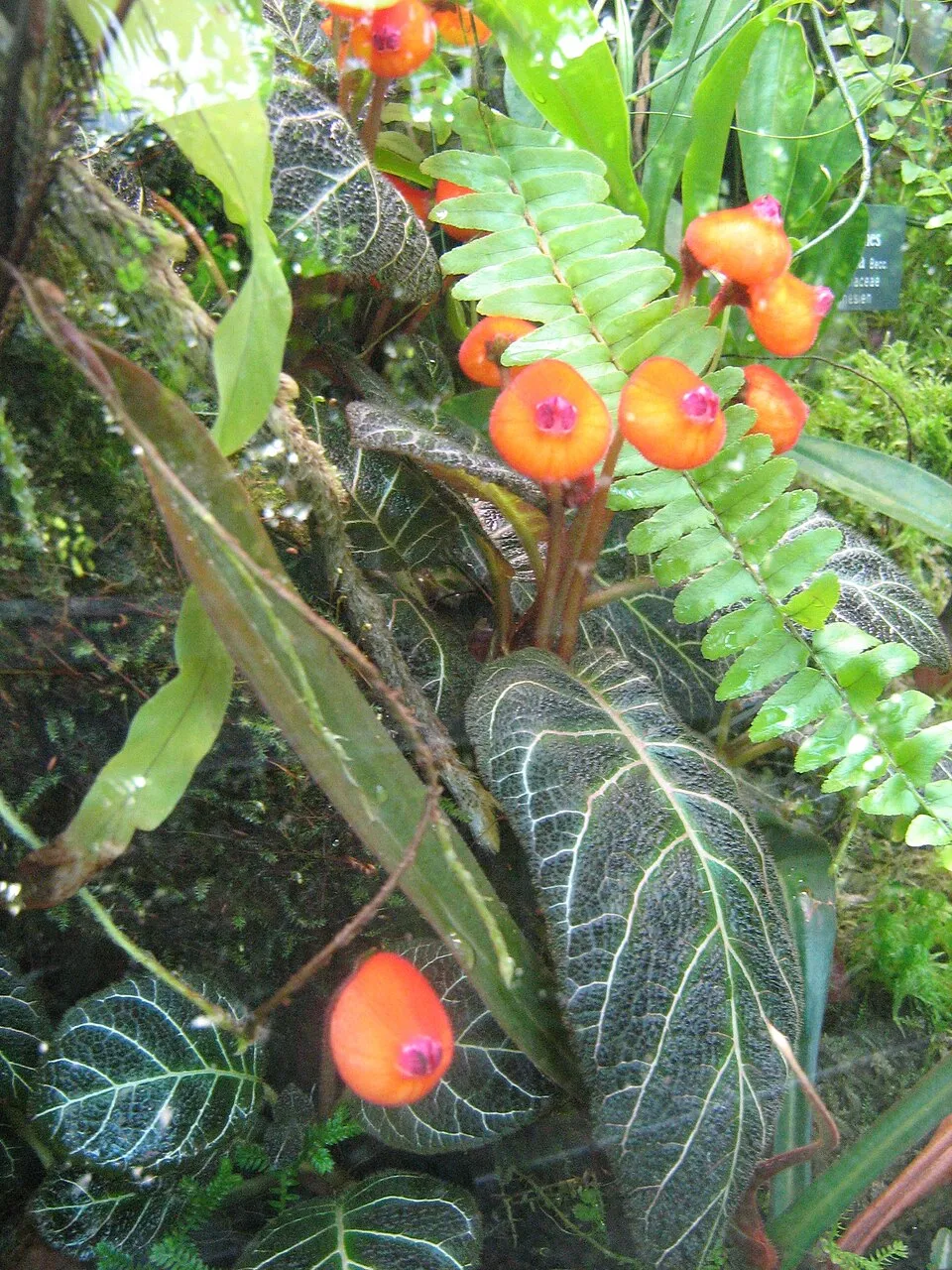
Pearcea hypocyrtiflora is an exquisite evergreen perennial herb or small shrub, a captivating member of the Gesneriaceae family, renowned for its striking ornamental attributes. This species is indigenous to the humid, shaded understories of the montane cloud forests of Ecuador, typically found at elevations ranging from 1500 to 2500 meters. Its growth habit is generally low-growing and spreading from the base, forming a somewhat bushy structure with fleshy stems, reaching a mature height of 1 to 2 meters. The foliage is a significant draw, featuring oppositely arranged leaves that are ovate to lanceolate in shape, with distinctly serrated margins and a slightly velvety texture.
These leaves are often variegated, displaying attractive patterns of pink and lime green veins, which contributes significantly to its aesthetic appeal. The true spectacle of Pearcea hypocyrtiflora lies in its unique inflorescences. The flowers are pendulous, emerging in clusters from the leaf axils, particularly along the upper stems. Each bloom is remarkably slipper-shaped or tubular, characterized by a swollen, pouch-like base and a recurved upper lip, earning it the common moniker 'slipper flower.' The corolla typically presents a brilliant, intense shade of orange-red or scarlet, often highlighted with contrasting yellow or magenta markings within the throat or on the lower lip.
These fuzzy, balloon-like blooms, perched atop short pedicels, give a clustered appearance and can occur sporadically throughout the year, peaking in warmer, more humid periods. Its highly specialized environmental niche, demanding consistent moisture, high ambient humidity, and cooler, stable temperatures, makes Pearcea hypocyrtiflora a challenging yet highly rewarding plant for dedicated enthusiasts of exotic flora.
Trusted Scientific References
1. Authoritative external sources for Pearcea hypocyrtiflora
1.1 Wikipedia — Pearcea hypocyrtiflora
1.2 Kew POWO (Plants of the World Online)
1.3 PubMed — peer-reviewed research
1.4 NCBI Taxonomy Browser
1.5 GBIF — Global Biodiversity
1.1.Pearcea Hypocyrtiflora — Key Features
- ✓ <strong>Family</strong> — Gesneriaceae (African Violet relative)
- ✓ <strong>Native Region</strong> — Cloud forests of Ecuador
- ✓ <strong>Growth Habit</strong> — Low-growing, spreading perennial herb/shrub
- ✓ <strong>Unique Flowers</strong> — Pendulous, slipper-shaped, vibrant orange-red/scarlet with yellow/magenta markings
- ✓ <strong>Foliage</strong> — Ovate-lanceolate, serrated, velvety, often variegated with pink/lime green veins
- ✓ <strong>Habitat Preference</strong> — Humid, shaded understories at 1500-2500m elevation
- ✓ <strong>Cultivation Challenge</strong> — Demands specific warm, high-humidity, and stable temperature conditions
- ✓ <strong>Ornamental Value</strong> — Highly sought after by exotic plant enthusiasts and collectors
- ✓ <strong>Rarity</strong> — Considered a hard-to-find species in the horticultural trade
- ✓ <strong>Ideal for</strong> — Terrariums, vivariums, and specialized indoor growing environments
1.2.Pearcea Hypocyrtiflora — Quick Summary
- ✓ Exotic Ecuadorian cloud forest native, belonging to the Gesneriaceae family.
- ✓ Features stunning, unique slipper-shaped orange-red flowers with variegated leaves.
- ✓ Highly prized ornamental plant, recognized for its rare and striking beauty.
- ✓ Requires specialized care, including high humidity, warm temperatures, and indirect light.
- ✓ Primarily cultivated for aesthetic appeal; no known traditional or modern medicinal uses.
2.Pearcea Hypocyrtiflora — Scientific Identity
3.Pearcea Hypocyrtiflora — Quick Facts
4.Pearcea Hypocyrtiflora — Appearance & Identification
5.Pearcea Hypocyrtiflora — Native Habitat
6.Pearcea Hypocyrtiflora — Water Requirements
- ✓ Humidity — Requires consistently high humidity, ideally above 70%, making it well-suited for terrariums, vivariums, or humid plant enclosures.
- ✓ Temperature — Prefers mild to warm conditions; daytime temperatures around 24°C (mid-70s F) and nighttime temperatures around 18°C (65°F) are ideal. Avoid temperatures below 13-16°C (55-60°F).
- ✓ Light — Thrives in lower light conditions; protect from strong, direct sunlight to prevent leaf scorch and maintain leaf variegation.
- ✓ Soil — Use a well-draining, airy potting mix, such as equal parts of quality potting soil and perlite, to prevent root rot.
- ✓ Watering — Keep the soil evenly moist but never soggy. Allow the top layer to slightly dry out before rewatering, and avoid letting water sit on the leaves.
- ✓ Air Circulation — Good air circulation is vital, especially in high-humidity setups, to prevent fungal diseases and 'melting' of leaves.
- ✓ Potting — Best grown in pots that allow for spread or in hanging planters, or as a groundcover in vivariums.
- ✓ Fertilization — Fertilize sparingly during the growing season with a diluted, balanced liquid fertilizer.
Reviewed by the Flora Medical Global Botanical Review Panel
Multi-disciplinary editorial group · Botany · Ethnobotany · Herbal-medicine literature
Who reviewed this: This page was checked by the Flora Medical Global Botanical Review Panel — an in-house editorial group of botany graduates, ethnobotany researchers, and horticulture practitioners who collectively maintain our 7,000+ plant encyclopedia. Meet the team.
Our 4-step verification process
1. Taxonomic verification
Scientific names and synonyms cross-checked against Kew POWO, World Flora Online, and The Plant List.
2. Phytochemical & medicinal cross-reference
Active compounds, traditional uses, and reported activities are cross-referenced with PubMed, USDA Dr. Duke's database, and peer-reviewed ethnobotanical literature.
3. Conservation & distribution check
Distribution, ecology, and conservation status confirmed against GBIF occurrence records and the IUCN Red List.
4. Editorial & safety review
Every entry passes an editorial pass for clarity, originality, and safety notices (toxicity, contraindications, dosage caveats) before publication.
Last reviewed:
Editorial Note: This page is for educational and plant care purposes only.
Written by: Flora Medical Global Editorial Team
Reviewed by: Flora Medical Global Botanical Review Panel
Last Updated: June 16, 2026







Pearcea Hypocyrtiflora — Comments & Community Reviews
Rate this plant