
Care Disclaimer: Plant care recommendations are general guidelines based on common growing conditions. Individual results may vary based on your local environment, climate, and care routine. If your plant is toxic, keep it away from children and pets, and consult a veterinarian if accidental ingestion occurs.
1.Philodendron Micans — Overview
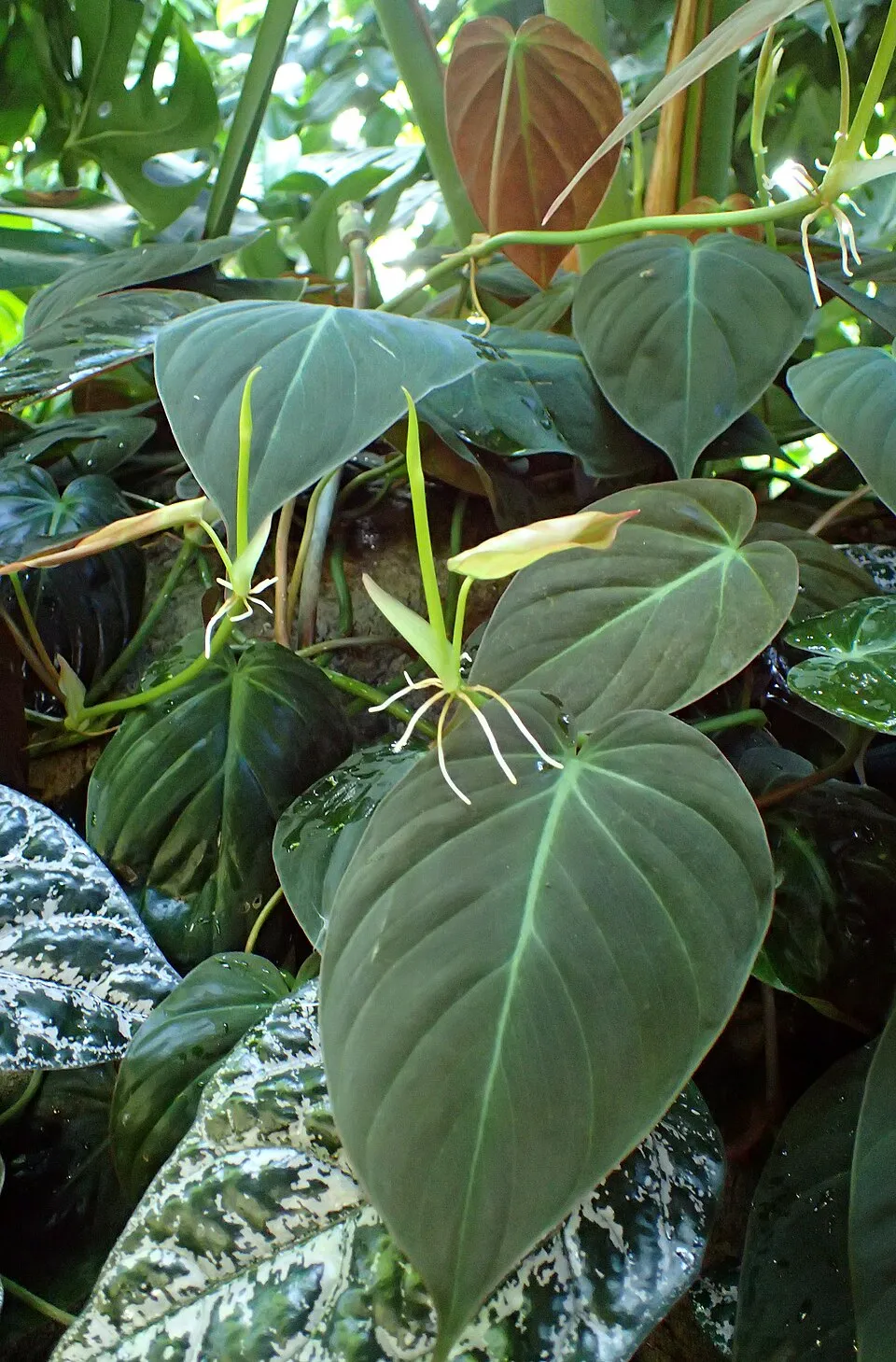
Philodendron hederaceum Micans, commonly known as the Velvet Leaf Philodendron, is a highly prized cultivar of the widespread Philodendron hederaceum species within the diverse Araceae family. This vining plant is celebrated for its striking ornamental value, primarily its unique foliage. The heart-shaped leaves, typically ranging from 5 to 13 cm (2 to 5 inches) in length, exhibit a distinctive velvety texture that imparts a soft, almost suede-like feel. This texture, coupled with a subtle iridescence, causes the leaves to shimmer with bronze-green to dark emerald hues, often displaying reddish or purplish undersides, particularly on new growth.
The leaves are borne on slender, trailing stems that can extend up to 90 cm (3 feet) or more when cultivated indoors under optimal conditions, making it an ideal choice for hanging baskets or climbing supports. Unlike many flowering plants, Philodendron Micans rarely produces the characteristic spathe and spadix inflorescence when grown in domestic settings, as its primary reproductive strategy in its native habitat relies on specific pollinators and conditions not typically replicated indoors. The stems are smooth and green, complementing the rich foliage. The plant's root system is fibrous, with the capacity to develop aerial adventitious roots that enable it to cling to surfaces and climb in its natural environment.
Philodendron hederaceum Micans is native to the tropical and subtropical rainforests of Central and South America, where it typically thrives as an understory plant, scrambling along the forest floor or climbing up tree trunks using its aerial roots. Its preference for medium to bright indirect light conditions indoors reflects its natural habitat, although it can tolerate lower light, making it a versatile choice for various interior spaces. The bark texture is not a prominent feature, as the plant primarily consists of smooth, herbaceous stems. Taxonomically, it is classified within the genus Philodendron, one of the largest genera in the Araceae family, known for its vast diversity and ornamental appeal.
Trusted Scientific References
1. Authoritative external sources for Philodendron hederaceum Micans
1.1 Wikipedia — Philodendron hederaceum Micans
1.2 Kew POWO (Plants of the World Online)
1.3 PubMed — peer-reviewed research
1.4 NCBI Taxonomy Browser
1.5 GBIF — Global Biodiversity
1.1.Philodendron Micans — Key Features
- ✓ <strong>Velvety Heart</strong> — Shaped Leaves — Distinctive soft texture and cordate leaf morphology with an iridescent sheen.
- ✓ <strong>Iridescent Foliage</strong> — Leaves shimmer with bronze-green to dark emerald hues, often with reddish undersides.
- ✓ <strong>Vining Growth Habit</strong> — Produces long, trailing stems suitable for hanging baskets or climbing.
- ✓ <strong>Low Maintenance Houseplant</strong> — Relatively easy to care for under appropriate indoor conditions, making it beginner-friendly.
- ✓ <strong>Air Purifying Qualities</strong> — Contributes to general indoor air quality as part of a diverse plant collection.
- ✓ <strong>Native to Tropical Americas</strong> — Originates from the understory of Central and South American rainforests.
- ✓ <strong>Epiphytic/Hemiepiphytic</strong> — Capable of growing on other plants or scrambling on the forest floor in its natural habitat.
- ✓ <strong>Toxic to Ingest</strong> — Contains calcium oxalate, posing a significant risk to pets and humans if consumed.
- ✓ <strong>Rarely Flowers Indoors</strong> — Primarily grown for its attractive foliage rather than its infrequent and inconspicuous inflorescence.
- ✓ <strong>Versatile Indoor Decor</strong> — Adapts well to various indoor light conditions, making it a popular choice for home and office aesthetics.
1.2.Philodendron Micans — Quick Summary
- ✓ Ornamental Vining Plant — Prized for its velvety, heart-shaped leaves and trailing growth.
- ✓ Toxic if Ingested — Contains calcium oxalate crystals, causing irritation and swelling.
- ✓ Easy Indoor Care — Thrives in bright indirect light, well-draining soil, and moderate humidity.
- ✓ Not for Medicinal Use — Primarily cultivated for aesthetic appeal and air purification benefits as a houseplant.
- ✓ Keep Away from Children/Pets — Essential safety measure due to its inherent toxicity.
2.Philodendron Micans — Scientific Identity
3.Philodendron Micans — Quick Facts
4.Philodendron Micans — Appearance & Identification
5.Philodendron Micans — Native Habitat
6.Philodendron Micans — Water Requirements
- Cultivating Philodendron hederaceum Micans successfully indoors requires attention to a few key environmental factors to mimic its native tropical habitat:
- ✓ Light — Thrives in medium to bright indirect light; direct sunlight can scorch leaves, while insufficient light leads to leggy growth and reduced vibrancy.
- ✓ Watering — Keep soil lightly and evenly moist, allowing the top 25-50% of the soil to dry out between waterings; avoid overwatering to prevent root rot.
- ✓ Soil — Prefers a chunky, well-draining aroid mix, often composed of orchid bark, pumice, perlite, and a quality indoor potting mix for optimal aeration and moisture retention.
- ✓ Temperature — Ideal range is 18-24°C (65-75°F) during the day, tolerating nighttime drops to 12°C (54°F); protect from cold drafts.
- ✓ Humidity — Benefits from moderate to high humidity (60-80%); consider using a pebble tray or humidifier, especially in dry indoor environments.
- ✓ Fertilization — Fertilize sparingly during the growing season (spring and summer) with a balanced liquid fertilizer diluted to half strength, typically every 2-4 weeks.
- ✓ Repotting — Repot when root-bound, typically every 1-2 years, increasing pot size by no more than two inches to prevent waterlogging and encourage root establishment.
- ✓ Pruning — Prune to maintain shape, encourage bushier growth, and manage leggy stems; cuttings can be used for propagation.
Reviewed by the Flora Medical Global Botanical Review Panel
Multi-disciplinary editorial group · Botany · Ethnobotany · Herbal-medicine literature
Who reviewed this: This page was checked by the Flora Medical Global Botanical Review Panel — an in-house editorial group of botany graduates, ethnobotany researchers, and horticulture practitioners who collectively maintain our 7,000+ plant encyclopedia. Meet the team.
Our 4-step verification process
1. Taxonomic verification
Scientific names and synonyms cross-checked against Kew POWO, World Flora Online, and The Plant List.
2. Phytochemical & medicinal cross-reference
Active compounds, traditional uses, and reported activities are cross-referenced with PubMed, USDA Dr. Duke's database, and peer-reviewed ethnobotanical literature.
3. Conservation & distribution check
Distribution, ecology, and conservation status confirmed against GBIF occurrence records and the IUCN Red List.
4. Editorial & safety review
Every entry passes an editorial pass for clarity, originality, and safety notices (toxicity, contraindications, dosage caveats) before publication.
Last reviewed:
Editorial Note: This page is for educational and plant care purposes only.
Written by: Flora Medical Global Editorial Team
Reviewed by: Flora Medical Global Botanical Review Panel
Last Updated: June 16, 2026







Philodendron Micans — Comments & Community Reviews
Rate this plant