
Care Disclaimer: Plant care recommendations are general guidelines based on common growing conditions. Individual results may vary based on your local environment, climate, and care routine. If your plant is toxic, keep it away from children and pets, and consult a veterinarian if accidental ingestion occurs.
1.Red Aglaonema — Overview
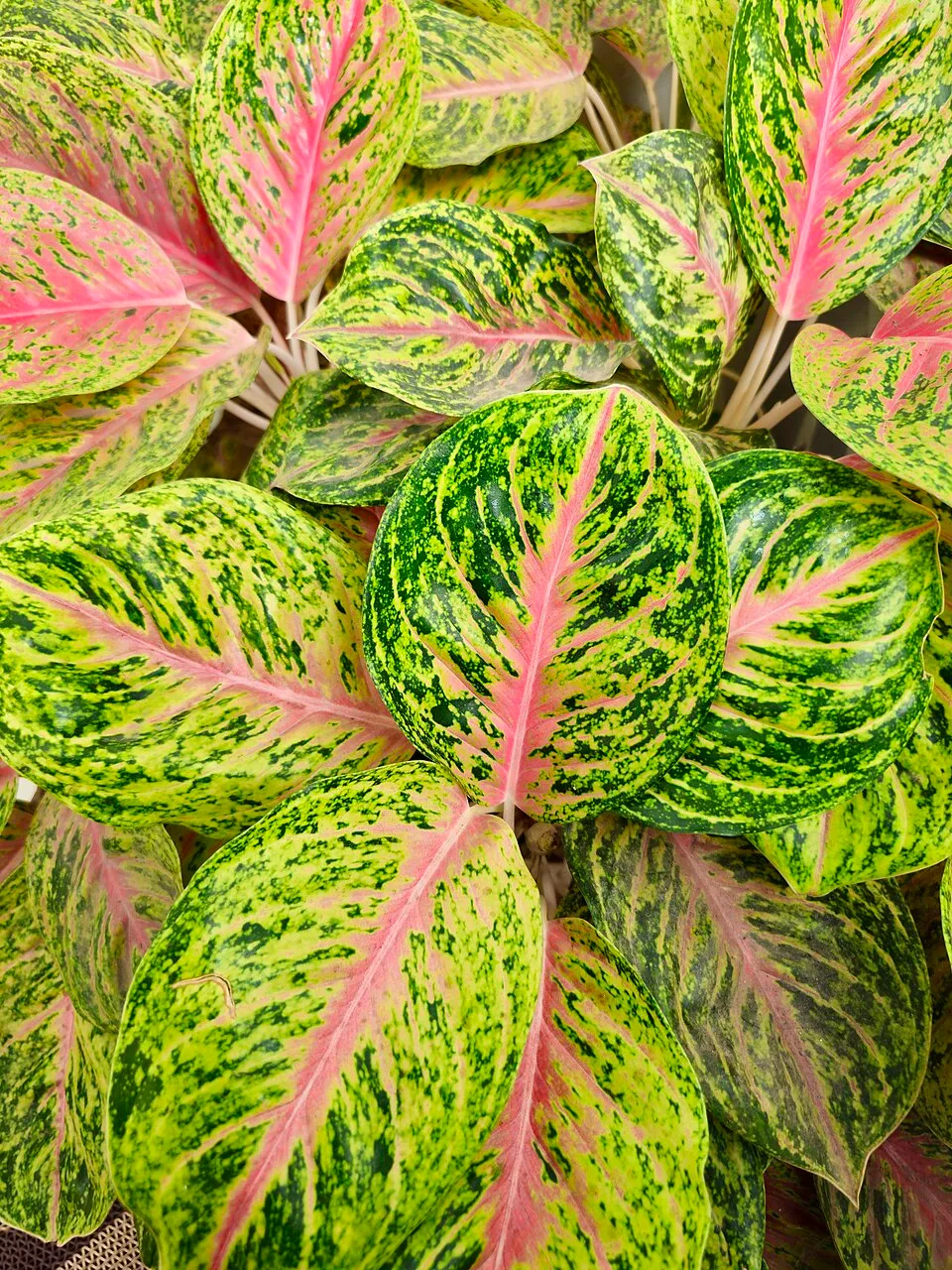
Aglaonema Siam Aurora, popularly known as Red Aglaonema or Red Chinese Evergreen, is a striking perennial herbaceous plant within the Araceae family, commonly referred to as the aroid family. This specific cultivar is highly prized for its captivating variegated foliage, which displays an intricate pattern of deep green, vibrant pink, and rich red hues, making it a favored choice for indoor ornamental cultivation. Typically, the plant achieves a mature height ranging from 30 to 90 centimeters, forming a dense, bushy habit.
Its broad, lanceolate to oblong-oval leaves are a defining characteristic, often measuring between 15 and 25 centimeters in length and 5 to 10 centimeters in width. The leaf surface possesses a notable gloss, which enhances its visual appeal and accentuates its vivid coloration. The stems are generally short and frequently concealed by the abundant leaf growth, though older specimens may develop a more visible, upright stem structure with pinkish undertones.
Originating from the humid, tropical understories of Southeast Asia, particularly regions within Thailand and Malaysia, Aglaonema Siam Aurora thrives in environments characterized by filtered light and consistently high humidity. In its natural setting, it forms part of the lower canopy strata of tropical forests, adapting effectively to indirect light conditions. This inherent adaptability to lower light makes it exceptionally well-suited for indoor environments, where intense, direct sunlight can often be detrimental, causing leaf scorch.
While primarily cultivated for its foliage, the plant does produce small, inconspicuous flowers characteristic of the Araceae family, known as a spathe and spadix. These flowers are usually green or cream-colored and are often hidden amidst the foliage, contributing less to its ornamental value than its leaves. Taxonomically, Aglaonema Siam Aurora is a cultivar of the genus Aglaonema, which encompasses approximately 20 species of evergreen perennial herbaceous plants, distinguished by their unique inflorescence structure.
Trusted Scientific References
1. Authoritative external sources for Aglaonema Siam Aurora
1.1 Wikipedia — Aglaonema Siam Aurora
1.2 Kew POWO (Plants of the World Online)
1.3 PubMed — peer-reviewed research
1.4 NCBI Taxonomy Browser
1.5 GBIF — Global Biodiversity
1.1.Red Aglaonema — Key Features
- ✓ <strong>Vibrant Red and Green Variegation</strong> — Distinctive, eye-catching foliage with a mosaic of red, pink, and deep green hues.
- ✓ <strong>Glossy, Lanceolate Leaves</strong> — Broad, shiny leaves that enhance visual appeal and light reflection.
- ✓ <strong>Compact, Bushy Growth Habit</strong> — Forms a dense, upright clump, suitable for various indoor spaces.
- ✓ <strong>Low</strong> — Light Adaptability — Thrives in indirect or low-light conditions, making it ideal for indoor environments.
- ✓ <strong>Tropical Origin</strong> — Native to humid Southeast Asian understories, preferring warmth and moisture.
- ✓ <strong>Easy Care Houseplant</strong> — Generally low-maintenance, making it popular for both novice and experienced plant enthusiasts.
- ✓ <strong>Air Purifying Qualities (General Houseplant)</strong> — Contributes to minor indoor air toxin reduction and oxygen release.
- ✓ <strong>Calcium Oxalate Presence (Toxicity)</strong> — Contains irritating calcium oxalate crystals, rendering it toxic if ingested.
- ✓ <strong>Moderate Growth Rate</strong> — Grows at a steady pace, allowing for manageable maintenance and growth.
- ✓ <strong>Ornamental Value</strong> — Primarily valued for its aesthetic contribution to interior decoration and biophilic design.
1.2.Red Aglaonema — Quick Summary
- ✓ Common Names — Red Aglaonema, Red Chinese Evergreen, Siam Aurora.
- ✓ Scientific Name — Aglaonema Siam Aurora.
- ✓ Family — Araceae (Aroid Family).
- ✓ Key Feature — Striking red and green variegated foliage, highly ornamental and adaptable to indoor conditions.
- ✓ Primary Use — Exclusively cultivated as an ornamental houseplant for aesthetic enhancement and general indoor air quality.
- ✓ Important Caution — All parts are toxic if ingested due to the presence of irritating calcium oxalate crystals.
2.Red Aglaonema — Scientific Identity
3.Red Aglaonema — Quick Facts
4.Red Aglaonema — Appearance & Identification
5.Red Aglaonema — Native Habitat
6.Red Aglaonema — Water Requirements
- ✓ Light — Provide bright, indirect sunlight; direct sun can scorch leaves, while insufficient light may diminish foliage color.
- ✓ Watering — Water thoroughly when the top 2-3 inches of soil feel dry, allowing excess water to drain completely to prevent root rot.
- ✓ Temperature — Maintain average room temperatures between 18-29°C (65-85°F); protect from cold drafts and sudden temperature fluctuations.
- ✓ Humidity — Prefers high humidity; misting, using a pebble tray, or placing near a humidifier can be beneficial, especially in dry environments.
- ✓ Soil — Use a well-draining, peat-based potting mix amended with perlite or pumice to enhance aeration and prevent compaction.
- ✓ Fertilizing — Feed with a balanced liquid houseplant fertilizer diluted to half strength every 2-4 weeks during the active growing season (spring and summer).
- ✓ Repotting — Repot every 2-4 years, or when root-bound, into a pot only slightly larger than the previous one, ideally during spring or early summer.
- ✓ Pruning — Trim leggy stems or yellowing leaves to maintain a bushy shape and encourage new growth, using clean, sharp shears.
Reviewed by the Flora Medical Global Botanical Review Panel
Multi-disciplinary editorial group · Botany · Ethnobotany · Herbal-medicine literature
Who reviewed this: This page was checked by the Flora Medical Global Botanical Review Panel — an in-house editorial group of botany graduates, ethnobotany researchers, and horticulture practitioners who collectively maintain our 7,000+ plant encyclopedia. Meet the team.
Our 4-step verification process
1. Taxonomic verification
Scientific names and synonyms cross-checked against Kew POWO, World Flora Online, and The Plant List.
2. Phytochemical & medicinal cross-reference
Active compounds, traditional uses, and reported activities are cross-referenced with PubMed, USDA Dr. Duke's database, and peer-reviewed ethnobotanical literature.
3. Conservation & distribution check
Distribution, ecology, and conservation status confirmed against GBIF occurrence records and the IUCN Red List.
4. Editorial & safety review
Every entry passes an editorial pass for clarity, originality, and safety notices (toxicity, contraindications, dosage caveats) before publication.
Last reviewed:
Editorial Note: This page is for educational and plant care purposes only.
Written by: Flora Medical Global Editorial Team
Reviewed by: Flora Medical Global Botanical Review Panel
Last Updated: June 16, 2026







Red Aglaonema — Comments & Community Reviews
Rate this plant