
Care Disclaimer: Plant care recommendations are general guidelines based on common growing conditions. Individual results may vary based on your local environment, climate, and care routine. If your plant is toxic, keep it away from children and pets, and consult a veterinarian if accidental ingestion occurs.
1.Senecio Barbertonicus — Overview
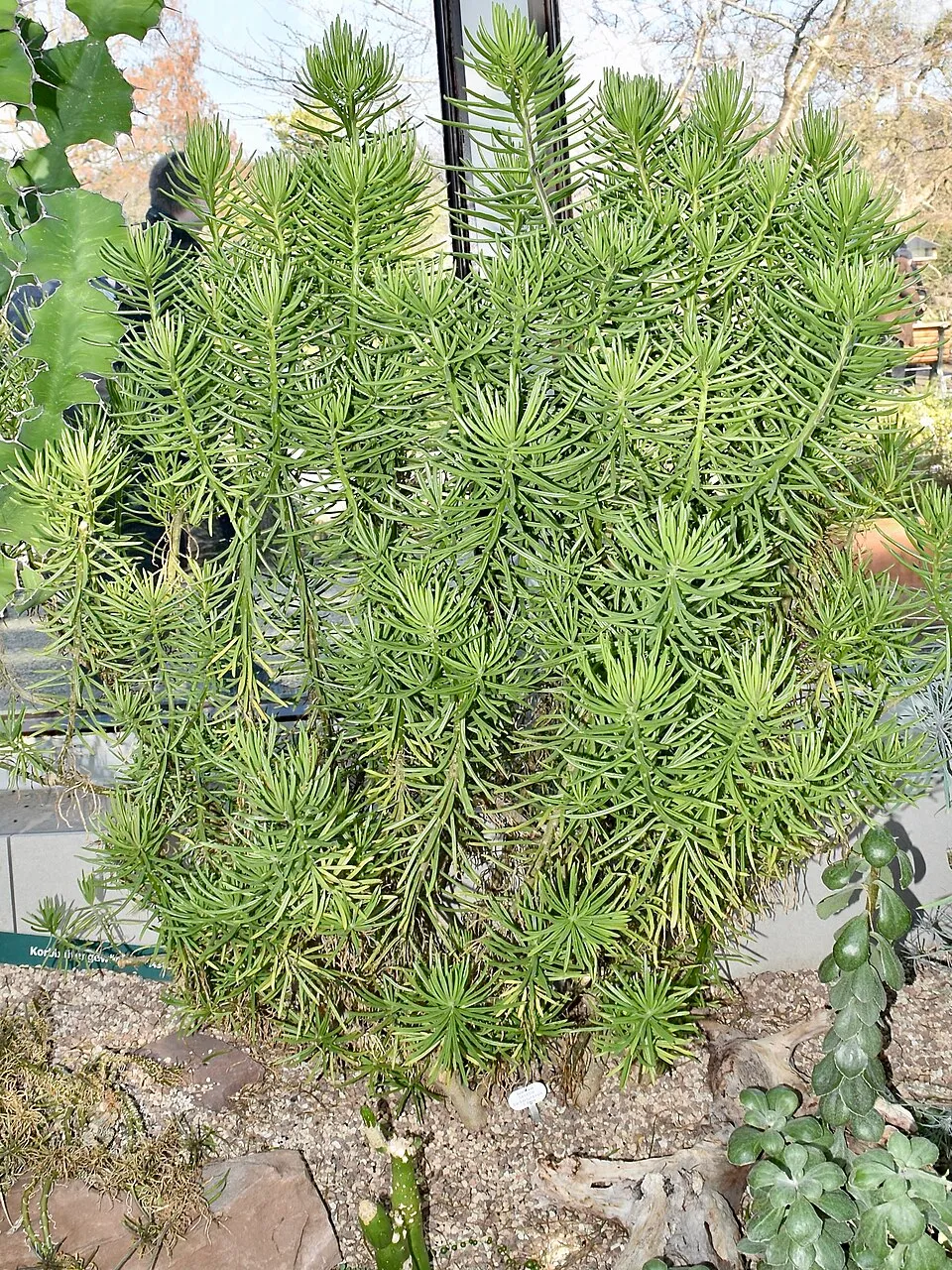
Senecio barbertonicus, commonly known as Barberton ragwort or succulent bush senecio, is a distinctive perennial herbaceous plant belonging to the expansive Asteraceae family. Native to the midlands of South Africa, particularly the Barberton region, this species thrives in environments characterized by rich biodiversity and specific climatic conditions. Morphologically, it is recognized by its fleshy, succulent, lobed leaves, which can extend up to 20 cm in length.
These leaves are typically arranged in dense rosettes at the base, often exhibiting a silvery-green hue due to a fine covering of protective hairs. During the summer months, the plant produces erect flowering stems, reaching up to 1 meter in height, which culminate in clusters of small, vibrant yellow, daisy-like flowers. These inflorescences serve as a vital nectar source for a variety of local pollinators, especially insects.
In its natural habitat, Senecio barbertonicus demonstrates remarkable adaptability, flourishing in well-drained, often rocky or gravelly soils. This resilience to arid conditions makes it a highly drought-resistant species, capable of enduring prolonged periods of low water availability, a common feature of its indigenous range. Its succulent nature allows for efficient water storage, contributing to its hardiness and ease of cultivation in suitable climates.
Trusted Scientific References
1. Authoritative external sources for Senecio barbertonicus
1.1 Wikipedia — Senecio barbertonicus
1.2 Kew POWO (Plants of the World Online)
1.3 PubMed — peer-reviewed research
1.4 NCBI Taxonomy Browser
1.5 GBIF — Global Biodiversity
1.6Senecio Barbertonicus should be interpreted through verified botanical identity, practical care, and responsible safety language. This recovery note adds the missing context needed for a complete profile: match light to the plant's habit, use well-drained soil, water according to season, and avoid unsupported medicinal or edible claims. For publishing, the plant can be presented as a source-backed indoor plant with clear care guidance, common problem diagnosis, and conservative safety wording.
1.1.Senecio Barbertonicus — Key Features
- ✓ <strong>Succulent Foliage</strong> — Fleshy, lobed leaves designed for water storage, characteristic of succulents.
- ✓ <strong>Drought</strong> — Tolerant — Highly adapted to arid conditions, requiring minimal watering.
- ✓ <strong>Bright Yellow Flowers</strong> — Produces clusters of small, daisy-like yellow flowers, attracting pollinators.
- ✓ <strong>South African Native</strong> — Indigenous to the Barberton region of South Africa, thriving in rocky soils.
- ✓ <strong>Air Purifying</strong> — Contributes to cleaner indoor air by absorbing CO2 and releasing O2.
- ✓ <strong>Low Maintenance</strong> — Easy to care for, making it suitable for beginner gardeners and busy lifestyles.
- ✓ <strong>Ornamental Value</strong> — Aesthetic appeal makes it a popular choice for home and garden decor.
- ✓ <strong>Pyrrolizidine Alkaloid Content</strong> — Contains toxic PAs, necessitating careful handling and strictly external use.
- ✓ <strong>Resilient Species</strong> — Known for its hardiness and ability to adapt to various environmental conditions.
- ✓ <strong>Asteraceae Family Member</strong> — Belongs to the large daisy family, sharing common botanical characteristics.
1.2.Senecio Barbertonicus — Quick Summary
- ✓ Senecio barbertonicus is a South African succulent in the Asteraceae family.
- ✓ Traditionally used for inflammation, pain, and skin ailments, though research is limited.
- ✓ Contains hepatotoxic pyrrolizidine alkaloids (PAs), making internal use highly dangerous.
- ✓ Valued for its air-purifying qualities and low-maintenance ornamental appeal as a houseplant.
- ✓ Requires well-drained soil and full sun; highly drought-tolerant.
- ✓ Strict safety precautions against ingestion are paramount due to toxicity.
2.Senecio Barbertonicus — Scientific Identity
3.Senecio Barbertonicus — Quick Facts
4.Senecio Barbertonicus — Appearance & Identification
5.Senecio Barbertonicus — Native Habitat
6.Senecio Barbertonicus — Water Requirements
- ✓ Soil Preference — Requires well-drained soil, ideally a sandy or rocky substrate to prevent root rot, mimicking its native habitat.
- ✓ Light Requirements — Thrives in full sun to partial shade, with brighter light promoting more compact growth and vibrant color.
- ✓ Watering Regime — Drought-tolerant; allow the soil to dry out completely between waterings, especially during dormant periods.
- ✓ Fertilization — Minimal fertilization is needed; a balanced, diluted liquid fertilizer once or twice during the growing season is sufficient.
- ✓ Propagation — Easily propagated from stem cuttings, which should be allowed to callus for a few days before planting in well-drained soil.
- ✓ Temperature Tolerance — Prefers warm temperatures but can tolerate mild frosts for short periods, not suitable for prolonged freezing conditions.
- ✓ Pest and Disease Management — Generally resilient to pests, but susceptible to root rot if overwatered; watch for mealybugs or aphids in stressed plants.
- ✓ Container Growing — Excellent for pots and containers, allowing for easy relocation and control over soil conditions, especially in cooler climates.
Reviewed by the Flora Medical Global Botanical Review Panel
Multi-disciplinary editorial group · Botany · Ethnobotany · Herbal-medicine literature
Who reviewed this: This page was checked by the Flora Medical Global Botanical Review Panel — an in-house editorial group of botany graduates, ethnobotany researchers, and horticulture practitioners who collectively maintain our 7,000+ plant encyclopedia. Meet the team.
Our 4-step verification process
1. Taxonomic verification
Scientific names and synonyms cross-checked against Kew POWO, World Flora Online, and The Plant List.
2. Phytochemical & medicinal cross-reference
Active compounds, traditional uses, and reported activities are cross-referenced with PubMed, USDA Dr. Duke's database, and peer-reviewed ethnobotanical literature.
3. Conservation & distribution check
Distribution, ecology, and conservation status confirmed against GBIF occurrence records and the IUCN Red List.
4. Editorial & safety review
Every entry passes an editorial pass for clarity, originality, and safety notices (toxicity, contraindications, dosage caveats) before publication.
Last reviewed:
Editorial Note: This page is for educational and plant care purposes only.
Written by: Flora Medical Global Editorial Team
Reviewed by: Flora Medical Global Botanical Review Panel
Last Updated: June 16, 2026







Senecio Barbertonicus — Comments & Community Reviews
Rate this plant