
Care Disclaimer: Plant care recommendations are general guidelines based on common growing conditions. Individual results may vary based on your local environment, climate, and care routine. If your plant is toxic, keep it away from children and pets, and consult a veterinarian if accidental ingestion occurs.
1.Senecio Rowleyanus Variegata — Overview
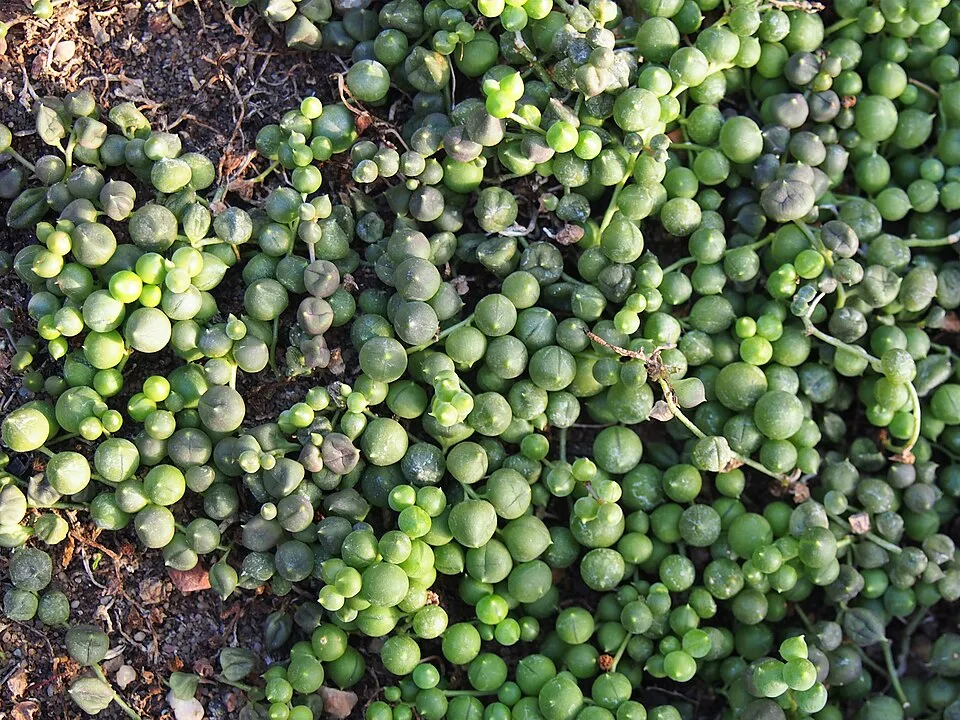
Senecio rowleyanus Variegata, commonly known as variegated string of pearls, is a captivating perennial succulent belonging to the expansive Asteraceae family. This ornamental gem originates from the arid regions of South Africa, where it has adapted to thrive in challenging environments.
It is celebrated for its distinctive cascading growth habit, featuring slender stems adorned with small, spherical leaves that strikingly resemble a string of pearls. Each 'pearl' exhibits a vibrant green hue, beautifully variegated with creamy-white or pale yellow streaks, adding to its unique aesthetic appeal.
The stems of Senecio rowleyanus Variegata can gracefully trail several feet, making it an exquisite choice for hanging planters, elevated shelves, or as a charming spillover element in mixed succulent arrangements. While the plant typically reaches a height of about 30 cm (approximately 12 inches) in a container, its trailing stems can extend significantly longer, creating a lush, flowing display.
It flourishes in bright, indirect sunlight, mimicking its natural habitat, and requires a well-draining soil mix to prevent root rot, a common issue for succulents.
During the summer months, under optimal conditions, Senecio rowleyanus Variegata may produce small, delicate white flowers. These blooms, often described as having a subtle cinnamon-like fragrance, are generally not the primary highlight of cultivation, as the foliage remains the star attraction.
Its inherent drought resistance and low-maintenance requirements contribute to its popularity among indoor gardeners, offering both an earthy aroma and a delightful visual presence that enhances any sunny indoor space. This plant exemplifies botanical resilience combined with striking ornamental value.
Trusted Scientific References
1. Authoritative external sources for Senecio rowleyanus Variegata
1.1 Wikipedia — Senecio rowleyanus Variegata
1.2 Kew POWO (Plants of the World Online)
1.3 PubMed — peer-reviewed research
1.4 NCBI Taxonomy Browser
1.5 GBIF — Global Biodiversity
1.1.Senecio Rowleyanus Variegata — Key Features
- ✓ <strong>Distinctive Variegated Foliage</strong> — Features spherical, bead-like leaves with striking green and creamy-white variegation, creating a unique visual appeal.
- ✓ <strong>Elegant Trailing Habit</strong> — Develops long, delicate stems that gracefully cascade, making it perfect for hanging planters and elevated displays.
- ✓ <strong>Drought</strong> — Tolerant Succulent — Possesses water-storing capabilities in its leaves, enabling it to withstand periods of dryness and requiring minimal watering.
- ✓ <strong>Low</strong> — Maintenance Care — An ideal choice for beginners or busy individuals due to its resilience and straightforward care requirements.
- ✓ <strong>Indoor Air Quality Contributor</strong> — Like many houseplants, it can contribute to a healthier indoor atmosphere by potentially filtering airborne toxins.
- ✓ <strong>Subtle Summer Blooms</strong> — Produces small, white, cinnamon-scented flowers during the summer months, adding an unexpected charm.
- ✓ <strong>Adaptable to Indoor Conditions</strong> — Thrives in typical household environments, provided it receives adequate bright, indirect light and proper drainage.
- ✓ <strong>Mildly Toxic Nature</strong> — Contains compounds that are mildly toxic if ingested, necessitating careful placement away from children and pets.
- ✓ <strong>Versatile Decorative Element</strong> — Enhances various interior design styles, from modern minimalist to bohemian, with its unique texture and form.
- ✓ <strong>Easy Propagation</strong> — Readily propagates from stem cuttings, allowing for easy expansion of your plant collection and sharing with others.
1.2.Senecio Rowleyanus Variegata — Quick Summary
- ✓ Senecio rowleyanus Variegata, or variegated string of pearls, is a perennial succulent native to South Africa, admired for its trailing strands of bead-like, variegated leaves.
- ✓ It thrives in bright, indirect light and well-drained soil, requiring infrequent watering due to its drought-tolerant nature.
- ✓ Primarily an ornamental houseplant, it is non-edible and contains compounds that are mildly toxic if ingested by humans or pets.
- ✓ Essential care includes moderate temperatures, good air circulation, and protection from direct sun to maintain its vibrant health and unique appearance.
- ✓ Its attractive aesthetic and relatively low-maintenance requirements make it a popular choice for hanging baskets and decorative indoor displays.
- ✓ Caution is paramount due to its mild toxicity, necessitating placement away from curious children and household animals.
2.Senecio Rowleyanus Variegata — Scientific Identity
3.Senecio Rowleyanus Variegata — Quick Facts
4.Senecio Rowleyanus Variegata — Appearance & Identification
5.Senecio Rowleyanus Variegata — Native Habitat
6.Senecio Rowleyanus Variegata — Water Requirements
- Cultivating Senecio rowleyanus Variegata successfully requires attention to a few key environmental factors to mimic its native arid habitat.
- ✓ Light Requirements — Provide bright, indirect sunlight; an east or west-facing window is ideal. Direct, intense afternoon sun can scorch its delicate leaves.
- ✓ Soil Composition — Plant in a specialized well-draining succulent or cactus potting mix to ensure excellent aeration and prevent waterlogging, which can lead to root rot.
- ✓ Watering Schedule — Water thoroughly only when the top 1-2 inches of soil are completely dry. Reduce watering significantly in the cooler winter months.
- ✓ Temperature & Humidity — Maintain indoor temperatures between 15-27°C (60-80°F) and moderate humidity levels, ideally around 40-60%. Avoid extreme cold or heat.
- ✓ Fertilization Regimen — Apply a diluted balanced liquid succulent fertilizer (e.g., 10-10-10) monthly during its active growing seasons of spring and summer.
- ✓ Repotting Practices — Repot every 1-2 years in spring into a slightly larger pot with fresh, well-draining soil, ensuring the new pot has adequate drainage holes.
- ✓ Air Circulation — Ensure good air circulation around the plant to help prevent fungal issues, especially in environments with higher humidity.
Reviewed by the Flora Medical Global Botanical Review Panel
Multi-disciplinary editorial group · Botany · Ethnobotany · Herbal-medicine literature
Who reviewed this: This page was checked by the Flora Medical Global Botanical Review Panel — an in-house editorial group of botany graduates, ethnobotany researchers, and horticulture practitioners who collectively maintain our 7,000+ plant encyclopedia. Meet the team.
Our 4-step verification process
1. Taxonomic verification
Scientific names and synonyms cross-checked against Kew POWO, World Flora Online, and The Plant List.
2. Phytochemical & medicinal cross-reference
Active compounds, traditional uses, and reported activities are cross-referenced with PubMed, USDA Dr. Duke's database, and peer-reviewed ethnobotanical literature.
3. Conservation & distribution check
Distribution, ecology, and conservation status confirmed against GBIF occurrence records and the IUCN Red List.
4. Editorial & safety review
Every entry passes an editorial pass for clarity, originality, and safety notices (toxicity, contraindications, dosage caveats) before publication.
Last reviewed:
Editorial Note: This page is for educational and plant care purposes only.
Written by: Flora Medical Global Editorial Team
Reviewed by: Flora Medical Global Botanical Review Panel
Last Updated: June 16, 2026







Senecio Rowleyanus Variegata — Comments & Community Reviews
Rate this plant