

Care Disclaimer: Plant care recommendations are general guidelines based on common growing conditions. Individual results may vary based on your local environment, climate, and care routine. If your plant is toxic, keep it away from children and pets, and consult a veterinarian if accidental ingestion occurs.
1.Silver Sword Philodendron — Overview
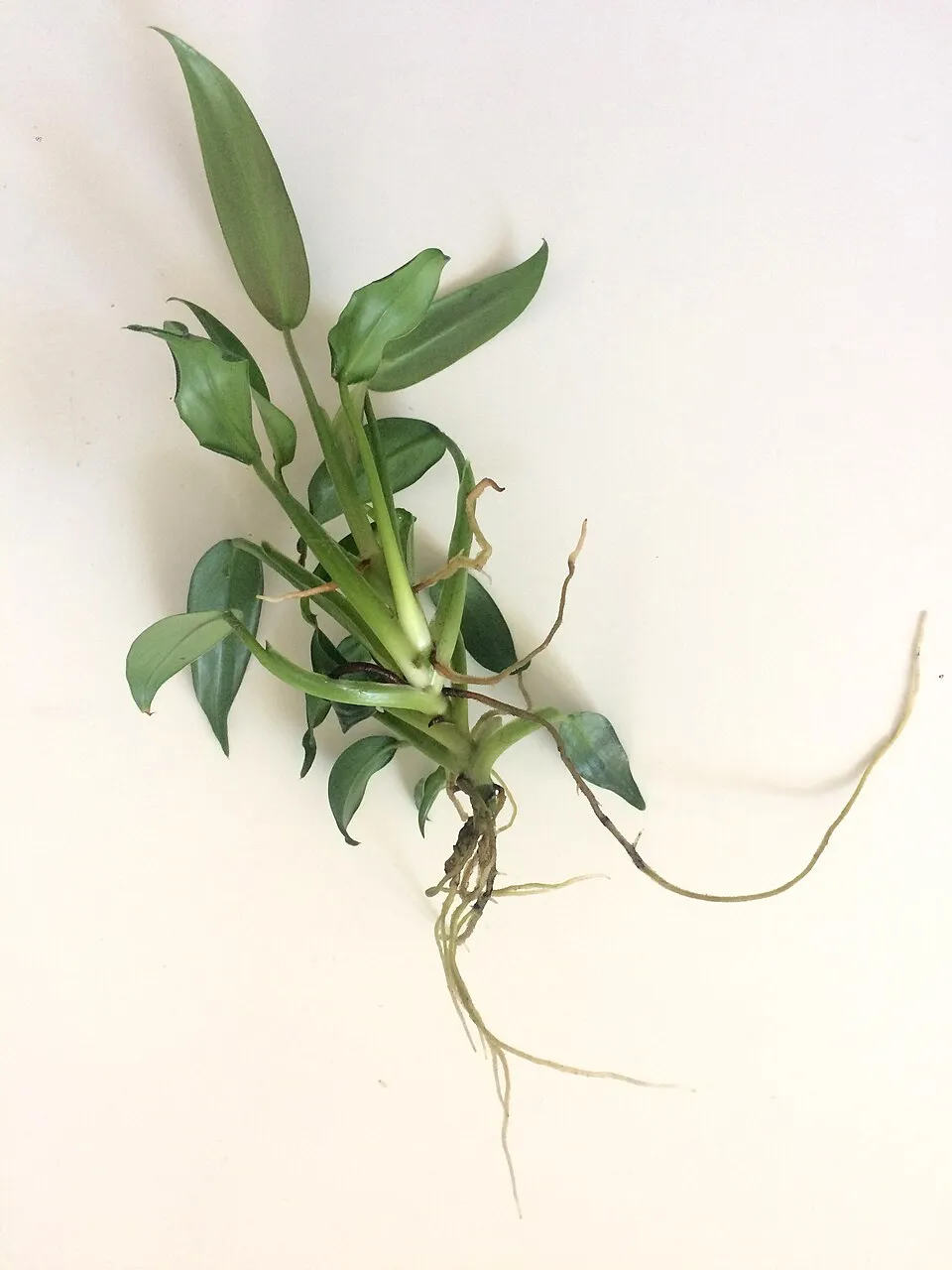
The Silver Sword Philodendron, scientifically designated as Philodendron hastatum, is a distinguished evergreen perennial belonging to the Araceae family. Native to the humid tropical rainforests of Brazil, particularly within the biodiverse Atlantic Forest, this plant is primarily celebrated for its striking ornamental characteristics. Its most prominent feature is the uniquely shaped, glossy foliage, which exhibits a distinct silvery-gray hue that matures into a more subdued metallic green while retaining a captivating sheen. The leaves are notably hastate, resembling an elongated spearhead or sword, which aptly gives rise to its common name.
Individual mature leaves can achieve impressive lengths of 30 to 60 centimeters (12 to 24 inches) and widths of 10 to 15 centimeters (4 to 6 inches), supported by robust petioles that facilitate an upright and structured leaf orientation. In its natural habitat, Philodendron hastatum often begins as a terrestrial plant before adopting a hemiepiphytic growth habit, climbing trees and utilizing aerial roots for both anchorage and nutrient absorption from the moisture-rich environment. The stems are typically smooth, greenish, and gradually develop a woody texture, supporting its characteristic vining or climbing growth. While inflorescences are rare in indoor cultivation, when they occur, they feature a typical Araceae structure: a simple, catkin-like spadix enveloped by a boat-shaped spathe, though these are generally inconspicuous compared to the plant's stunning foliage.
Both its terrestrial and aerial root systems are fibrous, optimizing nutrient uptake and providing stability. Taxonomically, its placement within the genus Philodendron aligns it with a diverse group of tropical plants, many of which are known for containing calcium oxalate crystals, contributing to their inherent toxicity.
Trusted Scientific References
1. Authoritative external sources for Philodendron hastatum
1.1 Wikipedia — Philodendron hastatum
1.2 Kew POWO (Plants of the World Online)
1.3 PubMed — peer-reviewed research
1.4 NCBI Taxonomy Browser
1.5 GBIF — Global Biodiversity
1.1.Silver Sword Philodendron — Key Features
- ✓ <strong>Distinctive hastate (spearhead</strong> — shaped) leaves.
- ✓ <strong>Unique silvery</strong> — gray to metallic green foliage.
- ✓ <strong>Glossy leaf texture</strong> — Glossy leaf texture with a captivating sheen.
- ✓ <strong>Vining, climbing, or</strong> — Vining, climbing, or hemiepiphytic growth habit.
- ✓ <strong>Member of the</strong> — Member of the tropical Araceae plant family.
- ✓ <strong>Contains toxic calcium</strong> — Contains toxic calcium oxalate crystals in all parts.
- ✓ <strong>Highly valued for</strong> — Highly valued for its ornamental appeal in interior decor.
- ✓ <strong>Purported to contribute</strong> — Purported to contribute to improved indoor air quality.
- ✓ <strong>Relatively low</strong> — maintenance requirements for indoor cultivation.
- ✓ <strong>Native to the</strong> — Native to the humid rainforests of Brazil.
1.2.Silver Sword Philodendron — Quick Summary
- ✓ Philodendron hastatum, commonly known as Silver Sword Philodendron, is an ornamental member of the Araceae family.
- ✓ It features striking, hastate, silvery-green leaves with a distinct metallic sheen.
- ✓ Primarily valued for its aesthetic appeal in interior design and purported indoor air purification qualities.
- ✓ All parts of the plant contain toxic calcium oxalate crystals, making it poisonous if ingested.
- ✓ A relatively low-maintenance hemiepiphyte, it thrives in warm, humid indoor environments.
2.Silver Sword Philodendron — Scientific Identity
3.Silver Sword Philodendron — Quick Facts
4.Silver Sword Philodendron — Appearance & Identification
5.Silver Sword Philodendron — Native Habitat
6.Silver Sword Philodendron — Water Requirements
- ✓ Light — Provide bright, indirect light; direct sunlight can scorch the distinctive silvery leaves.
- ✓ Watering — Water thoroughly when the top 2-3 inches of soil feel dry; ensure proper drainage to prevent root rot.
- ✓ Soil — Use a well-draining, aerated potting mix rich in organic matter, such as an aroid blend containing bark, perlite, and peat.
- ✓ Humidity — Prefers high humidity, consistent with its tropical origins; misting or placing near a humidifier is beneficial.
- ✓ Temperature — Maintain warm indoor temperatures, ideally between 18-29°C (65-85°F), and protect from cold drafts.
- ✓ Fertilization — Feed with a balanced liquid fertilizer diluted to half strength every 2-4 weeks during the active growing season (spring and summer).
- ✓ Pruning — Trim to manage size, encourage bushier growth, and remove any yellowing or damaged foliage to maintain plant health.
- ✓ Support — As a vining hemiepiphyte, it benefits from a moss pole or trellis to support its climbing habit and aerial roots.
Reviewed by the Flora Medical Global Botanical Review Panel
Multi-disciplinary editorial group · Botany · Ethnobotany · Herbal-medicine literature
Who reviewed this: This page was checked by the Flora Medical Global Botanical Review Panel — an in-house editorial group of botany graduates, ethnobotany researchers, and horticulture practitioners who collectively maintain our 7,000+ plant encyclopedia. Meet the team.
Our 4-step verification process
1. Taxonomic verification
Scientific names and synonyms cross-checked against Kew POWO, World Flora Online, and The Plant List.
2. Phytochemical & medicinal cross-reference
Active compounds, traditional uses, and reported activities are cross-referenced with PubMed, USDA Dr. Duke's database, and peer-reviewed ethnobotanical literature.
3. Conservation & distribution check
Distribution, ecology, and conservation status confirmed against GBIF occurrence records and the IUCN Red List.
4. Editorial & safety review
Every entry passes an editorial pass for clarity, originality, and safety notices (toxicity, contraindications, dosage caveats) before publication.
Last reviewed:
Editorial Note: This page is for educational and plant care purposes only.
Written by: Flora Medical Global Editorial Team
Reviewed by: Flora Medical Global Botanical Review Panel
Last Updated: June 16, 2026







Silver Sword Philodendron — Comments & Community Reviews
Rate this plant