
Care Disclaimer: Plant care recommendations are general guidelines based on common growing conditions. Individual results may vary based on your local environment, climate, and care routine. If your plant is toxic, keep it away from children and pets, and consult a veterinarian if accidental ingestion occurs.
1.Starfish Snake Plant — Overview
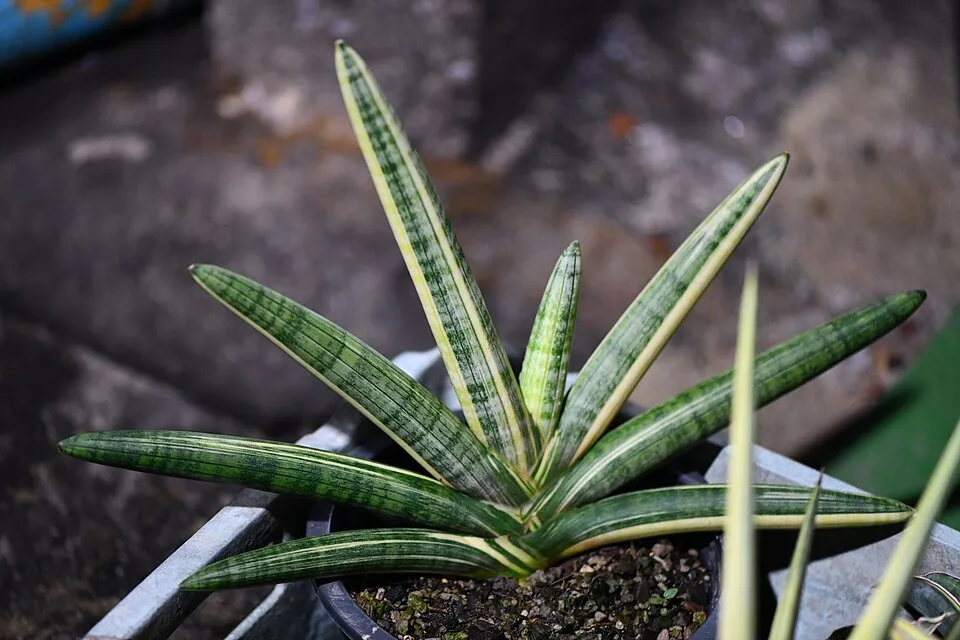
The Starfish Snake Plant, scientifically known as Dracaena angolensis boncel, is a distinctive evergreen perennial belonging to the Asparagaceae family, which also encompasses a wide variety of landscape and houseplants. This particular cultivar is noted for its striking ornamental appeal, characterized by uniquely shaped leaves that radiate outwards, reminiscent of a starfish's arms. Typically growing to a height of 12 to 24 inches (30 to 61 cm), its leaves are long, leathery, and robust, often reaching up to 20 inches (50 cm) in length and 4-6 inches (10-15 cm) in width.
They display a vibrant green coloration beautifully accented by prominent golden-yellow margins, enhancing its visual charm. The leaves emerge from a central rosette, contributing to its bushy and compact appearance, while its woody stems exhibit a varied texture, contrasting with the smooth leaf surfaces.
Native to Angola, Dracaena angolensis boncel thrives naturally in warm, humid, semi-tropical climates, preferring light, well-drained soils. While it rarely produces flowers when cultivated indoors, under optimal conditions, it can yield small, delicately fragrant white flowers that bloom on elongated stalks, adding another layer of aesthetic interest.
Beyond its captivating beauty, this plant is remarkably resilient and well-adapted to indoor environments, making it an excellent choice for homes and offices due to its minimal care requirements and ability to withstand varied conditions. It is also recognized for its air-purifying qualities, contributing to healthier indoor spaces.
Trusted Scientific References
1. Authoritative external sources for Dracaena angolensis boncel
1.1 Wikipedia — Dracaena angolensis boncel
1.2 Kew POWO (Plants of the World Online)
1.3 PubMed — peer-reviewed research
1.4 NCBI Taxonomy Browser
1.5 GBIF — Global Biodiversity
1.6Starfish Snake Plant should be interpreted through verified botanical identity, practical care, and responsible safety language. This recovery note adds the missing context needed for a complete profile: match light to the plant's habit, use well-drained soil, water according to season, and avoid unsupported medicinal or edible claims. For publishing, the plant can be presented as a source-backed indoor plant with clear care guidance, common problem diagnosis, and conservative safety wording.
1.1.Starfish Snake Plant — Key Features
- ✓ <strong>Striking Starfish</strong> — Like Foliage — Unique, cylindrical leaves that spread outwards from a central rosette.
- ✓ <strong>Air Purification Capabilities</strong> — Effectively removes indoor air pollutants and neutralizes odors.
- ✓ <strong>Rich Phytochemical Profile</strong> — Contains beneficial saponins, flavonoids, alkaloids, and other bioactive compounds.
- ✓ <strong>Traditional Medicinal Uses</strong> — Employed in African and Asian ethnomedicine for various health conditions.
- ✓ <strong>Low Maintenance Houseplant</strong> — Highly resilient and adaptable to a range of indoor growing conditions.
- ✓ <strong>Distinctive Golden</strong> — Yellow Margins — Vibrant green leaves are adorned with eye-catching golden-yellow edges.
- ✓ <strong>Drought Tolerant</strong> — Possesses succulent characteristics, allowing it to withstand periods of dryness.
- ✓ <strong>Evergreen Perennial</strong> — Maintains its foliage year-round, offering continuous ornamental value.
- ✓ <strong>Native to Angola</strong> — Originates from warm, humid semi-tropical regions, thriving in similar climates.
- ✓ <strong>Resilient and Adaptable</strong> — Ideal for homes and offices due to its hardiness and minimal care requirements.
1.2.Starfish Snake Plant — Quick Summary
- ✓ Dracaena angolensis boncel is an ornamental and medicinal plant.
- ✓ Known for its striking starfish-like foliage and air-purifying capabilities.
- ✓ Rich in bioactive compounds like saponins, flavonoids, and alkaloids.
- ✓ Traditionally used for a range of ailments including coughs, diarrhea, and wounds.
- ✓ Exhibits potential antioxidant, anticancer, and antibacterial properties.
- ✓ A resilient and low-maintenance houseplant suitable for various indoor environments.
2.Starfish Snake Plant — Scientific Identity
3.Starfish Snake Plant — Quick Facts
4.Starfish Snake Plant — Appearance & Identification
5.Starfish Snake Plant — Native Habitat
6.Starfish Snake Plant — Water Requirements
- ✓ Light — Provide bright, indirect light; direct sunlight can scorch the leaves and fade their vibrant coloration.
- ✓ Soil — Use a well-draining potting mix, ideally a succulent or cactus blend, to prevent root rot.
- ✓ Watering — Water sparingly, allowing the soil to dry out completely between waterings, typically every 2-4 weeks.
- ✓ Temperature — Thrives in warm temperatures, ideally between 65-80°F (18-27°C); avoid temperatures below 50°F (10°C).
- ✓ Humidity — Tolerates average indoor humidity but appreciates moderate to high humidity, especially in dry environments.
- ✓ Fertilization — Fertilize minimally during the growing season (spring and summer) with a diluted, balanced liquid fertilizer; generally not required in winter.
- ✓ Propagation — Easily propagated by division of rhizomes or through leaf cuttings, which can be rooted in water or well-draining soil.
- ✓ Pest Management — Generally resistant to pests, but occasional checks for common houseplant pests like spider mites or mealybugs are recommended.
Reviewed by the Flora Medical Global Botanical Review Panel
Multi-disciplinary editorial group · Botany · Ethnobotany · Herbal-medicine literature
Who reviewed this: This page was checked by the Flora Medical Global Botanical Review Panel — an in-house editorial group of botany graduates, ethnobotany researchers, and horticulture practitioners who collectively maintain our 7,000+ plant encyclopedia. Meet the team.
Our 4-step verification process
1. Taxonomic verification
Scientific names and synonyms cross-checked against Kew POWO, World Flora Online, and The Plant List.
2. Phytochemical & medicinal cross-reference
Active compounds, traditional uses, and reported activities are cross-referenced with PubMed, USDA Dr. Duke's database, and peer-reviewed ethnobotanical literature.
3. Conservation & distribution check
Distribution, ecology, and conservation status confirmed against GBIF occurrence records and the IUCN Red List.
4. Editorial & safety review
Every entry passes an editorial pass for clarity, originality, and safety notices (toxicity, contraindications, dosage caveats) before publication.
Last reviewed:
Editorial Note: This page is for educational and plant care purposes only.
Written by: Flora Medical Global Editorial Team
Reviewed by: Flora Medical Global Botanical Review Panel
Last Updated: June 16, 2026







Starfish Snake Plant — Comments & Community Reviews
Rate this plant