
Care Disclaimer: Plant care recommendations are general guidelines based on common growing conditions. Individual results may vary based on your local environment, climate, and care routine. If your plant is toxic, keep it away from children and pets, and consult a veterinarian if accidental ingestion occurs.
1.Variegated ZZ Plant — Overview
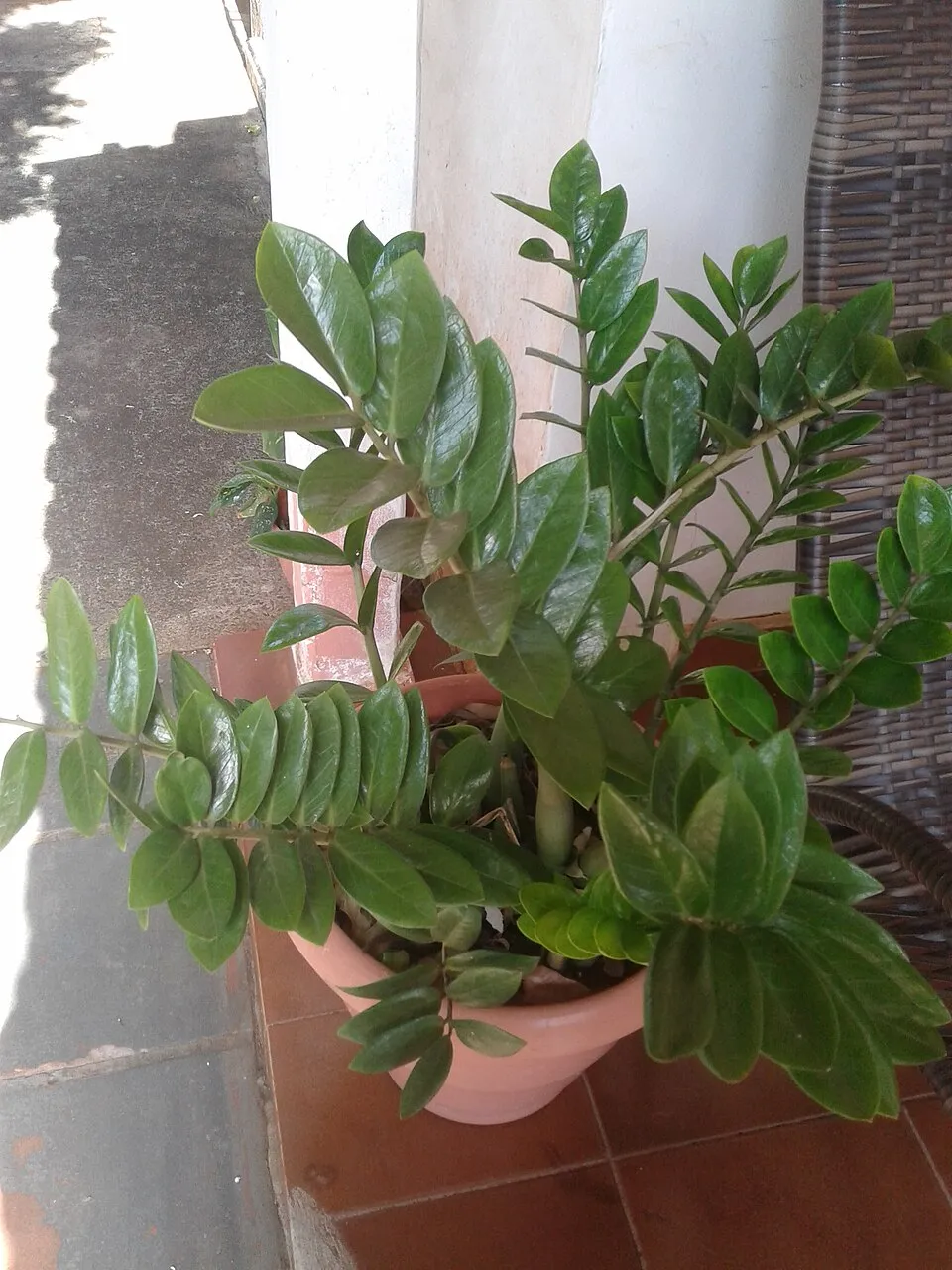
The Variegated ZZ Plant, scientifically known as Zamioculcas zamiifolia var., is a captivating member of the Araceae family, native to the tropical regions of East Africa. This perennial herbaceous plant is renowned for its striking morphology and exceptional resilience. It typically reaches heights of up to 0.9 meters (3 feet) when cultivated indoors, featuring a smooth, cylindrical stem that emerges from a thick, succulent rhizome, which serves as a vital water storage organ.
Its leaves are pinnate, composed of multiple pairs of glossy, waxy-textured oval leaflets, each measuring between 5-12 centimeters (2-5 inches) long. What distinguishes the variegated variety are the stunning pale yellow to creamy white patterns that streak across the deep green foliage, creating a highly decorative and sought-after aesthetic. While Zamioculcas zamiifolia does produce an inflorescence—a spadix enveloped by a spathe—flowering is a rare occurrence in indoor environments, typically observed only under optimal growing conditions.
Taxonomically, it belongs to the order Alismatales, specifically within the subfamily Aroideae of the Araceae family. Its natural habitat in low-light and drought-prone areas has equipped it with an impressive capacity to store moisture, contributing to its reputation as an incredibly low-maintenance and robust houseplant.
Trusted Scientific References
1. Authoritative external sources for Zamioculcas zamiifolia var.
1.1 Wikipedia — Zamioculcas zamiifolia var.
1.2 Kew POWO (Plants of the World Online)
1.3 PubMed — peer-reviewed research
1.4 NCBI Taxonomy Browser
1.5 GBIF — Global Biodiversity
1.6Variegated ZZ Plant should be interpreted through verified botanical identity, practical care, and responsible safety language. This recovery note adds the missing context needed for a complete profile: match light to the plant's habit, use well-drained soil, water according to season, and avoid unsupported medicinal or edible claims. For publishing, the plant can be presented as a source-backed indoor plant with clear care guidance, common problem diagnosis, and conservative safety wording.
1.1.Variegated ZZ Plant — Key Features
- ✓ <strong>Striking Variegated Foliage</strong> — Displays unique pale yellow to creamy white patterns on deep green leaves.
- ✓ <strong>Exceptional Drought Tolerance</strong> — Stores water efficiently in succulent rhizomes and petioles, requiring minimal watering.
- ✓ <strong>High Adaptability to Low Light</strong> — Thrives in various light conditions, including dimly lit indoor spaces.
- ✓ <strong>Natural Air Purifier</strong> — Filters harmful toxins such as benzene, xylene, and toluene from indoor air.
- ✓ <strong>Low Maintenance Houseplant</strong> — Ideal for beginners or busy individuals due to its resilience and minimal care requirements.
- ✓ <strong>Glossy, Waxy Leaf Texture</strong> — Distinctive appearance and helps reduce water loss.
- ✓ <strong>Robust and Resilient</strong> — Known for its hardiness and ability to withstand neglect.
- ✓ <strong>Aesthetic Enhancement</strong> — Adds a touch of elegance and sculptural quality to any interior.
- ✓ <strong>Toxic if Ingested</strong> — Contains calcium oxalate crystals, posing a risk to humans and pets.
- ✓ <strong>Positive Energy Symbolism</strong> — Revered in Feng Shui and Vaastu for attracting good fortune.
1.2.Variegated ZZ Plant — Quick Summary
- ✓ Variegated ZZ Plant — A stunning, low-maintenance ornamental known for its unique foliage.
- ✓ Zamioculcas zamiifolia var. — Exceptionally drought-tolerant and thrives in diverse light conditions.
- ✓ Air Purification Power — Effectively removes common indoor air toxins like benzene and xylene.
- ✓ Mental Wellness Support — Contributes to stress reduction and a calming indoor atmosphere.
- ✓ Toxicity Warning — Contains calcium oxalate crystals, making it toxic if ingested by humans or pets.
- ✓ Feng Shui & Vaastu — Valued for attracting positive energy, wealth, and prosperity.
2.Variegated ZZ Plant — Scientific Identity
3.Variegated ZZ Plant — Quick Facts
4.Variegated ZZ Plant — Appearance & Identification
5.Variegated ZZ Plant — Native Habitat
6.Variegated ZZ Plant — Water Requirements
- ✓ Light — Provide bright, indirect light for optimal growth; however, the plant is highly tolerant of low-light conditions.
- ✓ Watering — Water sparingly, allowing the soil to dry out completely between waterings, typically every 2-3 weeks, to prevent root rot.
- ✓ Soil — Use a well-draining potting mix, such as a cactus or succulent blend, amended with perlite or sand to enhance drainage.
- ✓ Temperature — Maintain indoor temperatures between 18-24°C (65-75°F) and protect the plant from extreme temperature fluctuations.
- ✓ Potting — Repot every 2-3 years into a pot only slightly larger than the current one, as ZZ Plants prefer to be somewhat root-bound.
- ✓ Humidity — Tolerates average household humidity levels and does not require additional humidification.
- ✓ Cleaning — Regularly wipe down the glossy leaves with a damp cloth to remove dust and maintain their aesthetic appeal and photosynthetic efficiency.
- ✓ Propagation — Easily propagated by dividing rhizomes or rooting individual leaf cuttings in water or a moist potting medium.
Reviewed by the Flora Medical Global Botanical Review Panel
Multi-disciplinary editorial group · Botany · Ethnobotany · Herbal-medicine literature
Who reviewed this: This page was checked by the Flora Medical Global Botanical Review Panel — an in-house editorial group of botany graduates, ethnobotany researchers, and horticulture practitioners who collectively maintain our 7,000+ plant encyclopedia. Meet the team.
Our 4-step verification process
1. Taxonomic verification
Scientific names and synonyms cross-checked against Kew POWO, World Flora Online, and The Plant List.
2. Phytochemical & medicinal cross-reference
Active compounds, traditional uses, and reported activities are cross-referenced with PubMed, USDA Dr. Duke's database, and peer-reviewed ethnobotanical literature.
3. Conservation & distribution check
Distribution, ecology, and conservation status confirmed against GBIF occurrence records and the IUCN Red List.
4. Editorial & safety review
Every entry passes an editorial pass for clarity, originality, and safety notices (toxicity, contraindications, dosage caveats) before publication.
Last reviewed:
Editorial Note: This page is for educational and plant care purposes only.
Written by: Flora Medical Global Editorial Team
Reviewed by: Flora Medical Global Botanical Review Panel
Last Updated: June 16, 2026







Variegated ZZ Plant — Comments & Community Reviews
Rate this plant