
Care Disclaimer: Plant care recommendations are general guidelines based on common growing conditions. Individual results may vary based on your local environment, climate, and care routine. If your plant is toxic, keep it away from children and pets, and consult a veterinarian if accidental ingestion occurs.
1.White Bird of Paradise — Overview
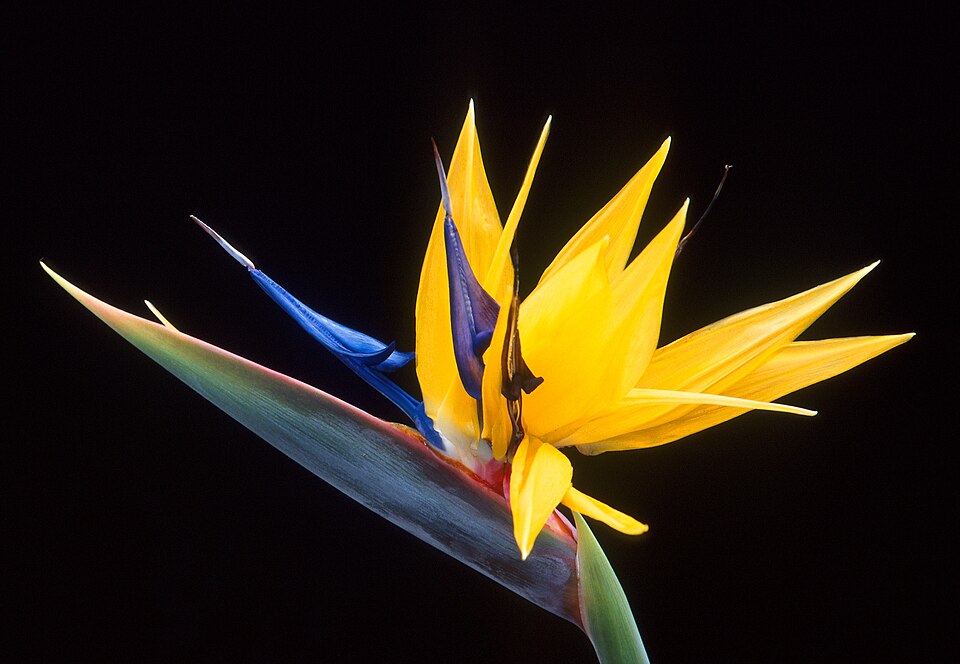
Strelitzia nicolai, commonly known as White Bird of Paradise, is a majestic tropical perennial renowned for its striking architectural form and lush foliage. Native to the coastal regions of South Africa, particularly KwaZulu-Natal, this member of the Strelitziaceae family can attain impressive heights, often reaching 3 to 5 feet indoors and significantly taller in its natural outdoor habitat. Its distinctive leaves are large, paddle-shaped, and deeply green, growing up to 3 feet long and 1 foot wide, arranged in an elegant, fan-like pattern that creates a dramatic visual impact.
While primarily celebrated for its foliage, mature plants may produce exotic, bird-like flowers featuring pristine white sepals and a blue 'tongue' or petal, often with hints of orange, though indoor flowering is a rare and cherished event. The stout, upright stems are smooth and green in their youth, developing a slightly textured bark with age. Taxonomically, Strelitzia nicolai is closely related to the vibrant Strelitzia reginae (Orange Bird of Paradise) and other species within its unique family.
Beyond its ornamental appeal, this plant is increasingly valued for its contribution to indoor air quality, effectively filtering common airborne toxins and enhancing the overall well-being of its environment.
Trusted Scientific References
1. Authoritative external sources for Strelitzia nicolai
1.1 Wikipedia — Strelitzia nicolai
1.2 Kew POWO (Plants of the World Online)
1.3 PubMed — peer-reviewed research
1.4 NCBI Taxonomy Browser
1.5 GBIF — Global Biodiversity
1.6White Bird of Paradise should be interpreted through verified botanical identity, practical care, and responsible safety language. This recovery note adds the missing context needed for a complete profile: match light to the plant's habit, use well-drained soil, water according to season, and avoid unsupported medicinal or edible claims. For publishing, the plant can be presented as a source-backed indoor plant with clear care guidance, common problem diagnosis, and conservative safety wording.
1.1.White Bird of Paradise — Key Features
- ✓ <strong>Botanical Name</strong> — Strelitzia nicolai
- ✓ <strong>Common Name</strong> — White Bird of Paradise
- ✓ <strong>Family</strong> — Strelitziaceae
- ✓ <strong>Origin</strong> — South Africa
- ✓ <strong>Foliage</strong> — Large, deep green, paddle-shaped leaves arranged in a distinctive fan pattern.
- ✓ <strong>Flowers</strong> — Exotic white and blue bird-like blooms (rare indoors).
- ✓ <strong>Growth Habit</strong> — Tall, upright perennial, reaching 3-5 feet indoors, much larger outdoors.
- ✓ <strong>Air Purification</strong> — Effectively filters indoor air, removing common toxins like formaldehyde.
- ✓ <strong>Unique Constituent</strong> — Arils contain bilirubin, an animal pigment with antioxidant properties.
- ✓ <strong>Research Interest</strong> — In vitro studies indicate potential anti-cancer activity of its aril extract.
1.2.White Bird of Paradise — Quick Summary
- ✓ White Bird of Paradise (Strelitzia nicolai) is a striking tropical perennial known for its large, paddle-shaped leaves and exotic white flowers.
- ✓ Native to South Africa, it thrives indoors with bright, indirect light, contributing significantly to aesthetic appeal and air quality.
- ✓ Recent research highlights its aril extract, containing bilirubin, for potent antioxidant and promising in vitro anti-cancer properties against cervical cancer cells.
- ✓ It is valued for its ability to purify indoor air by removing common toxins, enhancing overall environmental wellness.
- ✓ While safe for humans as an ornamental plant, all parts are considered mildly toxic to pets if ingested, causing gastrointestinal upset.
- ✓ This plant embodies both horticultural beauty and emerging scientific interest in its unique phytochemical profile.
2.White Bird of Paradise — Scientific Identity
3.White Bird of Paradise — Quick Facts
4.White Bird of Paradise — Appearance & Identification
5.White Bird of Paradise — Native Habitat
6.White Bird of Paradise — Water Requirements
- ✓ Light Requirements — Prefers bright, indirect light; direct harsh sunlight can scorch leaves, while insufficient light may hinder growth and flowering.
- ✓ Watering Schedule — Water thoroughly when the top 2-3 inches of soil feel dry; allow excess water to drain to prevent root rot, especially during cooler months.
- ✓ Soil Preference — Thrives in well-draining, rich potting mix, ideally a blend of peat, perlite, and pine bark to ensure good aeration and moisture retention.
- ✓ Temperature and Humidity — Best grown in warm conditions, between 65-80°F (18-27°C), with moderate to high humidity; misting can be beneficial, especially indoors.
- ✓ Fertilization — Feed with a balanced liquid fertilizer every 2-4 weeks during the growing season (spring and summer) and reduce frequency in fall and winter.
- ✓ Pruning — Remove dead or yellowing leaves at the base to maintain plant health and appearance; spent flower stalks should also be cut back.
- ✓ Propagation — Primarily propagated by division of rhizomes or from seeds, though seed germination can be slow and erratic.
- ✓ Pest Control — Generally resistant, but monitor for common pests like spider mites, mealybugs, and scale insects; treat with insecticidal soap or neem oil if detected.
Reviewed by the Flora Medical Global Botanical Review Panel
Multi-disciplinary editorial group · Botany · Ethnobotany · Herbal-medicine literature
Who reviewed this: This page was checked by the Flora Medical Global Botanical Review Panel — an in-house editorial group of botany graduates, ethnobotany researchers, and horticulture practitioners who collectively maintain our 7,000+ plant encyclopedia. Meet the team.
Our 4-step verification process
1. Taxonomic verification
Scientific names and synonyms cross-checked against Kew POWO, World Flora Online, and The Plant List.
2. Phytochemical & medicinal cross-reference
Active compounds, traditional uses, and reported activities are cross-referenced with PubMed, USDA Dr. Duke's database, and peer-reviewed ethnobotanical literature.
3. Conservation & distribution check
Distribution, ecology, and conservation status confirmed against GBIF occurrence records and the IUCN Red List.
4. Editorial & safety review
Every entry passes an editorial pass for clarity, originality, and safety notices (toxicity, contraindications, dosage caveats) before publication.
Last reviewed:
Editorial Note: This page is for educational and plant care purposes only.
Written by: Flora Medical Global Editorial Team
Reviewed by: Flora Medical Global Botanical Review Panel
Last Updated: June 16, 2026







White Bird of Paradise — Comments & Community Reviews
Rate this plant