
Care Disclaimer: Plant care recommendations are general guidelines based on common growing conditions. Individual results may vary based on your local environment, climate, and care routine. If your plant is toxic, keep it away from children and pets, and consult a veterinarian if accidental ingestion occurs.
1.Yucca Cane — Overview
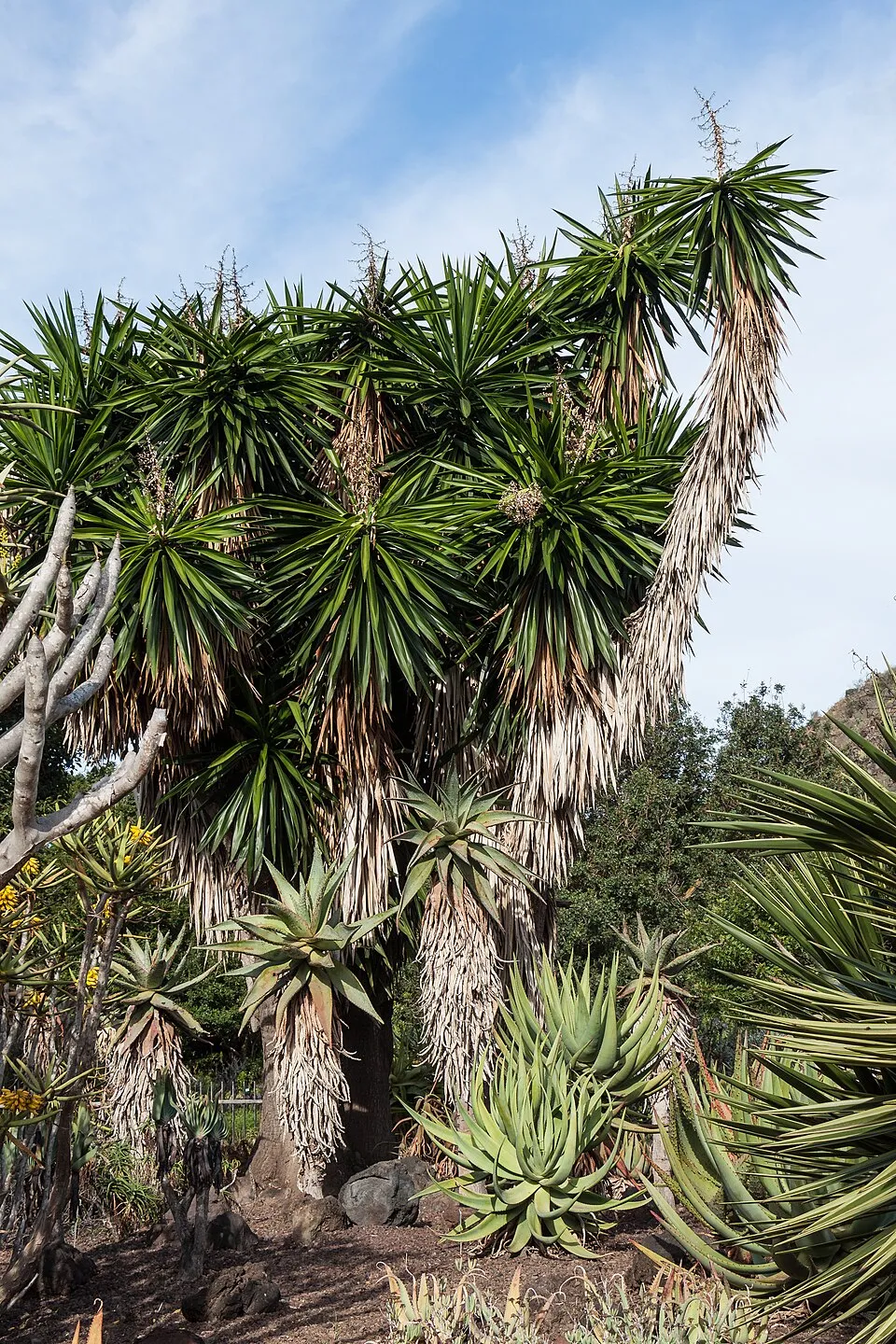
Yucca guatemalensis, widely recognized as the Yucca Cane or Spineless Yucca, is a striking perennial shrub belonging to the Asparagaceae family. This resilient plant is characterized by its robust, often tree-like stem that can reach several meters in height, topped by dense rosettes of long, sword-shaped leaves.
These leaves, typically a vibrant green to grey-green, can extend up to a meter in length, featuring a sharp, non-spiny tip and subtly fibrous margins, hence its 'Spineless' moniker. During the summer months, mature Yucca Cane plants can produce impressive, tall flower spikes, sometimes exceeding two meters, adorned with clusters of creamy white to pale yellow, bell-shaped flowers.
Native to the arid and semi-arid regions of Central America, particularly Guatemala and parts of Mexico, Yucca guatemalensis thrives in dry, rocky, and well-drained soils. Its natural habitat includes open woodlands and scrublands, often under full sun, which has equipped it with remarkable xerophytic adaptations. These adaptations, such as its ability to store water and minimize transpiration, contribute to its exceptional drought resistance.
Due to its architectural form and low-maintenance requirements, Yucca Cane has become a highly popular ornamental houseplant globally, lending an exotic touch to indoor spaces. Beyond its aesthetic appeal, it is also noted for its capacity to improve indoor air quality, making it a valuable addition to both homes and botanical collections.
Trusted Scientific References
1. Authoritative external sources for Yucca guatemalensis
1.1 Wikipedia — Yucca guatemalensis
1.2 Kew POWO (Plants of the World Online)
1.3 PubMed — peer-reviewed research
1.4 NCBI Taxonomy Browser
1.5 GBIF — Global Biodiversity
1.6Yucca Cane Indoor should be interpreted through verified botanical identity, practical care, and responsible safety language. This recovery note adds the missing context needed for a complete profile: match light to the plant's habit, use well-drained soil, water according to season, and avoid unsupported medicinal or edible claims. For publishing, the plant can be presented as a source-backed indoor plant with clear care guidance, common problem diagnosis, and conservative safety wording.
1.1.Yucca Cane — Key Features
- ✓ <strong>Ornamental Houseplant</strong> — Highly valued for its striking architectural form and ease of care in indoor environments.
- ✓ <strong>Drought</strong> — Tolerant — Exhibits excellent xerophytic adaptations, requiring minimal water once established.
- ✓ <strong>Air Purifier</strong> — Known to contribute to improved indoor air quality by filtering certain toxins.
- ✓ <strong>Anti</strong> — inflammatory Properties — Contains compounds that help reduce inflammation throughout the body.
- ✓ <strong>Antioxidant Rich</strong> — Abundant in phytochemicals that combat oxidative stress and free radical damage.
- ✓ <strong>Saponin Content</strong> — High levels of steroidal saponins are responsible for many of its medicinal actions.
- ✓ <strong>Native to Central America</strong> — Indigenous to Guatemala and surrounding regions, thriving in arid climates.
- ✓ <strong>Traditional Medicinal Uses</strong> — Utilized by Native American and Mesoamerican cultures for various ailments.
- ✓ <strong>Low Maintenance</strong> — An ideal plant for busy individuals due to its resilience and minimal care requirements.
- ✓ <strong>Pest Resistant</strong> — Generally robust and less prone to common plant pests.
1.2.Yucca Cane — Quick Summary
- ✓ Yucca guatemalensis, or Yucca Cane, is a Central American native known for its ornamental beauty and drought tolerance.
- ✓ It possesses significant anti-inflammatory and antioxidant properties, primarily due to its rich saponin and flavonoid content.
- ✓ Traditionally used for arthritis, joint pain, digestive issues, and skin conditions by various indigenous cultures.
- ✓ Key phytochemicals include steroidal saponins (sarsasaponin, smilagenin) and polyphenols (quercetin, resveratrol).
- ✓ Cultivation is low-maintenance, requiring bright light and infrequent watering in well-drained soil.
- ✓ Safety considerations include potential GI upset, allergic reactions, and interactions with certain medications; avoid during pregnancy and lactation.
2.Yucca Cane — Scientific Identity
3.Yucca Cane — Quick Facts
4.Yucca Cane — Appearance & Identification
5.Yucca Cane — Native Habitat
6.Yucca Cane — Water Requirements
- ✓ Light — Prefers bright, indirect light indoors; can tolerate full sun in its natural outdoor environment.
- ✓ Soil — Requires well-drained, sandy, or gritty potting mix to prevent root rot, mimicking its native arid habitat.
- ✓ Watering — Water infrequently, allowing the soil to dry out completely between applications; highly drought-tolerant.
- ✓ Temperature — Thrives in warm temperatures (18-35°C / 65-95°F); protect from cold drafts and frost.
- ✓ Humidity — Tolerant of low humidity levels, making it ideal for typical indoor environments.
- ✓ Fertilization — Fertilize sparingly during the growing season (spring/summer) with a balanced liquid fertilizer, typically once a month or every other month.
- ✓ Pruning — Remove yellowing or dead lower leaves to maintain appearance; can be pruned for shape or size control.
- ✓ Pests — Generally resistant to most pests, but monitor for common indoor plant pests like spider mites or mealybugs.
Reviewed by the Flora Medical Global Botanical Review Panel
Multi-disciplinary editorial group · Botany · Ethnobotany · Herbal-medicine literature
Who reviewed this: This page was checked by the Flora Medical Global Botanical Review Panel — an in-house editorial group of botany graduates, ethnobotany researchers, and horticulture practitioners who collectively maintain our 7,000+ plant encyclopedia. Meet the team.
Our 4-step verification process
1. Taxonomic verification
Scientific names and synonyms cross-checked against Kew POWO, World Flora Online, and The Plant List.
2. Phytochemical & medicinal cross-reference
Active compounds, traditional uses, and reported activities are cross-referenced with PubMed, USDA Dr. Duke's database, and peer-reviewed ethnobotanical literature.
3. Conservation & distribution check
Distribution, ecology, and conservation status confirmed against GBIF occurrence records and the IUCN Red List.
4. Editorial & safety review
Every entry passes an editorial pass for clarity, originality, and safety notices (toxicity, contraindications, dosage caveats) before publication.
Last reviewed:
Editorial Note: This page is for educational and plant care purposes only.
Written by: Flora Medical Global Editorial Team
Reviewed by: Flora Medical Global Botanical Review Panel
Last Updated: June 16, 2026







Yucca Cane — Comments & Community Reviews
Rate this plant