
Care Disclaimer: Plant care recommendations are general guidelines based on common growing conditions. Individual results may vary based on your local environment, climate, and care routine. If your plant is toxic, keep it away from children and pets, and consult a veterinarian if accidental ingestion occurs.
1.Zig Zag Cactus — Overview
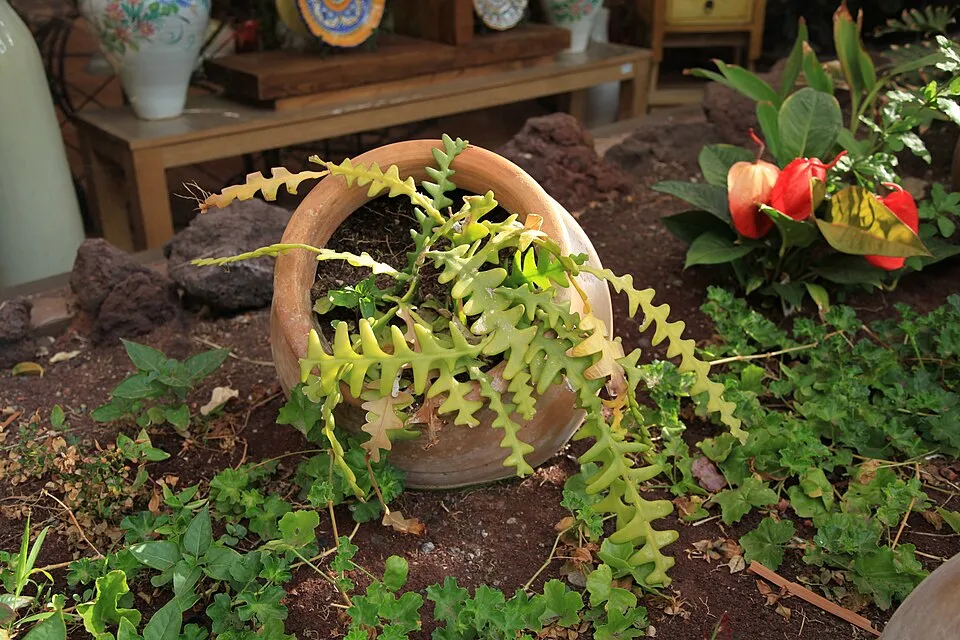
Selenicereus anthonyanus, widely recognized by its captivating common names, the Zig Zag Cactus or Fishbone Cactus, is an intriguing epiphytic cactus indigenous to the humid tropical regions of Central and South America. This botanical marvel is celebrated for its highly distinctive morphology, characterized by flattened, deeply lobed, and sinuously undulating stems that create a striking zigzag pattern, reminiscent of a fishbone. These vibrant green to dark green stems emerge from a central base, extending to lengths of approximately 1.5 to 3 meters (5 to 10 feet) in their natural mixed-growth settings.
In cultivation, they adopt an elegant cascading form, making them ideal for hanging baskets, or can be trained as climbing plants. Each segment of the stem features pronounced edges and a subtly ribbed texture, contributing to its unique aesthetic appeal. Under optimal conditions, typically during warmer months, the Zig Zag Cactus produces large, exquisitely fragrant, white to creamy-white flowers that unfurl dramatically at night.
These ephemeral blooms, often lasting only a single day, are a spectacular, albeit fleeting, display. While its nocturnal flowers are stunning, Selenicereus anthonyanus is primarily cultivated and admired for its extraordinary foliage, which provides year-round visual interest. Taxonomically, it belongs to the Cactaceae family, a diverse group known for its succulent and often spiny members, though this species is notably less spiny.
Trusted Scientific References
1. Authoritative external sources for Selenicereus anthonyanus
1.1 Wikipedia — Selenicereus anthonyanus
1.2 Kew POWO (Plants of the World Online)
1.3 PubMed — peer-reviewed research
1.4 NCBI Taxonomy Browser
1.5 GBIF — Global Biodiversity
1.6Zig Zag Cactus should be interpreted through verified botanical identity, practical care, and responsible safety language. This recovery note adds the missing context needed for a complete profile: match light to the plant's habit, use well-drained soil, water according to season, and avoid unsupported medicinal or edible claims. For publishing, the plant can be presented as a source-backed indoor plant with clear care guidance, common problem diagnosis, and conservative safety wording.
1.1.Zig Zag Cactus — Key Features
- ✓ <strong>Distinctive zigzagging, flattened</strong> — Distinctive zigzagging, flattened stems.
- ✓ <strong>Epiphytic growth habit,</strong> — Epiphytic growth habit, often cascading.
- ✓ <strong>Large, fragrant, white</strong> — Large, fragrant, white nocturnal blooms.
- ✓ <strong>Rich in antioxidants</strong> — Rich in antioxidants like phenolic compounds.
- ✓ <strong>Potential antimicrobial properties.</strong> — Potential antimicrobial properties.
- ✓ <strong>Symbolizes adaptability and</strong> — Symbolizes adaptability and resilience.
- ✓ <strong>Natural air purifier</strong> — Natural air purifier indoors.
- ✓ <strong>Low maintenance houseplant.</strong> — Low maintenance houseplant.
- ✓ <strong>Native to tropical</strong> — Native to tropical Central and South America.
- ✓ <strong>Valued for ornamental</strong> — Valued for ornamental foliage.
1.2.Zig Zag Cactus — Quick Summary
- Unique epiphytic cactus with zigzag stems and fragrant nocturnal flowers.
- Primarily ornamental, but traditionally recognized for antioxidant potential.
- Contains alkaloids and phenolic compounds with potential antimicrobial activity.
- Contributes to indoor air purification and stress reduction as a houseplant.
- Requires well-draining soil, indirect light, and moderate watering.
- Internal use is not recommended due to limited safety data.
2.Zig Zag Cactus — Scientific Identity
3.Zig Zag Cactus — Quick Facts
4.Zig Zag Cactus — Appearance & Identification
5.Zig Zag Cactus — Native Habitat
6.Zig Zag Cactus — Water Requirements
- ✓ Soil Requirements — Thrives in well-draining, airy soil mixes specifically formulated for epiphytic cacti or orchids, often composed of bark, perlite, and a small amount of potting soil to mimic its natural arboreal habitat.
- ✓ Watering Schedule — Requires moderate watering; allow the top inch or two of soil to dry out completely between watering sessions to prevent root rot, especially during cooler months. Reduce watering significantly in winter.
- ✓ Light Exposure — Prefers bright, indirect light. Direct, intense sunlight can scorch its delicate stems, leading to discoloration. An east or north-facing window is ideal, or a shaded outdoor spot in warm climates.
- ✓ Humidity Needs — Benefits from high humidity environments, reflecting its tropical origins. Regular misting, especially during dry periods, or placing the pot on a pebble tray filled with water can help maintain adequate moisture in the air.
- ✓ Fertilization — Feed with a balanced, diluted liquid fertilizer formulated for cacti or orchids during its active growing season (spring and summer), typically once every 2-4 weeks. Reduce or cease fertilization in fall and winter.
- ✓ Temperature Preference — Prefers warm temperatures, ideally between 18-29°C (65-85°F). Protect from frost and sudden temperature drops, as it is not cold-hardy.
- ✓ Potting and Support — Best grown in hanging baskets where its cascading stems can be displayed, or given a trellis to climb. Repot every 2-3 years, or when root-bound, into a slightly larger container with fresh medium.
- ✓ Pest Management — Monitor for common pests like mealybugs, spider mites, and scale insects. Treat infestations promptly with insecticidal soap or neem oil, ensuring adequate air circulation to prevent fungal issues.
Reviewed by the Flora Medical Global Botanical Review Panel
Multi-disciplinary editorial group · Botany · Ethnobotany · Herbal-medicine literature
Who reviewed this: This page was checked by the Flora Medical Global Botanical Review Panel — an in-house editorial group of botany graduates, ethnobotany researchers, and horticulture practitioners who collectively maintain our 7,000+ plant encyclopedia. Meet the team.
Our 4-step verification process
1. Taxonomic verification
Scientific names and synonyms cross-checked against Kew POWO, World Flora Online, and The Plant List.
2. Phytochemical & medicinal cross-reference
Active compounds, traditional uses, and reported activities are cross-referenced with PubMed, USDA Dr. Duke's database, and peer-reviewed ethnobotanical literature.
3. Conservation & distribution check
Distribution, ecology, and conservation status confirmed against GBIF occurrence records and the IUCN Red List.
4. Editorial & safety review
Every entry passes an editorial pass for clarity, originality, and safety notices (toxicity, contraindications, dosage caveats) before publication.
Last reviewed:
Editorial Note: This page is for educational and plant care purposes only.
Written by: Flora Medical Global Editorial Team
Reviewed by: Flora Medical Global Botanical Review Panel
Last Updated: June 16, 2026







Zig Zag Cactus — Comments & Community Reviews
Rate this plant