
Care Disclaimer: Plant care recommendations are general guidelines based on common growing conditions. Individual results may vary based on your local environment, climate, and care routine. If your plant is toxic, keep it away from children and pets, and consult a veterinarian if accidental ingestion occurs.
1.Abutilon Megapotamicum — Overview
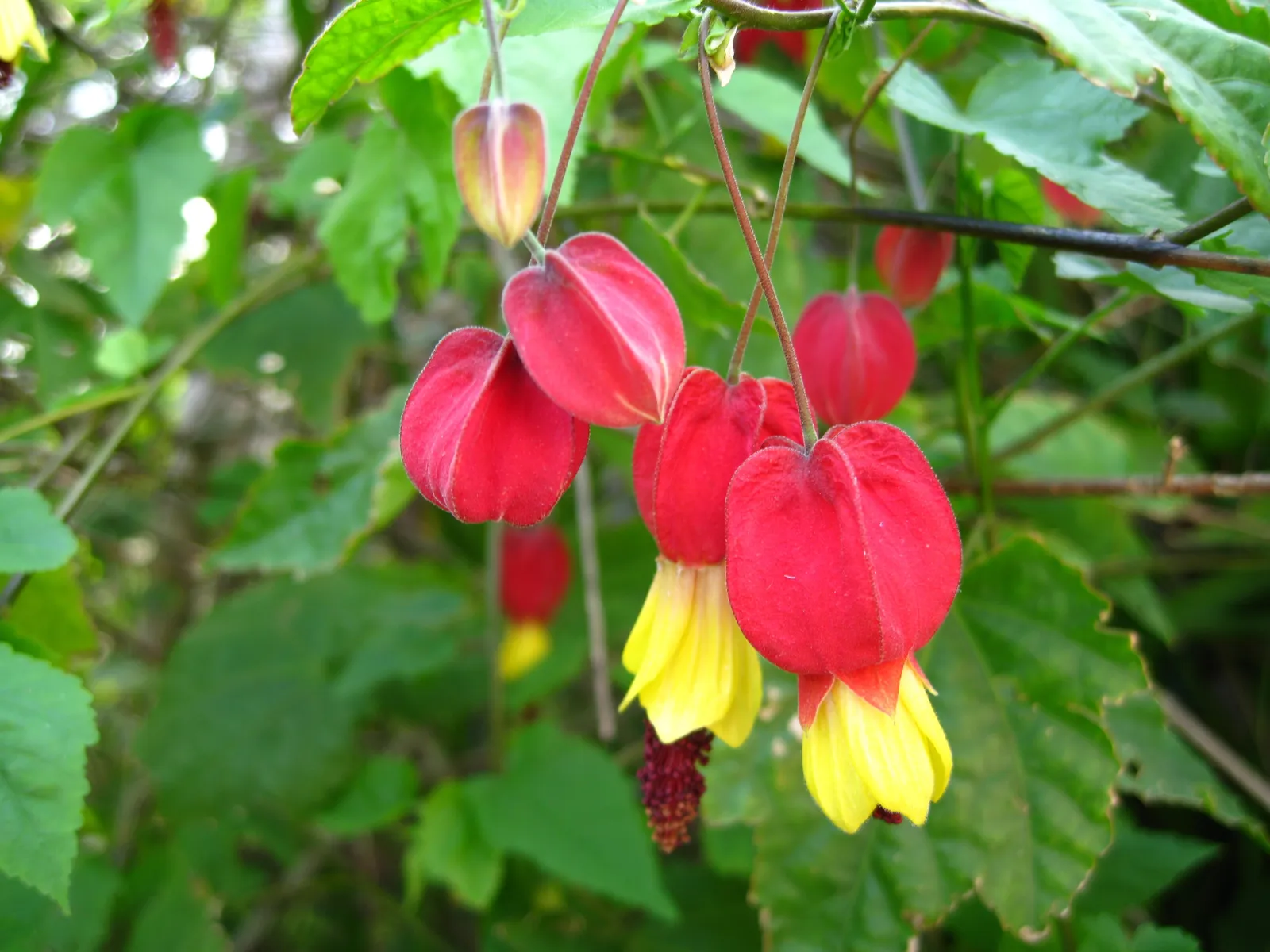
Abutilon megapotamicum, commonly known as Trailing Abutilon or Chinese Lantern, is an exquisitely ornamental evergreen shrub belonging to the Malvaceae family, a lineage celebrated for its diverse and often showy flora. This captivating plant is native to the subtropical and tropical regions of Brazil, primarily thriving in the southern states of Rio Grande do Sul, Santa Catarina, and Paraná. It demonstrates a preference for moist, yet well-drained soils, typically inhabiting the rich alluvial soils of riverbanks and the dappled light of open woodlands, showcasing remarkable adaptability to various microclimates.
The plant is characterized by its slender, gracefully arching stems, which can extend up to 3 meters, creating a visually appealing cascading habit ideal for hanging baskets or espaliers. Its leaves are soft to the touch, ovate to lanceolate in shape, and present a vibrant, deep green hue that provides an excellent backdrop to its distinctive flowers. The most striking feature of Abutilon megapotamicum is undoubtedly its unique floral structure: bright, inflated red calyces elegantly encasing delicate, crumpled yellow petals that protrude slightly, reminiscent of miniature, vibrant lanterns.
This enchanting appearance has solidified its popularity in horticulture globally, particularly in European conservatories since the 19th century. While its primary value is ornamental, the broader genus Abutilon holds a place in various folk medicine traditions, hinting at potential, though largely undocumented, properties for A. megapotamicum.
Trusted Scientific References
1. Authoritative external sources for Abutilon megapotamicum
1.1 Wikipedia — Abutilon megapotamicum
1.2 Kew POWO (Plants of the World Online)
1.3 PubMed — peer-reviewed research
1.4 NCBI Taxonomy Browser
1.5 GBIF — Global Biodiversity
1.6Abutilon Megapotamicum should be interpreted through verified botanical identity, practical care, and responsible safety language. This recovery note adds the missing context needed for a complete profile: match light to the plant's habit, use well-drained soil, water according to season, and avoid unsupported medicinal or edible claims. For publishing, the plant can be presented as a source-backed indoor plant with clear care guidance, common problem diagnosis, and conservative safety wording.
1.1.Abutilon Megapotamicum — Key Features
- ✓ <strong>Striking 'Chinese Lantern' Flowers</strong> — Bright red calyces encasing crumpled yellow petals.
- ✓ <strong>Evergreen Foliage</strong> — Soft, ovate to lanceolate vibrant green leaves.
- ✓ <strong>Trailing Growth Habit</strong> — Slender, arching stems up to 3 meters, ideal for cascading displays.
- ✓ <strong>Prolific Bloomer</strong> — Flowers continuously from spring through autumn, attracting pollinators.
- ✓ <strong>Subtropical/Tropical Native</strong> — Indigenous to Brazil, adaptable to warm climates.
- ✓ <strong>Malvaceae Family Member</strong> — Shares characteristics with hibiscus and mallow.
- ✓ <strong>Ornamental Value</strong> — Highly prized in horticulture for its aesthetic appeal.
- ✓ <strong>Edible Flowers</strong> — Sweet-tasting flowers can be consumed raw or cooked.
- ✓ <strong>Adaptable to Cultivation</strong> — Grows well in containers, hanging baskets, or as an espalier.
- ✓ <strong>Low Toxicity Risk</strong> — Considered safe with no known significant hazards reported.
1.2.Abutilon Megapotamicum — Quick Summary
- ✓ Ornamental Evergreen Shrub — Valued for its unique, lantern-like red and yellow flowers.
- ✓ Native to Brazil — Thrives in subtropical and tropical climates, favoring moist, well-drained soils.
- ✓ Edible Flowers — Flowers possess a pleasant sweet flavor, suitable for raw or cooked culinary uses.
- ✓ Limited Medicinal Documentation — Specific medicinal uses for A. megapotamicum are largely undocumented, unlike other Abutilon species.
- ✓ Easy to Cultivate — Requires sunny to part-shade conditions and regular watering; adaptable to containers and hanging baskets.
- ✓ Generally Safe — No known significant hazards or toxicity reported, making it safe for ornamental and moderate culinary use.
2.Abutilon Megapotamicum — Scientific Identity
3.Abutilon Megapotamicum — Quick Facts
4.Abutilon Megapotamicum — Appearance & Identification
5.Abutilon Megapotamicum — Native Habitat
6.Abutilon Megapotamicum — Water Requirements
- ✓ Site Selection — Prefers a sunny position or part day shade to encourage prolific flowering and robust growth.
- ✓ Soil Requirements — Thrives in fertile, well-drained soil, ideally with consistent moisture; dislikes drought conditions.
- ✓ Watering — Requires regular watering, especially during dry periods, to maintain soil moisture without becoming waterlogged.
- ✓ Pruning — Tip-prune young plants to promote a bushy habit; older plants can be cut back hard annually in spring to rejuvenate.
- ✓ Dead-heading — Regularly remove spent flowers (dead-head) to prevent seeding and encourage continuous blooming, enhancing plant longevity.
- ✓ Propagation — Can be propagated from seed, which typically germinates within a few weeks; also easily propagated from cuttings of young or half-ripe shoots.
- ✓ Winter Care — In colder climates (below USDA zone 7), it is best grown in containers and brought indoors or protected during winter.
- ✓ Pest & Disease Resistance — Notably resistant to common issues like honey fungus, though susceptible to typical garden pests like whiteflies or spider mites.
Reviewed by the Flora Medical Global Botanical Review Panel
Multi-disciplinary editorial group · Botany · Ethnobotany · Herbal-medicine literature
Who reviewed this: This page was checked by the Flora Medical Global Botanical Review Panel — an in-house editorial group of botany graduates, ethnobotany researchers, and horticulture practitioners who collectively maintain our 7,000+ plant encyclopedia. Meet the team.
Our 4-step verification process
1. Taxonomic verification
Scientific names and synonyms cross-checked against Kew POWO, World Flora Online, and The Plant List.
2. Phytochemical & medicinal cross-reference
Active compounds, traditional uses, and reported activities are cross-referenced with PubMed, USDA Dr. Duke's database, and peer-reviewed ethnobotanical literature.
3. Conservation & distribution check
Distribution, ecology, and conservation status confirmed against GBIF occurrence records and the IUCN Red List.
4. Editorial & safety review
Every entry passes an editorial pass for clarity, originality, and safety notices (toxicity, contraindications, dosage caveats) before publication.
Last reviewed:
Editorial Note: This page is for educational and plant care purposes only.
Written by: Flora Medical Global Editorial Team
Reviewed by: Flora Medical Global Botanical Review Panel
Last Updated: June 15, 2026







Abutilon Megapotamicum — Comments & Community Reviews
Rate this plant