


Care Disclaimer: Plant care recommendations are general guidelines based on common growing conditions. Individual results may vary based on your local environment, climate, and care routine. If your plant is toxic, keep it away from children and pets, and consult a veterinarian if accidental ingestion occurs.
1.Anthurium Warocqueanum — Overview
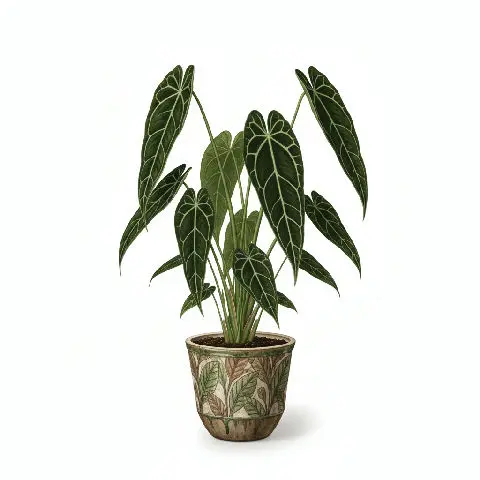
Anthurium warocqueanum, commonly known as the Queen Anthurium, is an exquisite epiphytic aroid native to the humid tropical rainforests of Colombia. This botanical marvel is celebrated for its exceptionally long, pendulous, and velvety dark green leaves, which can reach impressive lengths of up to six feet in mature specimens.
A distinguishing characteristic is the prominent, contrasting venation that ranges from pale green to striking silver, creating a regal, almost painted appearance. As an epiphyte, it naturally thrives by clinging to the trunks and branches of larger trees in the forest understory, absorbing moisture and nutrients from the air, rain, and accumulated organic debris rather than rooting in soil.
Botanically classified within the Araceae family, a group recognized for its unique spadix and spathe inflorescence, A. warocqueanum's primary allure lies in its magnificent foliage. It was first formally described by Thomas Moore in 1878, receiving its species name in honor of Warrocque, a prominent Belgian horticulturist.
Its specific habitat requirements—consistently high humidity, stable warm temperatures, and bright indirect light—make it a challenging yet rewarding plant for dedicated collectors. The species' ornamental value is exceptionally high, leading to its status as a horticultural trophy. However, this popularity also brings conservation concerns, with instances of illegal poaching from its natural habitat underscoring the need for sustainable cultivation and protection efforts.
Like many plants in the Araceae family, it contains calcium oxalate crystals, a natural defense mechanism that renders it toxic if ingested.
Trusted Scientific References
1. Authoritative external sources for Anthurium warocqueanum
1.1 Wikipedia — Anthurium warocqueanum
1.2 Kew POWO (Plants of the World Online)
1.3 PubMed — peer-reviewed research
1.4 NCBI Taxonomy Browser
1.5 GBIF — Global Biodiversity
1.6Anthurium Warocqueanum should be interpreted through verified botanical identity, practical care, and responsible safety language. This recovery note adds the missing context needed for a complete profile: match light to the plant's habit, use well-drained soil, water according to season, and avoid unsupported medicinal or edible claims. For publishing, the plant can be presented as a source-backed indoor plant with clear care guidance, common problem diagnosis, and conservative safety wording.
1.1.Anthurium Warocqueanum — Key Features
- ✓ <strong>Striking Velvety Foliage</strong> — Long, pendulous, dark green leaves with a velvety texture and contrasting pale venation.
- ✓ <strong>Epiphytic Growth Habit</strong> — Naturally grows on other plants in its native habitat, not in soil.
- ✓ <strong>Tropical Rainforest Native</strong> — Thrives in high humidity, warm temperatures, and bright, indirect light.
- ✓ <strong>Horticultural Trophy Plant</strong> — Highly sought after and valued by plant enthusiasts and collectors worldwide.
- ✓ <strong>Calcium Oxalate Presence</strong> — Contains toxic crystals that cause irritation upon ingestion or contact.
- ✓ <strong>Undocumented Medicinal Use</strong> — Lacks traditional or modern therapeutic applications; purely ornamental.
- ✓ <strong>Specific Care Requirements</strong> — Demands precise environmental conditions for optimal growth and health.
- ✓ <strong>Distinctive Araceae Morphology</strong> — Belongs to a family known for its unique spadix and spathe inflorescence.
- ✓ <strong>Conservation Concern</strong> — Its popularity has led to concerns regarding sustainable sourcing and habitat protection.
- ✓ <strong>Symbol of Exclusivity</strong> — Represents refined beauty and dedication within the plant collecting community.
1.2.Anthurium Warocqueanum — Quick Summary
- ✓ Ornamental Queen Anthurium, a prized collector's plant.
- ✓ Native epiphytic aroid from Colombian rainforests.
- ✓ Features long, velvety, dark green leaves with prominent silver venation.
- ✓ Contains toxic calcium oxalate crystals; avoid ingestion and skin contact.
- ✓ Requires high humidity, bright indirect light, and a well-draining, airy substrate.
- ✓ No documented traditional or modern medicinal uses; primarily horticultural.
2.Anthurium Warocqueanum — Scientific Identity
3.Anthurium Warocqueanum — Quick Facts
4.Anthurium Warocqueanum — Appearance & Identification
5.Anthurium Warocqueanum — Native Habitat
6.Anthurium Warocqueanum — Water Requirements
- ✓ Temperature Control — Maintain ideal temperatures between 75-85°F (24-29°C); avoid night temperatures below 65°F (18°C) as this can halt growth.
- ✓ Bright Indirect Light — Provide very bright indirect light, mimicking its understory habitat; direct sun will scorch leaves, while too little light hinders growth.
- ✓ High Humidity — Aim for 50-80% humidity, preferably on the higher end, using humidifiers or grow cases to prevent leaf crisping.
- ✓ Consistent Watering — Water regularly when the top layer of the well-draining soil mix feels almost entirely dry; ensure thorough drenching until water drains out.
- ✓ Acidic Water pH — Adjust water pH to slightly acidic, between 6.0-7.0, to optimize nutrient absorption, especially if tap water is alkaline.
- ✓ Airy, Well-Draining Substrate — Use a chunky, epiphytic mix with at least 50% inorganic material like pumice or orchid bark, combined with high-quality houseplant soil.
- ✓ Regular Fertilization — Feed with a balanced or nitrogen-rich fertilizer during the warmer growing season, typically every 2-4 weeks, reducing or stopping in winter.
- ✓ Potting Choice — Opt for plastic pots or hanging baskets to retain adequate moisture; terra cotta tends to dry out too quickly for this species.
Reviewed by the Flora Medical Global Botanical Review Panel
Multi-disciplinary editorial group · Botany · Ethnobotany · Herbal-medicine literature
Who reviewed this: This page was checked by the Flora Medical Global Botanical Review Panel — an in-house editorial group of botany graduates, ethnobotany researchers, and horticulture practitioners who collectively maintain our 7,000+ plant encyclopedia. Meet the team.
Our 4-step verification process
1. Taxonomic verification
Scientific names and synonyms cross-checked against Kew POWO, World Flora Online, and The Plant List.
2. Phytochemical & medicinal cross-reference
Active compounds, traditional uses, and reported activities are cross-referenced with PubMed, USDA Dr. Duke's database, and peer-reviewed ethnobotanical literature.
3. Conservation & distribution check
Distribution, ecology, and conservation status confirmed against GBIF occurrence records and the IUCN Red List.
4. Editorial & safety review
Every entry passes an editorial pass for clarity, originality, and safety notices (toxicity, contraindications, dosage caveats) before publication.
Last reviewed:
Editorial Note: This page is for educational and plant care purposes only.
Written by: Flora Medical Global Editorial Team
Reviewed by: Flora Medical Global Botanical Review Panel
Last Updated: June 15, 2026







Anthurium Warocqueanum — Comments & Community Reviews
Rate this plant