


Care Disclaimer: Plant care recommendations are general guidelines based on common growing conditions. Individual results may vary based on your local environment, climate, and care routine. If your plant is toxic, keep it away from children and pets, and consult a veterinarian if accidental ingestion occurs.
1.Araucaria Heterophylla — Overview
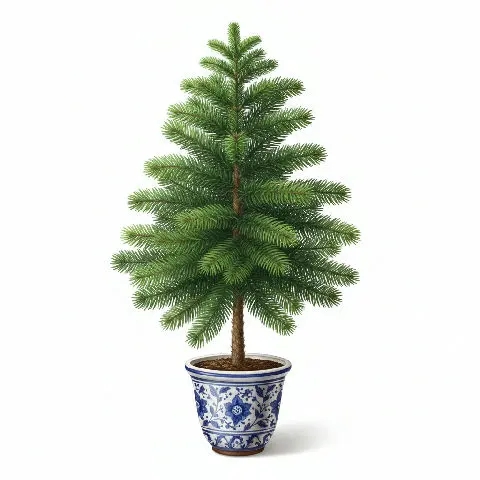
Araucaria heterophylla, widely recognized as the Norfolk Island Pine, is a magnificent coniferous tree indigenous to Norfolk Island, a small landmass situated in the Pacific Ocean. Despite its common moniker, it is not a true member of the Pinus genus but belongs to the ancient family Araucariaceae, with a lineage extending back to the Mesozoic era. This elegant conifer is celebrated for its distinctive, perfectly symmetrical tiered branches that extend horizontally from a robust central trunk, forming a characteristic pyramidal or conical shape in its younger stages. As the tree matures, particularly in its natural habitat, the lower branches may naturally shed, leading to a more open and somewhat irregular crown.
Early European explorers, notably Captain James Cook in 1774, were impressed by these towering trees, recognizing their potential utility for ship masts, which contributed to their subsequent global dissemination. Historically, while indigenous Polynesian inhabitants of Norfolk Island likely utilized the tree's resources, specific and extensively documented traditional medicinal uses are considerably less abundant compared to plants with more widespread ethnobotanical histories in larger, more populated regions. Nevertheless, its exceptional ornamental value rose to prominence from the 19th century onward. Today, Araucaria heterophylla is extensively cultivated as a popular indoor foliage plant in temperate climates and as a grand outdoor specimen tree in subtropical and tropical zones.
Its adaptability to container cultivation makes it a favored choice for 'living Christmas trees' globally, often decorated for the festive season and then reintegrated into indoor landscapes. Botanically, the species epithet 'heterophylla' denotes the fascinating leaf dimorphism exhibited by the tree: soft, awl-shaped, spirally arranged juvenile leaves contrasting with thicker, scale-like adult leaves.
Trusted Scientific References
1. Authoritative external sources for Araucaria heterophylla
1.1 Wikipedia — Araucaria heterophylla
1.2 Kew POWO (Plants of the World Online)
1.3 PubMed — peer-reviewed research
1.4 NCBI Taxonomy Browser
1.5 GBIF — Global Biodiversity
1.1.Araucaria Heterophylla — Key Features
- ✓ <strong>Ancient Lineage</strong> — Part of the Araucariaceae family, dating back to the Mesozoic era.
- ✓ <strong>Symmetrical Growth Habit</strong> — Distinctive tiered branches radiating horizontally from a central trunk.
- ✓ <strong>Leaf Dimorphism</strong> — Exhibits two distinct types of leaves: awl-shaped juvenile and scale-like adult.
- ✓ <strong>Ornamental Value</strong> — Highly prized globally as a decorative houseplant and landscape tree.
- ✓ <strong>'Living Christmas Tree'</strong> — Popular choice for holiday decoration due to its evergreen nature and shape.
- ✓ <strong>Native to Norfolk Island</strong> — Endemic to a small island in the Pacific Ocean.
- ✓ <strong>Adaptable to Containers</strong> — Thrives indoors in pots, making it a versatile decorative plant.
- ✓ <strong>Coniferous but Not Pine</strong> — Belongs to Araucaria genus, distinct from Pinus.
- ✓ <strong>Potential Phytochemicals</strong> — Preliminary studies indicate compounds with antioxidant and other properties.
- ✓ <strong>Low Maintenance (Indoors)</strong> — Relatively easy to care for with proper light and watering.
1.2.Araucaria Heterophylla — Quick Summary
- ✓ Majestic conifer, not a true pine, native to Norfolk Island.
- ✓ Renowned for its distinctive, symmetrical tiered branches and pyramidal form.
- ✓ Widely cultivated globally as an ornamental indoor and outdoor plant.
- ✓ Features unique leaf dimorphism: soft juvenile leaves and scale-like adult leaves.
- ✓ Limited traditional medicinal uses; modern research exploring phytochemical potential.
- ✓ Generally considered non-toxic for common household pets.
2.Araucaria Heterophylla — Scientific Identity
3.Araucaria Heterophylla — Quick Facts
4.Araucaria Heterophylla — Appearance & Identification
5.Araucaria Heterophylla — Native Habitat
6.Araucaria Heterophylla — Water Requirements
- ✓ Light Requirements — Prefers bright, indirect light indoors; full sun to light afternoon shade outdoors to prevent foliage bleach.
- ✓ Soil Preference — Thrives in fertile, porous, sandy, peaty, slightly acidic, and well-drained potting soil or garden soil.
- ✓ Watering Schedule — Water regularly from spring through autumn, ensuring the soil remains moist but never waterlogged; reduce watering in winter.
- ✓ Temperature & Humidity — Indoors, prefers cool rooms (55-65°F or 13-18°C); adapts to typical home humidity but benefits from misting in heated rooms.
- ✓ Fertilization — Apply dilute liquid fertilizer weekly or bi-weekly from spring to fall to support vigorous growth.
- ✓ Outdoor Planting — Requires ample space for its large size (up to 200 feet in native habitat); surface roots can be problematic near structures or lawns.
- ✓ Pruning — Generally requires minimal pruning; avoid cutting the central leader as it disrupts the tree's distinctive symmetrical growth habit.
- ✓ Pest Management — Generally pest-free but susceptible to scale insects; monitor for sooty mold and leaf spot, especially in indoor environments.
Reviewed by the Flora Medical Global Botanical Review Panel
Multi-disciplinary editorial group · Botany · Ethnobotany · Herbal-medicine literature
Who reviewed this: This page was checked by the Flora Medical Global Botanical Review Panel — an in-house editorial group of botany graduates, ethnobotany researchers, and horticulture practitioners who collectively maintain our 7,000+ plant encyclopedia. Meet the team.
Our 4-step verification process
1. Taxonomic verification
Scientific names and synonyms cross-checked against Kew POWO, World Flora Online, and The Plant List.
2. Phytochemical & medicinal cross-reference
Active compounds, traditional uses, and reported activities are cross-referenced with PubMed, USDA Dr. Duke's database, and peer-reviewed ethnobotanical literature.
3. Conservation & distribution check
Distribution, ecology, and conservation status confirmed against GBIF occurrence records and the IUCN Red List.
4. Editorial & safety review
Every entry passes an editorial pass for clarity, originality, and safety notices (toxicity, contraindications, dosage caveats) before publication.
Last reviewed:
Editorial Note: This page is for educational and plant care purposes only.
Written by: Flora Medical Global Editorial Team
Reviewed by: Flora Medical Global Botanical Review Panel
Last Updated: June 15, 2026







Araucaria Heterophylla — Comments & Community Reviews
Rate this plant