


Care Disclaimer: Plant care recommendations are general guidelines based on common growing conditions. Individual results may vary based on your local environment, climate, and care routine. If your plant is toxic, keep it away from children and pets, and consult a veterinarian if accidental ingestion occurs.
1.Areca Palm — Overview
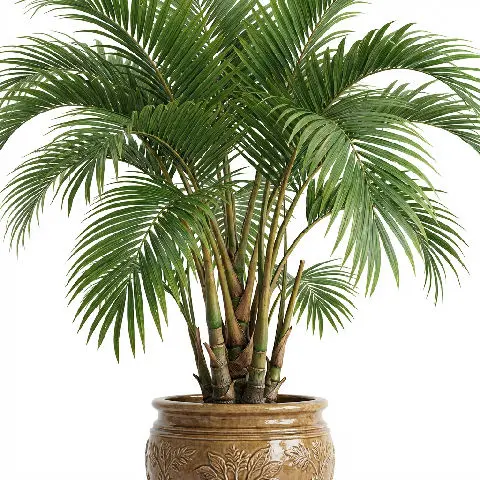
The Areca Palm, scientifically known as Dypsis lutescens, is a visually striking and highly valued indoor plant belonging to the Arecaceae family. Originating from the humid, tropical forests of Madagascar, particularly around Sainte Marie and Fort Dauphin, this elegant palm has adapted remarkably to diverse environments, making it a globally cherished ornamental specimen. Commonly referred to as the Butterfly Palm, Golden Cane Palm, or Yellow Palm, these names aptly describe its graceful, arching, yellow-green fronds and the distinctive golden hue of its stems, especially when exposed to ample light. First formally described by H.
Wendland in 1878, Dypsis lutescens naturally thrives in well-draining, sandy soils near coastal areas or stream banks, forming dense, multi-stemmed clumps that can reach impressive heights in its native habitat. Its natural populations in Madagascar are now critically endangered due to habitat destruction, emphasizing the importance of cultivated varieties for its continued existence. Botanically, the Areca Palm is characterized by its multiple, slender, ringed stems that emerge from a single base, creating a clustered, bamboo-like appearance. Its pinnate leaves, which can extend up to 2-3 meters in length, are composed of numerous narrow, lanceolate leaflets typically bright green to yellowish-green.
Inflorescences bearing small, inconspicuous yellowish flowers emerge from the leaf bases, eventually maturing into small, olive-shaped fruits that transition from yellow to orange, each containing a single seed. While primarily appreciated for its aesthetic appeal in softening interiors and imparting a tropical ambiance, Dypsis lutescens has gained significant scientific recognition for its exceptional air-purifying capabilities, notably highlighted by NASA's Clean Air Study for its efficiency in removing various volatile organic compounds (VOCs) from indoor environments.
Trusted Scientific References
1. Authoritative external sources for Dypsis lutescens
1.1 Wikipedia — Dypsis lutescens
1.2 Kew POWO (Plants of the World Online)
1.3 PubMed — peer-reviewed research
1.4 NCBI Taxonomy Browser
1.5 GBIF — Global Biodiversity
1.1.Areca Palm — Key Features
- ✓ <strong>Common Names</strong> — Butterfly Palm, Golden Cane Palm, Yellow Palm.
- ✓ <strong>Scientific Name</strong> — Dypsis lutescens.
- ✓ <strong>Family</strong> — Arecaceae (Palm Family).
- ✓ <strong>Native Habitat</strong> — Tropical forests of Madagascar, now endangered in the wild.
- ✓ <strong>Air Purification</strong> — Proven by NASA to remove VOCs like xylene, toluene, and formaldehyde.
- ✓ <strong>Ornamental Value</strong> — Elegant, arching, yellow-green fronds and golden stems.
- ✓ <strong>Non</strong> — Toxic — Safe for households with children and pets.
- ✓ <strong>Humidity Regulator</strong> — Increases indoor humidity through transpiration.
- ✓ <strong>Growth Habit</strong> — Multi-stemmed, clumping palm resembling bamboo canes.
- ✓ <strong>Cultural Significance</strong> — Valued in Chinese Feng Shui for positive energy and prosperity.
1.2.Areca Palm — Quick Summary
- ✓ Native to Madagascar, prized for ornamental beauty.
- ✓ Exceptional indoor air purifier, removing VOCs like formaldehyde.
- ✓ Non-toxic to humans and pets, making it a safe houseplant.
- ✓ Requires bright, indirect light, consistent moisture, and high humidity.
- ✓ Contributes to improved indoor air quality, humidity, and psychological well-being.
- ✓ Valued in Feng Shui for attracting positive energy and prosperity.
2.Areca Palm — Scientific Identity
3.Areca Palm — Quick Facts
4.Areca Palm — Appearance & Identification
5.Areca Palm — Native Habitat
6.Areca Palm — Water Requirements
- ✓ Light — Provide bright, indirect sunlight; direct sun can scorch leaves and cause yellowing.
- ✓ Watering — Keep soil consistently moist but never waterlogged; allow the top inch of soil to dry out between waterings.
- ✓ Humidity — Maintain high humidity, especially indoors; mist leaves several times a week or use a pebble tray/humidifier.
- ✓ Temperature — Ideal range is 18-24°C (64-75°F); protect from cold drafts and temperatures below 10°C (50°F).
- ✓ Soil — Use a well-draining potting mix rich in organic matter; a mix designed for palms is ideal.
- ✓ Fertilization — Feed with a balanced liquid fertilizer every 2-4 weeks during spring and summer, reducing in fall and winter.
- ✓ Repotting — Repot every 2-3 years or when root-bound, moving to a pot only slightly larger than the previous one.
- ✓ Pruning — Remove only yellowed or brown fronds at the base to maintain appearance and plant health.
Reviewed by the Flora Medical Global Botanical Review Panel
Multi-disciplinary editorial group · Botany · Ethnobotany · Herbal-medicine literature
Who reviewed this: This page was checked by the Flora Medical Global Botanical Review Panel — an in-house editorial group of botany graduates, ethnobotany researchers, and horticulture practitioners who collectively maintain our 7,000+ plant encyclopedia. Meet the team.
Our 4-step verification process
1. Taxonomic verification
Scientific names and synonyms cross-checked against Kew POWO, World Flora Online, and The Plant List.
2. Phytochemical & medicinal cross-reference
Active compounds, traditional uses, and reported activities are cross-referenced with PubMed, USDA Dr. Duke's database, and peer-reviewed ethnobotanical literature.
3. Conservation & distribution check
Distribution, ecology, and conservation status confirmed against GBIF occurrence records and the IUCN Red List.
4. Editorial & safety review
Every entry passes an editorial pass for clarity, originality, and safety notices (toxicity, contraindications, dosage caveats) before publication.
Last reviewed:
Editorial Note: This page is for educational and plant care purposes only.
Written by: Flora Medical Global Editorial Team
Reviewed by: Flora Medical Global Botanical Review Panel
Last Updated: June 15, 2026







Areca Palm — Comments & Community Reviews
Rate this plant