


Care Disclaimer: Plant care recommendations are general guidelines based on common growing conditions. Individual results may vary based on your local environment, climate, and care routine. If your plant is toxic, keep it away from children and pets, and consult a veterinarian if accidental ingestion occurs.
1.Asparagus Densiflorus — Overview
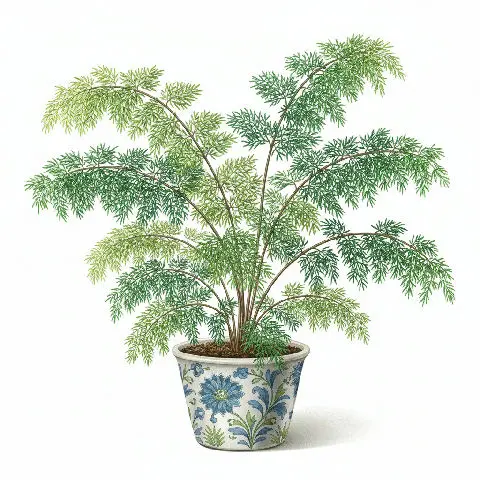
Asparagus densiflorus, commonly recognized by names such as Asparagus fern, Foxtail fern, or Plume fern, is a captivating perennial herb within the Asparagaceae family, not a true fern despite its common nomenclature. Native to the vibrant coastal regions of southeastern Africa, particularly the Eastern Cape and KwaZulu-Natal provinces, this resilient plant thrives in diverse natural settings, from sandy dunes to rocky outcrops. It exhibits a distinctive morphology characterized by arching, somewhat woody stems adorned with dense clusters of bright green, needle-like modified stems known as cladophylls, which perform the function of leaves.
Its true leaves are reduced to small, spine-like projections along the main stems. The plant typically forms a dense, wide-spreading habit, often reaching up to 3 feet in height and width, making it an effective groundcover in its native habitat, aiding in soil erosion prevention. During its flowering season, Asparagus densiflorus produces small, inconspicuous white-to-pink or yellowish-green bell-shaped flowers that are subtly fragrant.
These are followed by striking bright red berries, which enhance its ornamental appeal but are known to be mildly toxic if ingested. Its adaptability to varying light conditions and its lush, feathery texture have cemented its global popularity as an ornamental houseplant, container specimen, and landscape feature in subtropical and tropical climates.
Trusted Scientific References
1. Authoritative external sources for Asparagus densiflorus
1.1 Wikipedia — Asparagus densiflorus
1.2 Kew POWO (Plants of the World Online)
1.3 PubMed — peer-reviewed research
1.4 NCBI Taxonomy Browser
1.5 GBIF — Global Biodiversity
1.6Asparagus Densiflorus should be interpreted through verified botanical identity, practical care, and responsible safety language. This recovery note adds the missing context needed for a complete profile: match light to the plant's habit, use well-drained soil, water according to season, and avoid unsupported medicinal or edible claims. For publishing, the plant can be presented as a source-backed indoor plant with clear care guidance, common problem diagnosis, and conservative safety wording.
1.1.Asparagus Densiflorus — Key Features
- ✓ <strong>Botanical Misnomer</strong> — Commonly called a 'fern' but is botanically classified within the Asparagaceae family.
- ✓ <strong>Distinctive Foliage</strong> — Features dense, arching stems covered with needle-like modified stems (cladophylls) that resemble delicate foliage.
- ✓ <strong>African Native</strong> — Indigenous to the coastal regions of southeastern Africa, showcasing its adaptability to diverse environments.
- ✓ <strong>High Ornamental Value</strong> — Widely cultivated globally for its aesthetic appeal in both indoor and outdoor settings.
- ✓ <strong>Robust & Adaptable</strong> — Exhibits significant resilience, tolerating various light conditions and some drought once established.
- ✓ <strong>Mildly Toxic Berries</strong> — Produces attractive bright red berries that are known to be mildly toxic if consumed by humans or animals.
- ✓ <strong>Phytochemical Richness</strong> — Contains a spectrum of compounds including saponins, flavonoids, and phenolic acids with potential bioactivities.
- ✓ <strong>Low Maintenance</strong> — Generally easy to care for, requiring minimal attention once its basic environmental needs are met.
- ✓ <strong>Frost</strong> — Tender Nature — Sensitive to cold temperatures, necessitating indoor cultivation or protection in colder climates.
- ✓ <strong>Versatile Use</strong> — Excellent as a groundcover, in hanging baskets, containers, and as cut foliage in floral arrangements.
1.2.Asparagus Densiflorus — Quick Summary
- ✓ Asparagus densiflorus is an ornamental plant from the Asparagaceae family, not a true fern.
- ✓ Native to southeastern Africa, it is cherished for its lush, feathery cladophylls and resilient nature.
- ✓ Its bright red berries are mildly toxic if ingested by humans or pets.
- ✓ Preliminary scientific inquiry suggests potential antioxidant and anti-inflammatory properties from its phytochemicals.
- ✓ Cultivation requires bright, indirect light, well-draining soil, and protection from frost.
- ✓ Primarily used in horticulture for hanging baskets, groundcover, and floral arrangements.
2.Asparagus Densiflorus — Scientific Identity
3.Asparagus Densiflorus — Quick Facts
4.Asparagus Densiflorus — Appearance & Identification
5.Asparagus Densiflorus — Native Habitat
6.Asparagus Densiflorus — Water Requirements
- ✓ Light Requirements — Prefers bright, indirect light; direct afternoon sun can cause foliage to yellow. Tolerates full shade, but cladophylls may become lighter green.
- ✓ Soil & Drainage — Thrives in well-draining, fertile soil. A slightly acidic to neutral pH is ideal. Avoid heavy, waterlogged soils.
- ✓ Watering Schedule — Maintain consistent moisture during the spring and autumn growing seasons. Reduce watering significantly in winter, allowing the topsoil to dry out slightly between waterings.
- ✓ Temperature & Frost — Prefers medium warmth (60-75°F / 15-24°C). It is frost-tender; roots are hardy only to 20-25°F (-6 to -3°C). Bring container plants indoors before the first frost.
- ✓ Humidity — Appreciates moderate to high humidity, especially when grown indoors. Misting can be beneficial in dry environments.
- ✓ Fertilization — Feed with a balanced liquid fertilizer diluted to half strength monthly during the active growing period (spring through fall).
- ✓ Pruning & Maintenance — Pinch back stem tips to encourage denser, bushier growth and maintain desired form. The plant can be cut back to soil level for rejuvenation if it becomes leggy or overgrown.
- ✓ Propagation — Easily propagated by dividing its tuberous roots or rhizomes. Seeds, dispersed by birds, also germinate readily.
Reviewed by the Flora Medical Global Botanical Review Panel
Multi-disciplinary editorial group · Botany · Ethnobotany · Herbal-medicine literature
Who reviewed this: This page was checked by the Flora Medical Global Botanical Review Panel — an in-house editorial group of botany graduates, ethnobotany researchers, and horticulture practitioners who collectively maintain our 7,000+ plant encyclopedia. Meet the team.
Our 4-step verification process
1. Taxonomic verification
Scientific names and synonyms cross-checked against Kew POWO, World Flora Online, and The Plant List.
2. Phytochemical & medicinal cross-reference
Active compounds, traditional uses, and reported activities are cross-referenced with PubMed, USDA Dr. Duke's database, and peer-reviewed ethnobotanical literature.
3. Conservation & distribution check
Distribution, ecology, and conservation status confirmed against GBIF occurrence records and the IUCN Red List.
4. Editorial & safety review
Every entry passes an editorial pass for clarity, originality, and safety notices (toxicity, contraindications, dosage caveats) before publication.
Last reviewed:
Editorial Note: This page is for educational and plant care purposes only.
Written by: Flora Medical Global Editorial Team
Reviewed by: Flora Medical Global Botanical Review Panel
Last Updated: June 15, 2026







Asparagus Densiflorus — Comments & Community Reviews
Rate this plant