


Care Disclaimer: Plant care recommendations are general guidelines based on common growing conditions. Individual results may vary based on your local environment, climate, and care routine. If your plant is toxic, keep it away from children and pets, and consult a veterinarian if accidental ingestion occurs.
1.Begonia Corallina — Overview
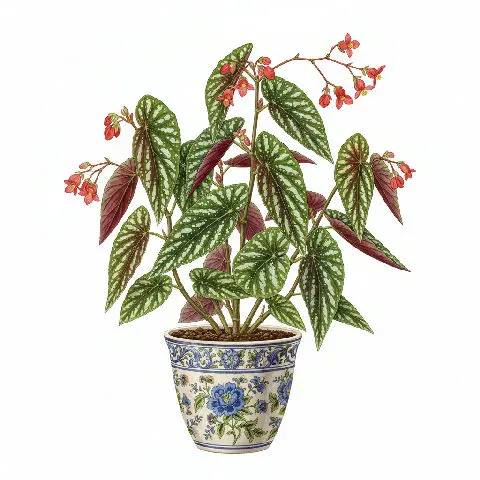
Begonia corallina, widely recognized as the Coral Begonia or Cane Begonia, is a striking and resilient species belonging to the extensive Begoniaceae family. This elegant plant is indigenous to the humid, shaded understory of the Atlantic Forests of Brazil, specifically thriving in regions such as Rio de Janeiro, Espírito Santo, and southern Bahia. Its natural environment, characterized by filtered light, consistent moisture, and nutrient-rich organic soils, perfectly informs its successful global cultivation as an indoor ornamental. First formally described in 1891 by the botanist Édouard André, the plant quickly captured attention due to its vibrant foliage and abundant flowering.
The species epithet 'corallina' aptly reflects the distinctive coral-pink hue of its profuse, pendulous flower clusters, a defining characteristic. While Begonia corallina is frequently hybridized in horticulture, yielding numerous cultivars with varied leaf patterns and flower shades, the pure species remains highly esteemed for its vigorous growth and classic beauty. Botanically, it is classified within the section Lemsia of the genus Begonia, a group notable for its upright, cane-like stems and distinctively asymmetric leaves. Although its primary value is ornamental, traditional knowledge regarding its use, particularly among indigenous communities in its native range, is largely anecdotal and not well-documented within established traditional medical systems like Ayurveda or Traditional Chinese Medicine.
Modern pharmacological research into various Begonia species, including B. corallina, is ongoing, focusing on phytochemical screening for compounds such as polyphenols, flavonoids, and triterpenoids that possess potential anti-inflammatory, antioxidant, and antimicrobial properties. However, specific, well-controlled clinical studies on B. corallina's efficacy in humans are still limited, with its cultural importance residing predominantly in its aesthetic appeal as a popular houseplant.
Trusted Scientific References
1. Authoritative external sources for Begonia corallina
1.1 Wikipedia — Begonia corallina
1.2 Kew POWO (Plants of the World Online)
1.3 PubMed — peer-reviewed research
1.4 NCBI Taxonomy Browser
1.5 GBIF — Global Biodiversity
1.1.Begonia Corallina — Key Features
- ✓ <strong>Striking Coral</strong> — Pink Flowers — Produces abundant, pendulous clusters of vibrant coral-pink blooms.
- ✓ <strong>Cane</strong> — Like Growth Habit — Characterized by distinct, upright, segmented stems, giving it a 'cane' appearance.
- ✓ <strong>Asymmetric, Textured Foliage</strong> — Features large, often dark green leaves that are typically asymmetric and may have silvery spots or variegation.
- ✓ <strong>Tropical Origin</strong> — Native to the humid, shaded understory of the Atlantic Forests in Brazil.
- ✓ <strong>Popular Houseplant</strong> — Widely cultivated globally for its significant ornamental appeal and ease of indoor care.
- ✓ <strong>Prefers Bright, Indirect Light</strong> — Thrives in filtered light conditions, avoiding harsh direct sun.
- ✓ <strong>High Humidity Requirement</strong> — Requires consistently high atmospheric humidity to flourish, especially in indoor environments.
- ✓ <strong>Rich in Phytochemicals</strong> — Contains a variety of compounds including flavonoids, polyphenols, and triterpenoids that are subjects of scientific study.
- ✓ <strong>Easy Propagation</strong> — Readily propagates from stem cuttings, making it simple to reproduce.
- ✓ <strong>Contains Oxalic Acid</strong> — All parts of the plant contain calcium oxalates, rendering it toxic if ingested.
1.2.Begonia Corallina — Quick Summary
- ✓ Ornamental beauty with vibrant coral-pink flowers and unique cane-like stems.
- ✓ Native to Brazil's Atlantic Forests, thriving in humid, shaded, and rich organic soil conditions.
- ✓ Contains bioactive compounds like flavonoids, polyphenols, and triterpenoids, under research for potential benefits.
- ✓ Preliminary research explores its antioxidant, anti-inflammatory, and antimicrobial properties in vitro.
- ✓ Primarily cultivated for aesthetics; any medicinal use is experimental, not clinically proven, and requires extreme caution.
- ✓ Contains oxalic acid, making all parts of the plant toxic if ingested; keep away from children and pets.
2.Begonia Corallina — Scientific Identity
3.Begonia Corallina — Quick Facts
4.Begonia Corallina — Appearance & Identification
5.Begonia Corallina — Native Habitat
6.Begonia Corallina — Water Requirements
- ✓ Light — *Begonia corallina* thrives in bright, indirect light; direct sunlight, especially harsh afternoon sun, can scorch its delicate leaves and should be avoided.
- ✓ Soil — Requires a well-draining, rich, and organic potting mix. A slightly acidic to neutral pH (6.0-7.0) is ideal to support robust growth and nutrient absorption.
- ✓ Watering — Maintain consistent soil moisture. Water thoroughly when the top inch of soil feels dry to the touch, but ensure proper drainage to prevent root rot.
- ✓ Humidity — High humidity is critical, mimicking its native tropical habitat. Use a humidifier, pebble tray, or regular misting to maintain ideal levels, especially indoors.
- ✓ Temperature — Prefers warm temperatures, ideally between 18-24°C (65-75°F). Protect the plant from cold drafts and temperatures below 15°C (60°F), which can cause stress.
- ✓ Propagation — Easily propagated from stem cuttings. Cuttings root readily in water or a moist, well-draining substrate, making it simple to multiply the plant.
- ✓ Fertilization — Feed monthly during its active growing season (spring through fall) with a balanced liquid fertilizer, diluted to half the recommended strength.
- ✓ Pruning — Prune regularly to encourage bushier growth, maintain a desirable shape, and remove any leggy stems or spent flower clusters to promote new blooms.
Reviewed by the Flora Medical Global Botanical Review Panel
Multi-disciplinary editorial group · Botany · Ethnobotany · Herbal-medicine literature
Who reviewed this: This page was checked by the Flora Medical Global Botanical Review Panel — an in-house editorial group of botany graduates, ethnobotany researchers, and horticulture practitioners who collectively maintain our 7,000+ plant encyclopedia. Meet the team.
Our 4-step verification process
1. Taxonomic verification
Scientific names and synonyms cross-checked against Kew POWO, World Flora Online, and The Plant List.
2. Phytochemical & medicinal cross-reference
Active compounds, traditional uses, and reported activities are cross-referenced with PubMed, USDA Dr. Duke's database, and peer-reviewed ethnobotanical literature.
3. Conservation & distribution check
Distribution, ecology, and conservation status confirmed against GBIF occurrence records and the IUCN Red List.
4. Editorial & safety review
Every entry passes an editorial pass for clarity, originality, and safety notices (toxicity, contraindications, dosage caveats) before publication.
Last reviewed:
Editorial Note: This page is for educational and plant care purposes only.
Written by: Flora Medical Global Editorial Team
Reviewed by: Flora Medical Global Botanical Review Panel
Last Updated: June 15, 2026







Begonia Corallina — Comments & Community Reviews
Rate this plant