


Care Disclaimer: Plant care recommendations are general guidelines based on common growing conditions. Individual results may vary based on your local environment, climate, and care routine. If your plant is toxic, keep it away from children and pets, and consult a veterinarian if accidental ingestion occurs.
1.Bird of Paradise — Overview
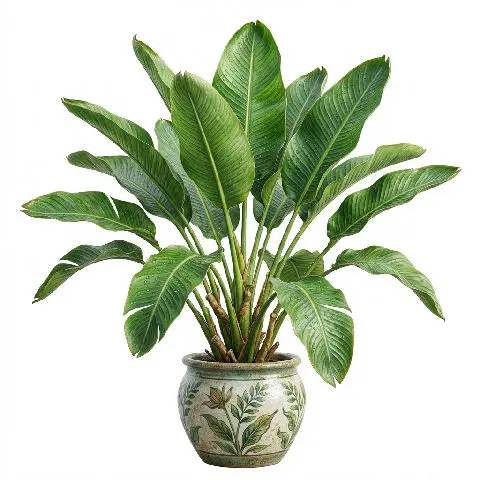
The Bird of Paradise plant, scientifically known as Strelitzia reginae, is a magnificent evergreen perennial celebrated for its distinctive, crane-like flowers. Native to the subtropical coastal bush and riverbanks of Southern Africa, specifically the Eastern Cape and KwaZulu-Natal provinces, it thrives in mild climates with consistent rainfall.
Its striking inflorescence features vibrant orange sepals and iridescent blue petals that emerge from a boat-shaped, horizontal spathe, creating the iconic resemblance to a crested bird in flight. This captivating appearance led to its naming in honor of Queen Charlotte of Mecklenburg-Strelitz, with 'reginae' signifying 'of the queen.'
Belonging to the family Strelitziaceae, Strelitzia reginae is one of five species within its genus, all indigenous to southern Africa. The plant typically forms dense, clump-forming growth with fleshy roots and large, leathery, oblong leaves that resemble those of a banana plant but are smaller and grow in a fan-like arrangement from a central crown.
Since its introduction to Europe in the late 18th century, it has become a globally cherished ornamental plant, widely cultivated in subtropical regions like Southern California and Florida, and a popular choice for cut flowers due to its exotic allure and hardiness. While primarily recognized for its aesthetic appeal, limited ethnobotanical records from its native range hint at traditional uses, prompting contemporary research into its phytochemical composition and potential bioactivities.
Trusted Scientific References
1. Authoritative external sources for Strelitzia reginae
1.1 Wikipedia — Strelitzia reginae
1.2 Kew POWO (Plants of the World Online)
1.3 PubMed — peer-reviewed research
1.4 NCBI Taxonomy Browser
1.5 GBIF — Global Biodiversity
1.6Bird of Paradise should be interpreted through verified botanical identity, practical care, and responsible safety language. This recovery note adds the missing context needed for a complete profile: match light to the plant's habit, use well-drained soil, water according to season, and avoid unsupported medicinal or edible claims. For publishing, the plant can be presented as a source-backed indoor plant with clear care guidance, common problem diagnosis, and conservative safety wording.
1.1.Bird of Paradise — Key Features
- ✓ <strong>Exotic Floral Display</strong> — Features vibrant orange sepals and blue petals resembling a crested bird in flight.
- ✓ <strong>Native to Southern Africa</strong> — Indigenous to subtropical coastal regions of the Eastern Cape and KwaZulu-Natal.
- ✓ <strong>Evergreen Perennial</strong> — Maintains lush foliage year-round in suitable warm climates.
- ✓ <strong>Large, Banana</strong> — like Leaves — Distinctive, stiff, leathery, grayish-green leaves growing in a fan shape.
- ✓ <strong>High Ornamental Value</strong> — Widely popular globally for landscaping, garden design, and as a cut flower.
- ✓ <strong>Folk Medicinal History</strong> — Traditional uses in its native range include applications for inflammation and wound healing.
- ✓ <strong>Rich in Phenolic Compounds</strong> — Contains beneficial flavonoids and anthocyanins with recognized antioxidant properties.
- ✓ <strong>Adaptable to Subtropical Climates</strong> — Thrives in warm, sunny conditions with well-drained soil.
- ✓ <strong>Clump</strong> — Forming Growth — Grows in dense clumps from fleshy rhizomes, contributing to its robust nature.
- ✓ <strong>Unique Spathe Structure</strong> — The hard, beak-like spathe is a defining characteristic from which the flowers emerge.
1.2.Bird of Paradise — Quick Summary
- ✓ Iconic ornamental plant known for its striking, bird-like orange and blue flowers.
- ✓ Native to Southern Africa, revered globally for its exotic beauty.
- ✓ Limited traditional folk use of rhizomes for inflammation and wound healing in its native range.
- ✓ Modern research highlights the presence of antioxidant flavonoids and anthocyanins.
- ✓ Primarily cultivated for ornamental purposes; internal medicinal use is not well-established.
- ✓ Exercise caution and avoid internal use due to insufficient safety data and potential mild toxicity.
2.Bird of Paradise — Scientific Identity
3.Bird of Paradise — Quick Facts
4.Bird of Paradise — Appearance & Identification
5.Bird of Paradise — Native Habitat
6.Bird of Paradise — Water Requirements
- ✓ Provide Full Sun Exposure — Requires abundant sunlight, ideally 6+ hours daily, to encourage robust growth and prolific flowering, especially in indoor settings.
- ✓ Ensure Well-Draining Soil — Plant in a rich, well-aerated potting mix or garden soil that drains freely to prevent root rot.
- ✓ Maintain Consistent Moisture — Keep soil moist during active growth periods (spring/summer), allowing it to dry slightly between waterings when dormant or indoors during winter.
- ✓ Fertilize Regularly — Feed every 2-4 weeks during the growing season with a balanced, water-soluble fertilizer, reducing frequency in winter.
- ✓ Encourage Pot-Bound Conditions — Strelitzia reginae flowers best when its roots are somewhat restricted, so avoid frequent repotting unless the plant is severely root-bound.
- ✓ Protect from Frost — While tolerant of brief dips to 28°F, prolonged cold or frost can damage the plant; bring indoors before the first frost in colder climates.
- ✓ Propagate by Division or Seed — Mature clumps can be divided in early spring, or seeds can be sown (after soaking and removing the orange aril) in warm conditions, though germination is slow and flowering takes years.
- ✓ Acclimate to Outdoor Light — When moving an indoor plant outdoors for summer, gradually introduce it to stronger sunlight to prevent leaf scorch.
Reviewed by the Flora Medical Global Botanical Review Panel
Multi-disciplinary editorial group · Botany · Ethnobotany · Herbal-medicine literature
Who reviewed this: This page was checked by the Flora Medical Global Botanical Review Panel — an in-house editorial group of botany graduates, ethnobotany researchers, and horticulture practitioners who collectively maintain our 7,000+ plant encyclopedia. Meet the team.
Our 4-step verification process
1. Taxonomic verification
Scientific names and synonyms cross-checked against Kew POWO, World Flora Online, and The Plant List.
2. Phytochemical & medicinal cross-reference
Active compounds, traditional uses, and reported activities are cross-referenced with PubMed, USDA Dr. Duke's database, and peer-reviewed ethnobotanical literature.
3. Conservation & distribution check
Distribution, ecology, and conservation status confirmed against GBIF occurrence records and the IUCN Red List.
4. Editorial & safety review
Every entry passes an editorial pass for clarity, originality, and safety notices (toxicity, contraindications, dosage caveats) before publication.
Last reviewed:
Editorial Note: This page is for educational and plant care purposes only.
Written by: Flora Medical Global Editorial Team
Reviewed by: Flora Medical Global Botanical Review Panel
Last Updated: June 15, 2026







Bird of Paradise — Comments & Community Reviews
Rate this plant