


Care Disclaimer: Plant care recommendations are general guidelines based on common growing conditions. Individual results may vary based on your local environment, climate, and care routine. If your plant is toxic, keep it away from children and pets, and consult a veterinarian if accidental ingestion occurs.
1.Brighamia Insignis — Overview
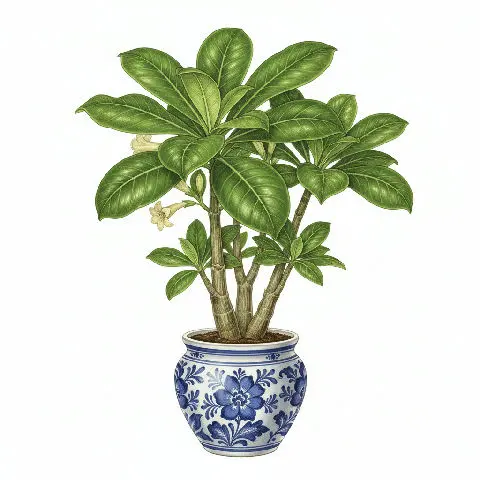
Brighamia insignis, affectionately known as the Hawaiian Palm or Cabbage on a Stick, is a critically endangered succulent endemic to the rugged, windswept sea cliffs of Kauaʻi and Niʻihau in the Hawaiian archipelago. This unique plant belongs to the Campanulaceae family, also known as the Bellflower family, a testament to its distinctive floral morphology.
Its evolutionary journey is a remarkable tale of island adaptation, having diversified from a singular colonizing ancestor to thrive in a narrow ecological niche.
Morphologically, Brighamia insignis presents a striking appearance: a thick, often unbranched, succulent stem that can reach heights of over ten feet, topped by a dense rosette of glossy, ovate leaves, typically five to eight inches long. Its vibrant yellow, tubular flowers, arranged in clusters of three to eight, are not only showy but also emit a delightful sweet fragrance reminiscent of honeysuckle or citrus.
Blooming occurs sporadically throughout the year in cultivation, though wild populations primarily flower in September and October.
The plant's semi-succulent leaves and swollen stem are crucial adaptations, allowing it to store water and endure prolonged periods of drought, strong winds, and salt spray characteristic of its coastal habitat. Despite its resilience, Brighamia insignis faces severe threats.
Habitat degradation, the proliferation of invasive alien species, and the catastrophic loss of its natural, co-evolved pollinator – the now-extinct Sphingid moth (Manduca blackburni) – have pushed it to the brink of extinction. Conservation efforts are intense, focusing on meticulous hand-pollination to ensure seed production and the establishment of ex situ populations in botanical gardens worldwide, serving as a vital genetic safeguard for this botanical treasure.
Trusted Scientific References
1. Authoritative external sources for Brighamia insignis
1.1 Wikipedia — Brighamia insignis
1.2 Kew POWO (Plants of the World Online)
1.3 PubMed — peer-reviewed research
1.4 NCBI Taxonomy Browser
1.5 GBIF — Global Biodiversity
1.1.Brighamia Insignis — Key Features
- ✓ <strong>Critically Endangered Endemic</strong> — Critically Endangered Endemic Species
- ✓ <strong>Distinctive Succulent Morphology</strong> — Distinctive Succulent Morphology (thick stem, leaf rosette)
- ✓ <strong>Fragrant Yellow Tubular</strong> — Fragrant Yellow Tubular Flowers
- ✓ <strong>Specialized Pollination (historically</strong> — Specialized Pollination (historically Sphingid moth, now manual)
- ✓ <strong>Adaptive to Arid</strong> — Adaptive to Arid Cliff Habitats
- ✓ <strong>Cultural Significance in</strong> — Cultural Significance in Early Hawaiian Practices (lei, limited traditional remedy)
- ✓ <strong>Focus of Intensive</strong> — Focus of Intensive Conservation Efforts
- ✓ <strong>Valuable Ornamental and</strong> — Valuable Ornamental and Specimen Plant
- ✓ <strong>Drought, Wind, and</strong> — Drought, Wind, and Salt Spray Tolerant
- ✓ <strong>Member of the</strong> — Member of the Bellflower (Campanulaceae) Family
1.2.Brighamia Insignis — Quick Summary
- ✓ Critically endangered Hawaiian endemic succulent, known as Hawaiian Palm.
- ✓ Distinctive thick stem, rosette of leaves, and fragrant yellow tubular flowers.
- ✓ Faces severe threats from habitat loss and the extinction of its natural pollinator.
- ✓ Conservation efforts include intensive hand-pollination and ex situ cultivation.
- ✓ Limited historical traditional use (e.g., for 'consumption'), but no modern medicinal research.
- ✓ Valued primarily for its unique horticultural appeal and ecological significance.
2.Brighamia Insignis — Scientific Identity
3.Brighamia Insignis — Quick Facts
4.Brighamia Insignis — Appearance & Identification
5.Brighamia Insignis — Native Habitat
6.Brighamia Insignis — Water Requirements
- ✓ Excellent Drainage — Requires a well-aerated soil mix, such as those formulated for succulents and cacti, with black cinder being an excellent component.
- ✓ Controlled Watering — Allow soil to dry slightly between waterings; overwatering can easily lead to root and stem rot or fungal infections.
- ✓ Adequate Light — Thrives in full sun to partial sun conditions; a balance of both often yields the best growth.
- ✓ Regular Fertilization — Responds well to monthly applications of half-strength foliar fertilizer or slow-release fertilizer twice a year, with high phosphorus varieties promoting blooming.
- ✓ Pest Management — Vigilant protection from common pests like carmine spider mites, slugs, and snails (especially African snails) is crucial, as they can rapidly defoliate and kill the plant.
- ✓ Pruning for Aesthetics — Remove lower yellowing or browning leaves to maintain a clean appearance and direct plant energy.
- ✓ Manual Pollination — In cultivation, hand pollination is essential for fruit and seed production due to the absence of its natural pollinator.
- ✓ Container Growing — Often best cultivated in pots to ensure optimal drainage and protect against ground-dwelling pests, especially in non-native environments.
Reviewed by the Flora Medical Global Botanical Review Panel
Multi-disciplinary editorial group · Botany · Ethnobotany · Herbal-medicine literature
Who reviewed this: This page was checked by the Flora Medical Global Botanical Review Panel — an in-house editorial group of botany graduates, ethnobotany researchers, and horticulture practitioners who collectively maintain our 7,000+ plant encyclopedia. Meet the team.
Our 4-step verification process
1. Taxonomic verification
Scientific names and synonyms cross-checked against Kew POWO, World Flora Online, and The Plant List.
2. Phytochemical & medicinal cross-reference
Active compounds, traditional uses, and reported activities are cross-referenced with PubMed, USDA Dr. Duke's database, and peer-reviewed ethnobotanical literature.
3. Conservation & distribution check
Distribution, ecology, and conservation status confirmed against GBIF occurrence records and the IUCN Red List.
4. Editorial & safety review
Every entry passes an editorial pass for clarity, originality, and safety notices (toxicity, contraindications, dosage caveats) before publication.
Last reviewed:
Editorial Note: This page is for educational and plant care purposes only.
Written by: Flora Medical Global Editorial Team
Reviewed by: Flora Medical Global Botanical Review Panel
Last Updated: June 15, 2026







Brighamia Insignis — Comments & Community Reviews
Rate this plant