
Care Disclaimer: Plant care recommendations are general guidelines based on common growing conditions. Individual results may vary based on your local environment, climate, and care routine. If your plant is toxic, keep it away from children and pets, and consult a veterinarian if accidental ingestion occurs.
1.Cast Iron Plant — Overview
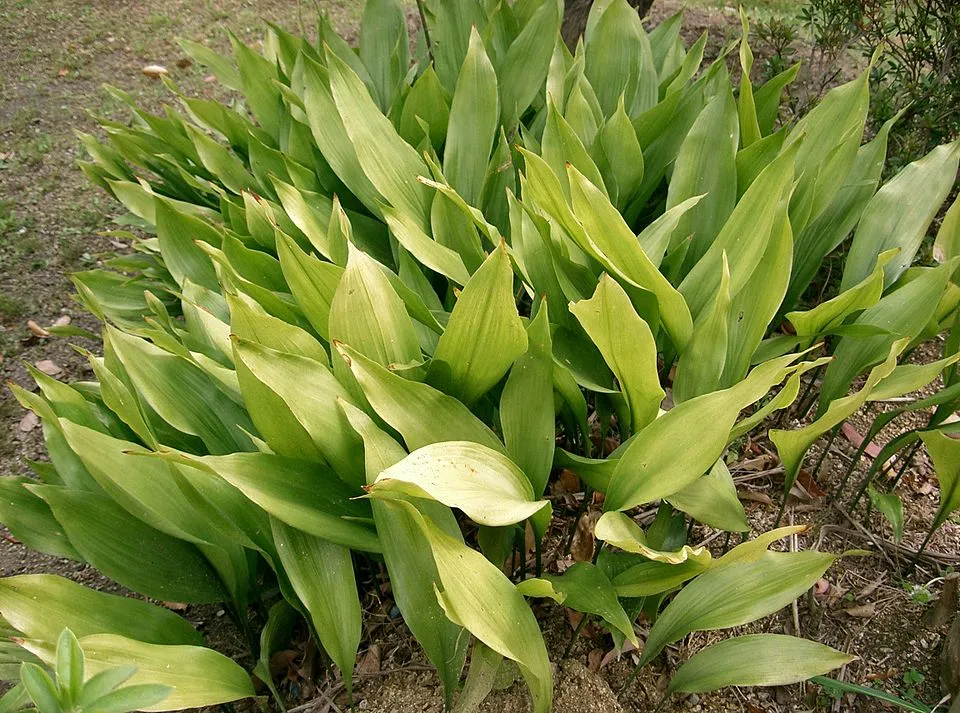
The Cast Iron Plant, scientifically known as Aspidistra elatior, is an exceptionally robust, evergreen perennial highly valued for its striking foliage and remarkable resilience. Native to the shaded forest understories of Taiwan and Japan, its common name perfectly encapsulates its ability to withstand harsh conditions, earning it a reputation as a nearly indestructible ornamental plant. Historically, Aspidistra elatior gained widespread popularity in Europe during the Victorian era, thriving in the dimly lit, often polluted urban environments of the time, such as gas-lit parlors.
Botanically classified within the Asparagaceae family, though previously placed in Liliaceae and Convallariaceae, it is characterized by long-stalked, glossy, dark green leaves that emerge directly from thick, underground rhizomes. Each leathery leaf can grow significantly, typically ranging from 30-70 cm (12-28 inches) in length and 10-15 cm (4-6 inches) in width. While primarily cultivated for its aesthetic appeal, Aspidistra elatior produces unique, bell-shaped, purplish-brown flowers at ground level, often concealed beneath its dense foliage, blooming from late winter to early spring.
These unusual flowers are pollinated by terrestrial invertebrates, such as slugs and amphipods, highlighting a distinctive evolutionary adaptation. Despite its ornamental prominence, the plant possesses a limited but intriguing history in traditional medicine, particularly in parts of Asia, where its rhizomes have been explored for various folk remedies.
Trusted Scientific References
1. Authoritative external sources for Aspidistra elatior
1.1 Wikipedia — Aspidistra elatior
1.2 Kew POWO (Plants of the World Online)
1.3 PubMed — peer-reviewed research
1.4 NCBI Taxonomy Browser
1.5 GBIF — Global Biodiversity
1.6Cast Iron Plant should be interpreted through verified botanical identity, practical care, and responsible safety language. This recovery note adds the missing context needed for a complete profile: match light to the plant's habit, use well-drained soil, water according to season, and avoid unsupported medicinal or edible claims. For publishing, the plant can be presented as a source-backed indoor plant with clear care guidance, common problem diagnosis, and conservative safety wording.
1.1.Cast Iron Plant — Key Features
- ✓ <strong>Remarkable Resilience</strong> — Tolerates low light, drought, and varying temperatures.
- ✓ <strong>Evergreen Perennial</strong> — Provides year-round foliage and beauty.
- ✓ <strong>Glossy Dark Green Leaves</strong> — Aesthetically appealing, leathery texture.
- ✓ <strong>Unique Ground</strong> — Level Flowers — Bell-shaped, purplish-brown, pollinated by invertebrates.
- ✓ <strong>Shade</strong> — Loving Plant — Ideal for dimly lit indoor spaces or shaded garden areas.
- ✓ <strong>Low Maintenance</strong> — Requires minimal care, making it popular for beginners.
- ✓ <strong>Rhizomatous Growth</strong> — Spreads via underground stems, forming clumps.
- ✓ <strong>Traditional Folk Uses</strong> — Employed in some Asian folk remedies for various ailments.
- ✓ <strong>Air Purifying Qualities (potential)</strong> — Like many houseplants, may contribute to indoor air quality.
- ✓ <strong>Architectural Foliage</strong> — Provides a strong, structural element in plant arrangements.
1.2.Cast Iron Plant — Quick Summary
- ✓ Extremely resilient evergreen perennial, known as the 'Cast Iron Plant'.
- ✓ Thrives in deep shade and tolerates neglect, ideal for low-light conditions.
- ✓ Primarily ornamental, valued for its glossy, dark green foliage.
- ✓ Limited traditional medicinal uses in Asia for fevers, pain, and urinary issues.
- ✓ Produces unique, inconspicuous, ground-level purplish-brown flowers.
- ✓ Modern pharmacological research into its bioactive compounds is nascent.
2.Cast Iron Plant — Scientific Identity
3.Cast Iron Plant — Quick Facts
4.Cast Iron Plant — Appearance & Identification
5.Cast Iron Plant — Native Habitat
6.Cast Iron Plant — Water Requirements
- ✓ Prefers deep to semi-shade conditions, mimicking its natural forest understory habitat.
- ✓ Thrives in rich, well-drained soil, but tolerates nutritionally poor and heavy clay soils.
- ✓ Requires consistent moisture but is remarkably drought-tolerant once established.
- ✓ Hardy in USDA zones 7-11, capable of withstanding temperatures down to -15°C (5°F) in well-sited locations.
- ✓ Propagated primarily by division of its rhizomes in spring as new growth emerges.
- ✓ Can also be grown from seed sown in spring, though germination can be slow.
- ✓ An excellent low-maintenance houseplant, tolerating significant neglect and various indoor conditions.
Reviewed by the Flora Medical Global Botanical Review Panel
Multi-disciplinary editorial group · Botany · Ethnobotany · Herbal-medicine literature
Who reviewed this: This page was checked by the Flora Medical Global Botanical Review Panel — an in-house editorial group of botany graduates, ethnobotany researchers, and horticulture practitioners who collectively maintain our 7,000+ plant encyclopedia. Meet the team.
Our 4-step verification process
1. Taxonomic verification
Scientific names and synonyms cross-checked against Kew POWO, World Flora Online, and The Plant List.
2. Phytochemical & medicinal cross-reference
Active compounds, traditional uses, and reported activities are cross-referenced with PubMed, USDA Dr. Duke's database, and peer-reviewed ethnobotanical literature.
3. Conservation & distribution check
Distribution, ecology, and conservation status confirmed against GBIF occurrence records and the IUCN Red List.
4. Editorial & safety review
Every entry passes an editorial pass for clarity, originality, and safety notices (toxicity, contraindications, dosage caveats) before publication.
Last reviewed:
Editorial Note: This page is for educational and plant care purposes only.
Written by: Flora Medical Global Editorial Team
Reviewed by: Flora Medical Global Botanical Review Panel
Last Updated: June 15, 2026







Cast Iron Plant — Comments & Community Reviews
Rate this plant