


Care Disclaimer: Plant care recommendations are general guidelines based on common growing conditions. Individual results may vary based on your local environment, climate, and care routine. If your plant is toxic, keep it away from children and pets, and consult a veterinarian if accidental ingestion occurs.
1.Cat Palm — Overview
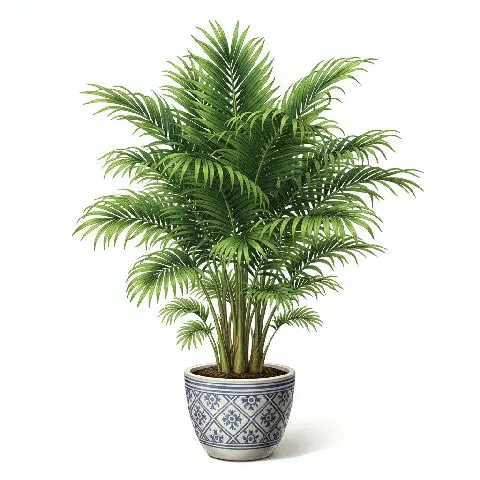
The Cat Palm, scientifically designated Chamaedorea cataractarum, is a captivating, clustering palm native to the lush, humid lowlands of southeastern Mexico and parts of Central America. Its specific epithet, 'cataractarum,' aptly describes its natural affinity for riparian environments, thriving along rivers and streams, often forming dense, verdant thickets at the bases of waterfalls. This understory palm is a botanical marvel, belonging to the Arecaceae family, characterized by its unique growth habit where multiple slender, cane-like stems emerge directly from the ground, creating a dense, bushy appearance rather than a singular trunk.
Its aesthetic appeal is largely attributed to its exquisite pinnately compound leaves, which are composed of numerous narrow, lance-shaped, dark green leaflets arranged along a central petiole, often evoking the soft, feathery look of a 'cat's tail' or 'cat's whiskers,' thus inspiring its common name. Unlike many palm species, Chamaedorea cataractarum is dioecious, meaning individual plants are either exclusively male or female, necessitating the presence of both sexes for successful fruit production. In its indigenous habitat, this resilient palm typically attains heights of 1 to 2 meters (3 to 6 feet), occasionally reaching 3 meters in established clumps, though it generally remains more compact when cultivated indoors.
Its robust adaptability to varying light conditions and tolerance for typical indoor humidity levels underscore its popularity as an ornamental houseplant.
Trusted Scientific References
1. Authoritative external sources for Chamaedorea cataractarum
1.1 Wikipedia — Chamaedorea cataractarum
1.2 Kew POWO (Plants of the World Online)
1.3 PubMed — peer-reviewed research
1.4 NCBI Taxonomy Browser
1.5 GBIF — Global Biodiversity
1.6Cat Palm should be interpreted through verified botanical identity, practical care, and responsible safety language. This recovery note adds the missing context needed for a complete profile: match light to the plant's habit, use well-drained soil, water according to season, and avoid unsupported medicinal or edible claims. For publishing, the plant can be presented as a source-backed indoor plant with clear care guidance, common problem diagnosis, and conservative safety wording.
1.1.Cat Palm — Key Features
- ✓ <strong>Rheophytic Growth Habit</strong> — Forms dense, multi-stemmed clumps without a single prominent trunk, adapted to growing along waterways.
- ✓ <strong>Pinnately Compound Leaves</strong> — Characterized by numerous narrow, dark green, lanceolate leaflets arranged along a central rachis, creating a feathery appearance.
- ✓ <strong>Dioecious Nature</strong> — Individual plants are either male or female, requiring both for successful fruit and seed production.
- ✓ <strong>Excellent Air Purifier</strong> — Consistently ranked among top performers for removing indoor air toxins like formaldehyde, benzene, and trichloroethylene.
- ✓ <strong>Adaptable to Low Light</strong> — Thrives in bright, indirect light conditions, making it well-suited for various indoor environments.
- ✓ <strong>Pet</strong> — Friendly — Generally considered non-toxic to common household pets, ensuring safety in family homes.
- ✓ <strong>Tropical Aesthetic</strong> — Adds a lush, vibrant, and elegant tropical ambiance to interior spaces.
- ✓ <strong>Natural Humidifier</strong> — Contributes to increased indoor humidity through transpiration, beneficial for dry climates.
- ✓ <strong>Root</strong> — Zone Biofiltration — Utilizes beneficial microorganisms in its potting mix to metabolize absorbed airborne pollutants.
- ✓ <strong>Low Maintenance</strong> — Relatively easy to care for, requiring consistent moisture and protection from direct sun.
1.2.Cat Palm — Quick Summary
- ✓ The Cat Palm (Chamaedorea cataractarum) is a clumping, understory palm native to tropical Mexico and Central America, thriving in riparian zones.
- ✓ It is highly prized as an indoor ornamental plant for its lush, feathery, pinnate foliage and graceful, cane-like stems.
- ✓ Renowned for its exceptional indoor air purification capabilities, it effectively removes common volatile organic compounds (VOCs) like formaldehyde, benzene, and trichloroethylene.
- ✓ This plant contributes significantly to healthier indoor environments by enhancing air quality and potentially alleviating symptoms of 'sick building syndrome'.
- ✓ Chamaedorea cataractarum is generally considered non-toxic to humans and pets, making it a safe and beneficial addition to any home.
- ✓ Its adaptability to indirect light and relatively easy care make it a popular choice for both novice and experienced plant enthusiasts.
2.Cat Palm — Scientific Identity
3.Cat Palm — Quick Facts
4.Cat Palm — Appearance & Identification
5.Cat Palm — Native Habitat
6.Cat Palm — Water Requirements
- ✓ Light — Provide bright, indirect light; direct sunlight can scorch its delicate fronds, while too little light can lead to sparse growth.
- ✓ Watering — Keep the soil consistently moist but never waterlogged; allow the top inch of soil to dry slightly between waterings, reducing frequency in winter.
- ✓ Soil — Use a well-draining, peat-based potting mix rich in organic matter to mimic its native tropical forest floor conditions.
- ✓ Humidity — Thrives in high humidity (above 50%); consider misting regularly, using a pebble tray, or placing it near a humidifier.
- ✓ Temperature — Maintain consistent indoor temperatures between 18-24°C (65-75°F); avoid cold drafts and sudden temperature fluctuations.
- ✓ Fertilization — Feed monthly during the active growing season (spring and summer) with a balanced liquid fertilizer diluted to half strength.
- ✓ Potting — Repot only when root-bound, typically every 2-3 years, into a pot only slightly larger than the previous one to prevent overwatering.
- ✓ Pruning — Remove only dead, yellowing, or damaged fronds by cutting them at the base with clean, sharp shears to maintain plant health and appearance.
Reviewed by the Flora Medical Global Botanical Review Panel
Multi-disciplinary editorial group · Botany · Ethnobotany · Herbal-medicine literature
Who reviewed this: This page was checked by the Flora Medical Global Botanical Review Panel — an in-house editorial group of botany graduates, ethnobotany researchers, and horticulture practitioners who collectively maintain our 7,000+ plant encyclopedia. Meet the team.
Our 4-step verification process
1. Taxonomic verification
Scientific names and synonyms cross-checked against Kew POWO, World Flora Online, and The Plant List.
2. Phytochemical & medicinal cross-reference
Active compounds, traditional uses, and reported activities are cross-referenced with PubMed, USDA Dr. Duke's database, and peer-reviewed ethnobotanical literature.
3. Conservation & distribution check
Distribution, ecology, and conservation status confirmed against GBIF occurrence records and the IUCN Red List.
4. Editorial & safety review
Every entry passes an editorial pass for clarity, originality, and safety notices (toxicity, contraindications, dosage caveats) before publication.
Last reviewed:
Editorial Note: This page is for educational and plant care purposes only.
Written by: Flora Medical Global Editorial Team
Reviewed by: Flora Medical Global Botanical Review Panel
Last Updated: June 15, 2026







Cat Palm — Comments & Community Reviews
Rate this plant