
Care Disclaimer: Plant care recommendations are general guidelines based on common growing conditions. Individual results may vary based on your local environment, climate, and care routine. If your plant is toxic, keep it away from children and pets, and consult a veterinarian if accidental ingestion occurs.
1.Clivia Miniata — Overview
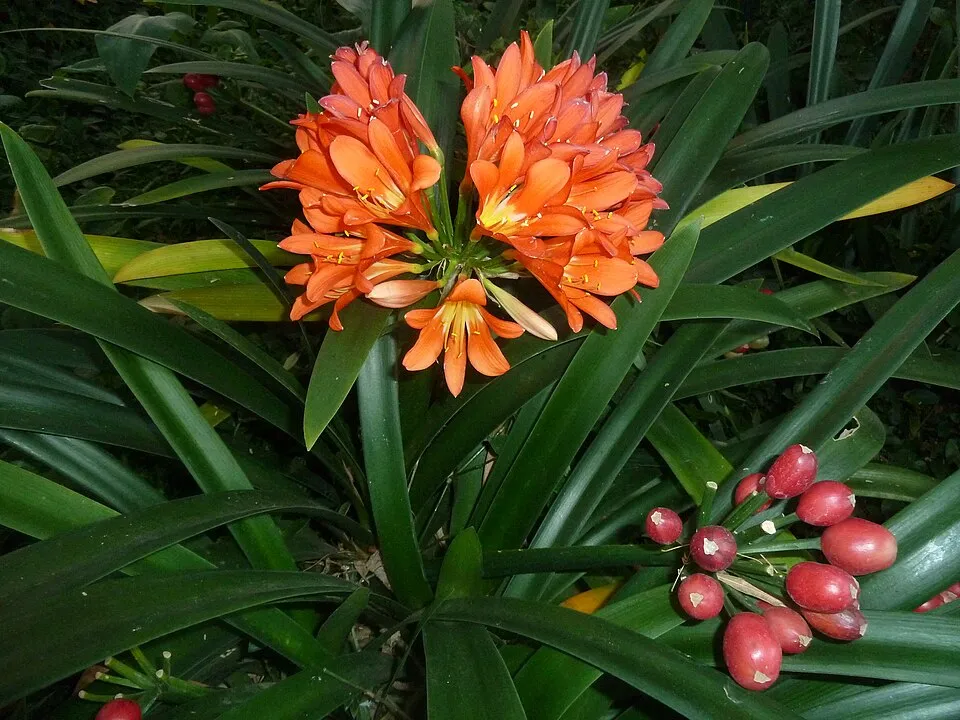
Clivia miniata, commonly known as the Natal Lily, Bush Lily, or Kaffir Lily, is a striking perennial evergreen herb belonging to the Amaryllidaceae family. Native to the moist, shady woodlands of Southern Africa, particularly thriving as an understory plant, its natural distribution spans from the Eastern Cape through KwaZulu-Natal to Mpumalanga in South Africa and into Swaziland. The plant typically grows as a cluster, reaching heights of about 80 cm, and is characterized by its robust, long, narrow (approximately 5 cm wide), strap-like, smooth-edged, dark green leaves that emerge from a fleshy underground stem base, not a true bulb.
Its botanical name 'Clivia' honors Lady Charlotte Clive, Duchess of Northumberland, while 'miniata' refers to its distinctive vermillion or cinnabar-red flowers. Unique among its genus, Clivia miniata is the only species with trumpet-like flowers, which are clustered in vibrant umbels atop hardy stalks. While typically orange-red, varieties with cream, yellow, or even bicolored blooms exist, sometimes exuding a faint, sweet scent.
The plant produces berries containing one to more than twenty seeds, usually around ten per berry. It prefers well-drained, humus-rich soil and, once established, demonstrates resilience to drier conditions, making it a popular ornamental globally.
Trusted Scientific References
1. Authoritative external sources for Clivia miniata
1.1 Wikipedia — Clivia miniata
1.2 Kew POWO (Plants of the World Online)
1.3 PubMed — peer-reviewed research
1.4 NCBI Taxonomy Browser
1.5 GBIF — Global Biodiversity
1.6Clivia Miniata should be interpreted through verified botanical identity, practical care, and responsible safety language. This recovery note adds the missing context needed for a complete profile: match light to the plant's habit, use well-drained soil, water according to season, and avoid unsupported medicinal or edible claims. For publishing, the plant can be presented as a source-backed indoor plant with clear care guidance, common problem diagnosis, and conservative safety wording.
1.1.Clivia Miniata — Key Features
- ✓ <strong>Botanical Name</strong> — Clivia miniata
- ✓ <strong>Family</strong> — Amaryllidaceae
- ✓ <strong>Common Names</strong> — Natal Lily, Bush Lily, Kaffir Lily, Umayime (Zulu)
- ✓ <strong>Native Region</strong> — Southern Africa (Eastern Cape, KwaZulu-Natal, Swaziland)
- ✓ <strong>Key Bioactive Compounds</strong> — Amaryllidaceae Alkaloids (e.g., Lycorine, Clivonine)
- ✓ <strong>Traditional Uses</strong> — Analgesic, Antipyretic, Anti-inflammatory, Uterotonic, Antidote for snakebites
- ✓ <strong>Modern Research Interest</strong> — Anti-cancer, Antiviral, Anti-inflammatory, Neurological effects
- ✓ <strong>Plant Type</strong> — Perennial evergreen herb with strap-like foliage and trumpet-like flowers
- ✓ <strong>Flower Color</strong> — Predominantly orange-red (vermillion), with cream and yellow varieties
- ✓ <strong>Toxicity</strong> — Highly toxic; all plant parts are poisonous if ingested, especially roots and rhizomes
1.2.Clivia Miniata — Quick Summary
- ✓ Clivia miniata, the Natal Lily, is a beautiful, perennial evergreen herb native to Southern Africa.
- ✓ It is rich in potent Amaryllidaceae alkaloids, including lycorine, clivonine, and miniaceine.
- ✓ Traditionally used by indigenous communities for pain, fever, inflammation, and to aid childbirth.
- ✓ Modern research explores its potential anti-cancer, antiviral, and anti-inflammatory properties.
- ✓ All parts of the plant, especially roots and rhizomes, are toxic if ingested.
- ✓ Medicinal use requires strict professional supervision due to its inherent toxicity and potent compounds.
2.Clivia Miniata — Scientific Identity
3.Clivia Miniata — Quick Facts
4.Clivia Miniata — Appearance & Identification
5.Clivia Miniata — Native Habitat
6.Clivia Miniata — Water Requirements
- ✓ Light Requirements — Prefers partial to full shade, thriving as an understory plant; direct, harsh sunlight should be avoided to prevent leaf scorch.
- ✓ Soil Composition — Requires well-drained, humus-rich soil with a slightly acidic to neutral pH (6.0-7.0) for optimal growth and nutrient absorption.
- ✓ Watering Schedule — Keep soil consistently moist but never waterlogged during the growing season; reduce watering significantly during cooler, dormant periods.
- ✓ Temperature & Humidity — Best grown in moderate temperatures ranging from 15-25°C (59-77°F) and appreciates higher humidity; protect vigorously from frost.
- ✓ Propagation — Can be propagated from fresh seeds, which germinate slowly over several months, or more readily by dividing mature clumps after flowering.
- ✓ Fertilization — Feed with a balanced liquid fertilizer every 2-4 weeks during the active growing season (spring and summer), reducing or stopping in autumn and winter.
- ✓ Pests & Diseases — Generally robust, but susceptible to common pests like mealybugs, scale insects, and spider mites; overwatering can lead to root rot.
Reviewed by the Flora Medical Global Botanical Review Panel
Multi-disciplinary editorial group · Botany · Ethnobotany · Herbal-medicine literature
Who reviewed this: This page was checked by the Flora Medical Global Botanical Review Panel — an in-house editorial group of botany graduates, ethnobotany researchers, and horticulture practitioners who collectively maintain our 7,000+ plant encyclopedia. Meet the team.
Our 4-step verification process
1. Taxonomic verification
Scientific names and synonyms cross-checked against Kew POWO, World Flora Online, and The Plant List.
2. Phytochemical & medicinal cross-reference
Active compounds, traditional uses, and reported activities are cross-referenced with PubMed, USDA Dr. Duke's database, and peer-reviewed ethnobotanical literature.
3. Conservation & distribution check
Distribution, ecology, and conservation status confirmed against GBIF occurrence records and the IUCN Red List.
4. Editorial & safety review
Every entry passes an editorial pass for clarity, originality, and safety notices (toxicity, contraindications, dosage caveats) before publication.
Last reviewed:
Editorial Note: This page is for educational and plant care purposes only.
Written by: Flora Medical Global Editorial Team
Reviewed by: Flora Medical Global Botanical Review Panel
Last Updated: June 15, 2026







Clivia Miniata — Comments & Community Reviews
Rate this plant