
Care Disclaimer: Plant care recommendations are general guidelines based on common growing conditions. Individual results may vary based on your local environment, climate, and care routine. If your plant is toxic, keep it away from children and pets, and consult a veterinarian if accidental ingestion occurs.
1.Colocasia Black Magic — Overview
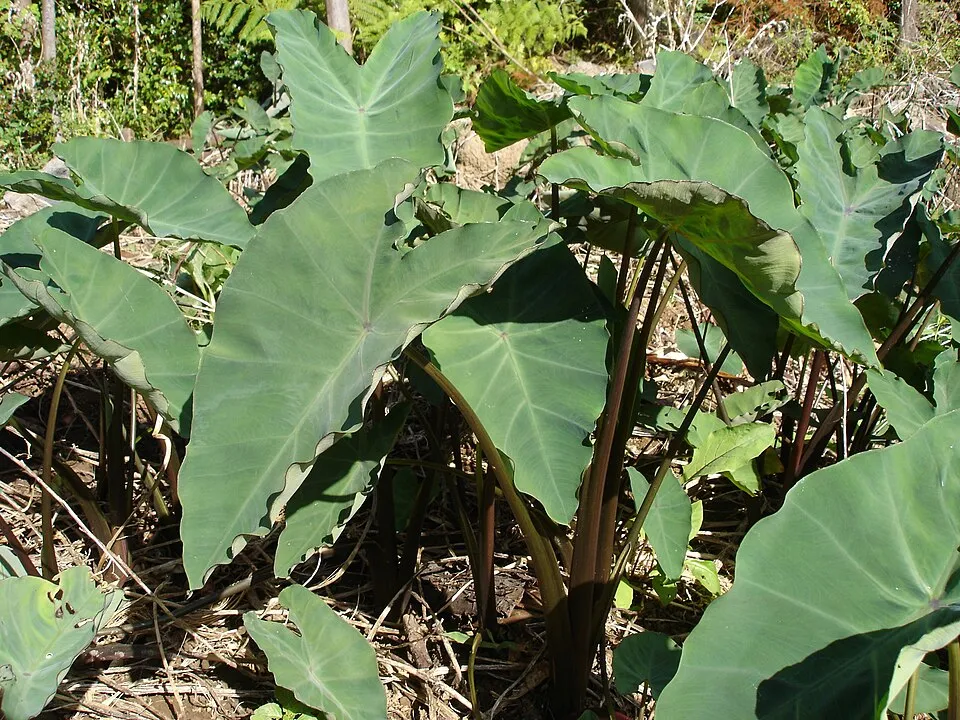
Colocasia 'Black Magic' (Colocasia esculenta 'Black Magic') is a visually striking cultivar of the common taro, Colocasia esculenta, celebrated primarily for its dramatic, deep purple-black foliage. This ornamental aroid stands out from its typically green-leaved parent species due to a significantly higher concentration of anthocyanin pigments, which imbue its large leaves with their characteristic dark hue.
While the broader species, Colocasia esculenta, boasts an extensive history as a vital food crop and traditional medicinal plant across tropical and subtropical regions, 'Black Magic' is a more recent horticultural selection, cultivated predominantly for its aesthetic appeal in gardens and landscapes.
Originating from Southeast Asia, the cradle of taro domestication, 'Black Magic' inherits the robust growth patterns of its ancestors. It typically forms impressive clumps, reaching heights of 90-150 cm (3-5 feet) with a similar spread, thriving in consistently damp, fertile environments.
Its distinctive large, heart-shaped or sagittate leaves can grow up to 60 cm (2 feet) in length, emerging on equally dark, contrasting petioles. This striking visual dynamic makes it a favored choice for water gardens, bog gardens, and as an impactful container plant.
Unlike many culinary taro varieties, the corms of 'Black Magic' are not typically harvested for food due to their substantial content of calcium oxalate crystals, which impart a strong acrid taste and can cause severe irritation if not meticulously processed. Although primarily ornamental, it retains the fundamental botanical and phytochemical profile of Colocasia esculenta.
Ethnobotanically, various parts of the parent species have been employed in traditional healing systems such as Ayurveda, where it's considered 'ruksha' and 'tikshna' for Vata and Kapha imbalances, and in Traditional Chinese Medicine (TCM), where taro is valued for its sweet and pungent properties that influence the spleen and stomach meridians. Unani medicine also recognizes the nutritional and therapeutic attributes of taro.
Trusted Scientific References
1. Authoritative external sources for Colocasia esculenta Black Magic
1.1 Wikipedia — Colocasia esculenta Black Magic
1.2 Kew POWO (Plants of the World Online)
1.3 PubMed — peer-reviewed research
1.4 NCBI Taxonomy Browser
1.5 GBIF — Global Biodiversity
1.1.Colocasia Black Magic — Key Features
- ✓ <strong>Striking Dark Foliage</strong> — Deep purple-black leaves provide dramatic visual contrast.
- ✓ <strong>Large Sagittate Leaves</strong> — Heart-shaped leaves can grow up to 60 cm (2 feet) long.
- ✓ <strong>Ornamental Cultivar</strong> — Prized for aesthetic value in gardens and landscapes.
- ✓ <strong>High Anthocyanin Content</strong> — Responsible for the distinctive dark pigmentation.
- ✓ <strong>Tropical Bog Plant</strong> — Thrives in wet, fertile soil and warm, humid conditions.
- ✓ <strong>Fast</strong> — Growing — Can quickly form large, impressive clumps.
- ✓ <strong>Container Friendly</strong> — Excellent for dramatic accents in pots, especially in cooler zones.
- ✓ <strong>Parent Species Medicinal Legacy</strong> — Inherits the botanical profile of *Colocasia esculenta*.
- ✓ <strong>Low Culinary Value</strong> — Corms of this specific cultivar are generally not consumed due to high oxalate levels.
- ✓ <strong>Frost Sensitive</strong> — Requires protection or overwintering in non-tropical climates.
1.2.Colocasia Black Magic — Quick Summary
- ✓ Colocasia 'Black Magic' is an ornamental taro cultivar known for its dramatic dark purple-black foliage.
- ✓ It contains calcium oxalate crystals, making all raw parts toxic and requiring extensive cooking for the parent species' culinary use.
- ✓ The parent species, *Colocasia esculenta*, has a rich history as a staple food and medicinal plant in traditional systems.
- ✓ Its dark color is due to high anthocyanin content, offering potential antioxidant benefits.
- ✓ Primarily grown for aesthetic appeal, 'Black Magic' corms are generally not consumed.
- ✓ Offers potential traditional health benefits through its parent species, but always with caution and proper preparation.
2.Colocasia Black Magic — Scientific Identity
3.Colocasia Black Magic — Quick Facts
4.Colocasia Black Magic — Appearance & Identification
5.Colocasia Black Magic — Native Habitat
6.Colocasia Black Magic — Water Requirements
- ✓ Soil Preference — Thrives in rich, fertile, consistently moist to wet soil, often performing well in boggy conditions or shallow standing water.
- ✓ Light Requirements — Prefers full sun to partial shade; more sun generally enhances the dark coloration of 'Black Magic' leaves.
- ✓ Temperature Sensitivity — A tropical plant, it is highly sensitive to frost and cold temperatures, requiring protection or overwintering in cooler climates.
- ✓ Watering — Demands abundant and consistent watering, especially during warm growing periods, to prevent wilting and maintain vigor.
- ✓ Propagation — Primarily propagated from corms or cormels (offsets) planted in spring after the last frost danger has passed.
- ✓ Fertilization — Benefits from regular feeding with a balanced liquid fertilizer during the growing season to support its vigorous growth and large foliage.
- ✓ Container Growing — Excellent choice for containers, especially in cooler zones, allowing for easy relocation indoors for winter protection.
- ✓ Pest and Disease Management — Generally robust, but watch for common garden pests like aphids or spider mites, and ensure good air circulation to prevent fungal issues.
Reviewed by the Flora Medical Global Botanical Review Panel
Multi-disciplinary editorial group · Botany · Ethnobotany · Herbal-medicine literature
Who reviewed this: This page was checked by the Flora Medical Global Botanical Review Panel — an in-house editorial group of botany graduates, ethnobotany researchers, and horticulture practitioners who collectively maintain our 7,000+ plant encyclopedia. Meet the team.
Our 4-step verification process
1. Taxonomic verification
Scientific names and synonyms cross-checked against Kew POWO, World Flora Online, and The Plant List.
2. Phytochemical & medicinal cross-reference
Active compounds, traditional uses, and reported activities are cross-referenced with PubMed, USDA Dr. Duke's database, and peer-reviewed ethnobotanical literature.
3. Conservation & distribution check
Distribution, ecology, and conservation status confirmed against GBIF occurrence records and the IUCN Red List.
4. Editorial & safety review
Every entry passes an editorial pass for clarity, originality, and safety notices (toxicity, contraindications, dosage caveats) before publication.
Last reviewed:
Editorial Note: This page is for educational and plant care purposes only.
Written by: Flora Medical Global Editorial Team
Reviewed by: Flora Medical Global Botanical Review Panel
Last Updated: June 15, 2026







Colocasia Black Magic — Comments & Community Reviews
Rate this plant