


Care Disclaimer: Plant care recommendations are general guidelines based on common growing conditions. Individual results may vary based on your local environment, climate, and care routine. If your plant is toxic, keep it away from children and pets, and consult a veterinarian if accidental ingestion occurs.
1.Columnea Carnival — Overview
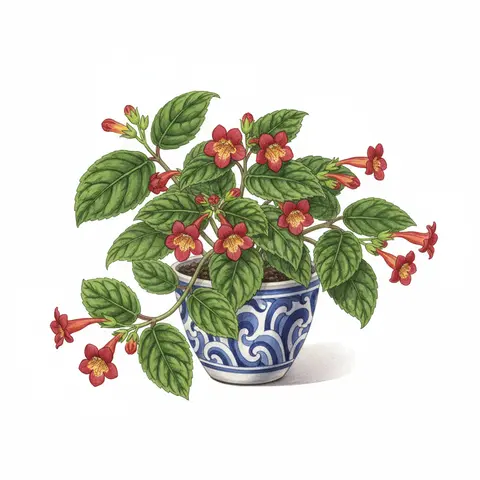
Columnea Carnival is a distinguished horticultural hybrid within the Gesneriaceae family, celebrated for its striking ornamental value rather than medicinal applications. Its lineage traces back to deliberate cross-breeding, primarily involving vibrant wild species such as Columnea gloriosa and Columnea microcalyx, cultivated specifically for their enhanced aesthetic appeal and robust growth characteristics. Unlike its wild progenitors, which thrive as epiphytes or lithophytes in the humid tropical rainforests of Central and South America, Columnea Carnival has been selectively bred for its exceptional adaptability to indoor environments.
The plant’s history reflects a mid to late 20th-century surge in demand for colorful, relatively easy-to-care-for houseplants. Morphologically, Columnea Carnival is characterized by its lustrous, dark green leaves, often exhibiting a subtle bronze or reddish flush on their undersides, which beautifully complement its signature trumpet-shaped flowers. These flamboyant blooms, typically a dazzling blend of reds, oranges, and yellows, frequently display intricate patterns or speckles, earning the genus its popular moniker, 'Goldfish Plant,' due to their resemblance to tiny, exotic fish.
Its architectural growth habit features stems that gracefully cascade, often extending over a meter in length, making it an ideal choice for hanging baskets. Propagation is predominantly vegetative, ensuring genetic fidelity given its hybrid nature. While research into the broader Columnea genus often explores unique flower morphology, specialized pollination biology (often by hummingbirds), and the presence of secondary metabolites like iridoid glycosides and flavonoids, specific pharmacological studies on Columnea Carnival itself are limited due to its primary role as an ornamental cultivar.
Trusted Scientific References
1. Authoritative external sources for Columnea carnival
1.1 Wikipedia — Columnea carnival
1.2 Kew POWO (Plants of the World Online)
1.3 PubMed — peer-reviewed research
1.4 NCBI Taxonomy Browser
1.5 GBIF — Global Biodiversity
1.1.Columnea Carnival — Key Features
- ✓ <strong>Striking 'Goldfish' Flowers</strong> — Vivid, trumpet-shaped blooms in reds, oranges, and yellows.
- ✓ <strong>Trailing/Cascading Growth</strong> — Ideal for hanging baskets and elevated displays.
- ✓ <strong>Glossy Green Foliage</strong> — Often with bronze or reddish undersides, adding to its visual appeal.
- ✓ <strong>Hybrid Vigor</strong> — Selected for robust growth and enhanced ornamental traits.
- ✓ <strong>Indoor Adaptability</strong> — Thrives in controlled indoor environments with proper care.
- ✓ <strong>Low Maintenance</strong> — Relatively easy to care for, making it suitable for many plant enthusiasts.
- ✓ <strong>Epiphytic Ancestry</strong> — Derived from species that naturally grow on trees or rocks.
- ✓ <strong>Long Blooming Period</strong> — Can flower continuously under optimal conditions.
- ✓ <strong>Tropical Origin</strong> — Prefers warm temperatures and high humidity.
- ✓ <strong>Vegetative Propagation</strong> — Easily propagated from stem cuttings, ensuring true-to-type offspring.
1.2.Columnea Carnival — Quick Summary
- ✓ Columnea Carnival is a vibrant, easy-to-care-for ornamental hybrid.
- ✓ Features striking 'Goldfish' flowers and a graceful trailing habit.
- ✓ Primarily valued for aesthetic appeal in hanging baskets and indoor displays.
- ✓ Its wild relatives are epiphytic tropical plants from the Americas.
- ✓ Not traditionally used for medicinal purposes; research focuses on the broader Columnea genus.
- ✓ Requires bright, indirect light, high humidity, and well-draining soil.
2.Columnea Carnival — Scientific Identity
3.Columnea Carnival — Quick Facts
4.Columnea Carnival — Appearance & Identification
5.Columnea Carnival — Native Habitat
6.Columnea Carnival — Water Requirements
- ✓ Light — Provide bright, indirect light; avoid harsh direct sunlight which can scorch leaves and fade flowers.
- ✓ Watering — Water thoroughly when the top inch of soil feels dry, then allow excess water to drain completely to prevent root rot.
- ✓ Humidity — Maintain high humidity levels (50-70%) through misting, pebble trays, or a humidifier, especially in dry indoor environments.
- ✓ Soil — Use a well-draining, airy potting mix, such as an orchid mix blended with perlite or coarse peat, mimicking its epiphytic nature.
- ✓ Fertilization — Feed every 2-4 weeks during the active growing season (spring and summer) with a balanced liquid fertilizer diluted to half strength.
- ✓ Temperature — Keep temperatures consistently warm, ideally between 18-27°C (65-80°F), and protect from cold drafts or sudden temperature drops.
- ✓ Propagation — Easily propagated from stem cuttings; take 4-6 inch sections and root them in moist soil or water.
- ✓ Pruning — Prune regularly to maintain shape, encourage bushier growth, and promote more abundant flowering.
Reviewed by the Flora Medical Global Botanical Review Panel
Multi-disciplinary editorial group · Botany · Ethnobotany · Herbal-medicine literature
Who reviewed this: This page was checked by the Flora Medical Global Botanical Review Panel — an in-house editorial group of botany graduates, ethnobotany researchers, and horticulture practitioners who collectively maintain our 7,000+ plant encyclopedia. Meet the team.
Our 4-step verification process
1. Taxonomic verification
Scientific names and synonyms cross-checked against Kew POWO, World Flora Online, and The Plant List.
2. Phytochemical & medicinal cross-reference
Active compounds, traditional uses, and reported activities are cross-referenced with PubMed, USDA Dr. Duke's database, and peer-reviewed ethnobotanical literature.
3. Conservation & distribution check
Distribution, ecology, and conservation status confirmed against GBIF occurrence records and the IUCN Red List.
4. Editorial & safety review
Every entry passes an editorial pass for clarity, originality, and safety notices (toxicity, contraindications, dosage caveats) before publication.
Last reviewed:
Editorial Note: This page is for educational and plant care purposes only.
Written by: Flora Medical Global Editorial Team
Reviewed by: Flora Medical Global Botanical Review Panel
Last Updated: June 15, 2026







Columnea Carnival — Comments & Community Reviews
Rate this plant