


Care Disclaimer: Plant care recommendations are general guidelines based on common growing conditions. Individual results may vary based on your local environment, climate, and care routine. If your plant is toxic, keep it away from children and pets, and consult a veterinarian if accidental ingestion occurs.
1.Cotton Candy Fern — Overview
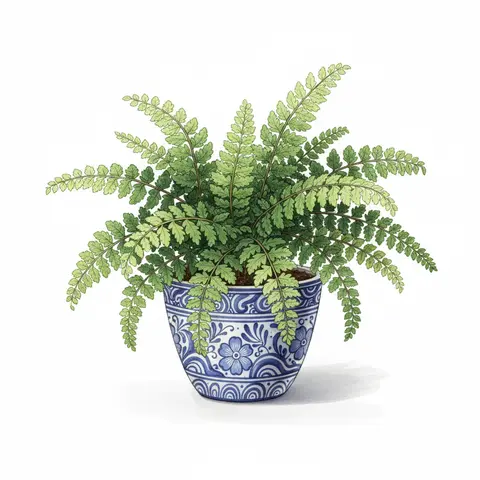
The Cotton Candy Fern, scientifically known as Nephrolepis exaltata 'Suzi Q', is a highly sought-after cultivar of the popular Boston fern, distinguished by its exceptionally dense, finely dissected, and incredibly soft fronds. These unique fronds create a delicate, cloud-like texture that truly lives up to its charming common name.
While its wild ancestors, various Nephrolepis species, are native to humid tropical and subtropical regions across the Americas, Africa, and Asia, thriving in the dappled light of forest understories, 'Suzi Q' is a modern horticultural selection. It was specifically bred for its ornamental value, compact growth habit, and distinct texture, making it an ideal indoor plant for enthusiasts and beginners alike.
Taxonomically, Nephrolepis exaltata belongs to the family Lomariopsidaceae, a diverse group of ferns. The 'Suzi Q' cultivar, like its parent species, exhibits a robust yet elegant morphology, characterized by arching fronds arising from a central rhizome. Although 'Suzi Q' itself is a contemporary development and not directly featured in ancient medicinal texts, its wild counterparts within the Nephrolepis genus have a rich ethnobotanical history.
These wild species have been traditionally associated with properties like cooling effects, used in various folk remedies for fevers and inflammatory conditions, or as topical applications for skin irritations. Modern scientific interest in the broader Nephrolepis genus has revealed a phytochemical profile rich in compounds such as flavonoids, triterpenoids, and phenolic acids, which are recognized for their antioxidant and anti-inflammatory activities. However, the primary significance of 'Suzi Q' today remains its aesthetic contribution, offering a touch of vibrant, living artistry and a calming presence to indoor environments.
Trusted Scientific References
1. Authoritative external sources for Nephrolepis exaltata Suzi Q
1.1 Wikipedia — Nephrolepis exaltata Suzi Q
1.2 Kew POWO (Plants of the World Online)
1.3 PubMed — peer-reviewed research
1.4 NCBI Taxonomy Browser
1.5 GBIF — Global Biodiversity
1.1.Cotton Candy Fern — Key Features
- ✓ <strong>Botanical Name</strong> — Nephrolepis exaltata 'Suzi Q', a distinct cultivar of the Boston fern.
- ✓ <strong>Unique Texture</strong> — Exceptionally dense, finely divided, and feathery fronds with a cloud-like appearance.
- ✓ <strong>Compact Growth</strong> — Maintains a manageable size, making it ideal for shelves, desks, and smaller indoor spaces.
- ✓ <strong>Indirect Light Preference</strong> — Requires bright, indirect light to prevent frond damage and maintain vibrant green color.
- ✓ <strong>High Humidity Requirement</strong> — Flourishes in consistently humid conditions, mimicking its tropical ancestry.
- ✓ <strong>Moisture</strong> — Retentive Soil — Needs a well-draining yet consistently moist potting mix for optimal health.
- ✓ <strong>Natural Air Purification</strong> — Acts as a natural filter, helping to remove airborne toxins from indoor environments.
- ✓ <strong>Aesthetic Appeal</strong> — Adds a lush, vibrant green and calming, whimsical presence to any interior decor.
- ✓ <strong>Low Maintenance</strong> — Considered relatively easy to care for, suitable for various levels of plant expertise.
- ✓ <strong>Non</strong> — Toxic to Pets — Generally regarded as safe for homes with cats and dogs.
1.2.Cotton Candy Fern — Quick Summary
- ✓ Ornamental Elegance — Prized for its soft, finely textured fronds resembling cotton candy.
- ✓ Air-Purifying — Contributes to cleaner indoor air by filtering common toxins.
- ✓ Easy Care — A forgiving houseplant suitable for both novice and experienced growers.
- ✓ Pet-Friendly — Generally non-toxic to household pets, making it a safe addition.
- ✓ Humidity Lover — Thrives in consistently moist, indirect light environments.
2.Cotton Candy Fern — Scientific Identity
3.Cotton Candy Fern — Quick Facts
4.Cotton Candy Fern — Appearance & Identification
5.Cotton Candy Fern — Native Habitat
6.Cotton Candy Fern — Water Requirements
- ✓ Light — Provide bright, indirect light; direct sunlight can scorch the delicate fronds, leading to browning and stress.
- ✓ Humidity — Maintain high ambient humidity, ideally above 60%, using humidifiers, grouping plants, or placing the pot on a pebble tray with water.
- ✓ Watering — Keep the soil consistently moist but never waterlogged; allow the top inch of soil to dry out slightly before watering again to prevent root rot.
- ✓ Soil — Use a well-draining, moisture-retentive potting mix rich in organic matter, such as a blend designed for ferns or tropical plants.
- ✓ Temperature — Thrives in stable temperatures between 65-75°F (18-24°C); protect from sudden fluctuations and cold drafts.
- ✓ Fertilization — Feed sparingly during the active growing season (spring and summer) with a diluted liquid fertilizer, typically at half-strength every 4-6 weeks.
- ✓ Pruning — Trim off old, yellowing, or damaged fronds at the base to encourage new growth, maintain plant vigor, and improve its overall aesthetic appearance.
Reviewed by the Flora Medical Global Botanical Review Panel
Multi-disciplinary editorial group · Botany · Ethnobotany · Herbal-medicine literature
Who reviewed this: This page was checked by the Flora Medical Global Botanical Review Panel — an in-house editorial group of botany graduates, ethnobotany researchers, and horticulture practitioners who collectively maintain our 7,000+ plant encyclopedia. Meet the team.
Our 4-step verification process
1. Taxonomic verification
Scientific names and synonyms cross-checked against Kew POWO, World Flora Online, and The Plant List.
2. Phytochemical & medicinal cross-reference
Active compounds, traditional uses, and reported activities are cross-referenced with PubMed, USDA Dr. Duke's database, and peer-reviewed ethnobotanical literature.
3. Conservation & distribution check
Distribution, ecology, and conservation status confirmed against GBIF occurrence records and the IUCN Red List.
4. Editorial & safety review
Every entry passes an editorial pass for clarity, originality, and safety notices (toxicity, contraindications, dosage caveats) before publication.
Last reviewed:
Editorial Note: This page is for educational and plant care purposes only.
Written by: Flora Medical Global Editorial Team
Reviewed by: Flora Medical Global Botanical Review Panel
Last Updated: June 15, 2026







Cotton Candy Fern — Comments & Community Reviews
Rate this plant