
Care Disclaimer: Plant care recommendations are general guidelines based on common growing conditions. Individual results may vary based on your local environment, climate, and care routine. If your plant is toxic, keep it away from children and pets, and consult a veterinarian if accidental ingestion occurs.
1.Croton Indoor — Overview
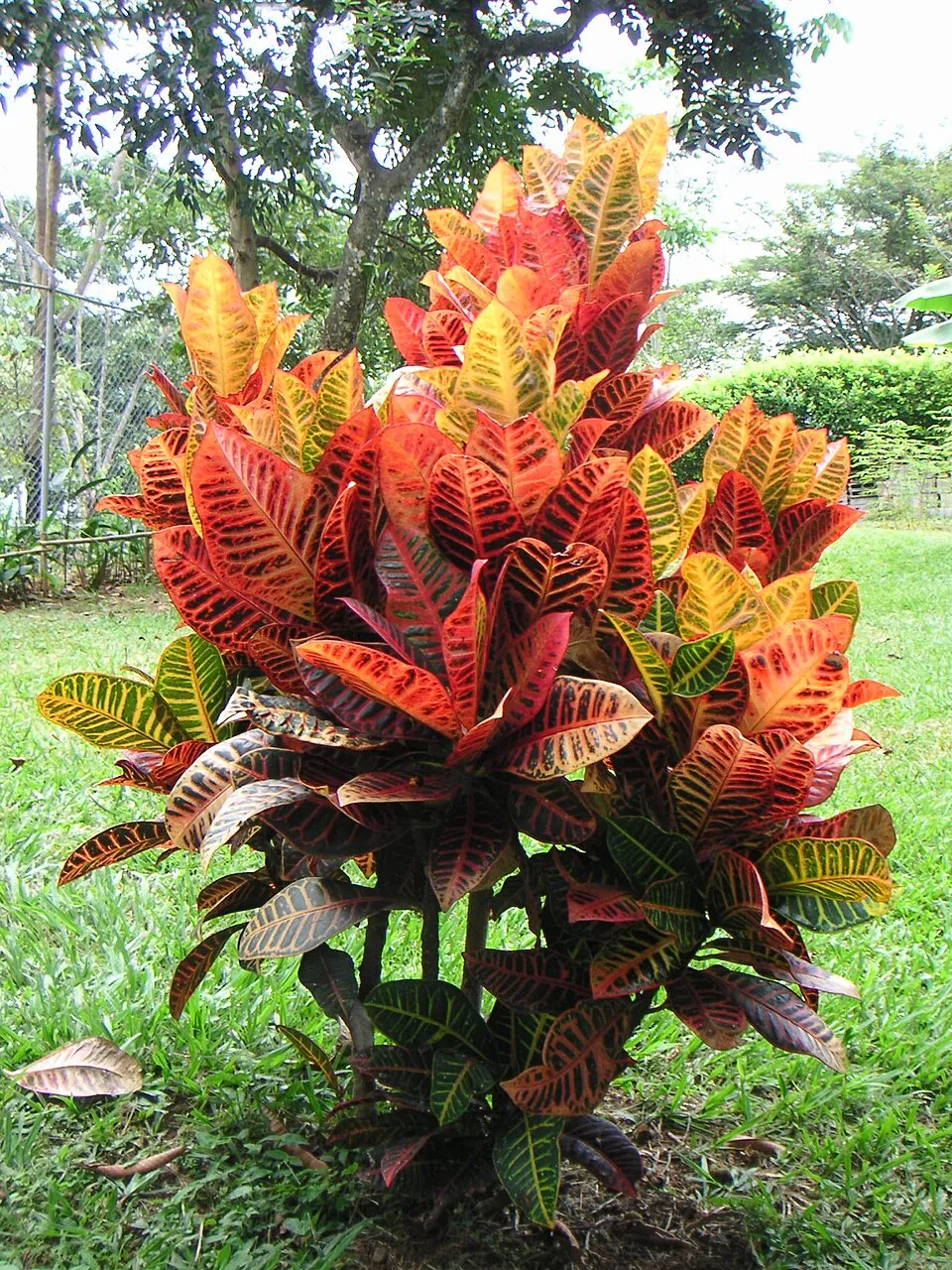
Codiaeum variegatum, widely recognized as Croton, is a captivating and highly polymorphic perennial evergreen shrub belonging to the Euphorbiaceae family. Native to the sun-drenched tropical regions of Southeast Asia, including Malaysia, Indonesia, the Pacific Islands, and Northern Australia, its natural habitat encompasses open forests and scrublands where it flourishes under bright, dappled sunlight and consistently warm, humid temperatures. The plant is globally celebrated for its extraordinarily variegated foliage, which showcases an astonishing spectrum of colors such as vibrant greens, sunny yellows, fiery oranges, deep reds, rich purples, and even black.
These hues often form intricate patterns of speckles, blotches, and prominent veins, making each leaf a unique work of art. The leaf shapes exhibit equal diversity, ranging from classic oval and elliptical to linear, distinctively lobed, or dramatically spiraled, frequently with undulating or twisted margins. This remarkable polymorphism is the primary reason Croton is so highly sought after as an ornamental plant, particularly for indoor cultivation in temperate climates.
A characteristic feature, shared with other Euphorbiaceae members, is the milky latex exuded from its stems when cut, which contains potent compounds responsible for its significant toxicity.
Trusted Scientific References
1. Authoritative external sources for Codiaeum variegatum
1.1 Wikipedia — Codiaeum variegatum
1.2 Kew POWO (Plants of the World Online)
1.3 PubMed — peer-reviewed research
1.4 NCBI Taxonomy Browser
1.5 GBIF — Global Biodiversity
1.6Croton Indoor should be interpreted through verified botanical identity, practical care, and responsible safety language. This recovery note adds the missing context needed for a complete profile: match light to the plant's habit, use well-drained soil, water according to season, and avoid unsupported medicinal or edible claims. For publishing, the plant can be presented as a source-backed indoor plant with clear care guidance, common problem diagnosis, and conservative safety wording.
1.1.Croton Indoor — Key Features
- ✓ <strong>Striking Variegated Foliage</strong> — Displays an extraordinary array of colors and intricate patterns on its leaves.
- ✓ <strong>Ornamental Value</strong> — Highly prized globally as a decorative indoor and outdoor plant in tropical and subtropical regions.
- ✓ <strong>Milky Toxic Latex</strong> — Contains potent diterpene phorbol esters, responsible for its irritant and toxic properties.
- ✓ <strong>Polymorphic Leaf Shapes</strong> — Exhibits diverse leaf forms, including oval, elliptical, linear, lobed, and spiraled.
- ✓ <strong>Tropical Evergreen Shrub</strong> — A perennial plant that maintains its foliage year-round in warm, humid climates.
- ✓ <strong>Ethnobotanical Topical Uses</strong> — Limited historical external applications in native cultures for specific ailments, always with extreme caution.
- ✓ <strong>Euphorbiaceae Family Member</strong> — Shares characteristic milky sap and potential toxicity with other plants in this family.
- ✓ <strong>Minimal Documented Internal Medicinal Use</strong> — Largely absent from major traditional pharmacopeias for internal therapeutic applications due to its toxicity.
- ✓ <strong>Requires Bright, Indirect Light</strong> — Essential for maintaining the vibrant coloration and health of its distinctive foliage.
1.2.Croton Indoor — Quick Summary
- ✓ Codiaeum variegatum, known as Croton, is an ornamental shrub famed for its vibrant, variegated foliage.
- ✓ It belongs to the toxic Euphorbiaceae family, containing highly irritant phorbol esters in its milky latex.
- ✓ Historically, limited and cautious topical applications were used in some folk traditions, never for internal therapeutic purposes.
- ✓ Modern herbalism strongly advises against any medicinal use due to significant toxicity and severe side effects.
- ✓ Its primary cultural and commercial significance lies in its unparalleled aesthetic appeal as a decorative plant.
2.Croton Indoor — Scientific Identity
3.Croton Indoor — Quick Facts
4.Croton Indoor — Appearance & Identification
5.Croton Indoor — Native Habitat
6.Croton Indoor — Water Requirements
- ✓ Climate — Thrives in warm, humid tropical climates, ideally USDA zones 10-12, or in controlled greenhouse environments.
- ✓ Light — Requires bright, indirect light for optimal growth and vivid foliage coloration; direct harsh sun can scorch leaves.
- ✓ Soil — Prefers well-draining, fertile loam soil rich in organic matter.
- ✓ pH — Optimal soil pH range is slightly acidic to neutral, typically between 6.0 and 7.0.
- ✓ Watering — Needs consistent moisture; water thoroughly when the top inch of soil feels dry, but avoid waterlogging.
- ✓ Propagation — Primarily propagated by stem cuttings, which root best in warm, humid conditions.
- ✓ Fertilization — Benefits from regular feeding with a balanced liquid fertilizer during the active growing season (spring and summer).
- ✓ Pruning — Prune to maintain desired shape and size; wear gloves due to irritating latex.
Reviewed by the Flora Medical Global Botanical Review Panel
Multi-disciplinary editorial group · Botany · Ethnobotany · Herbal-medicine literature
Who reviewed this: This page was checked by the Flora Medical Global Botanical Review Panel — an in-house editorial group of botany graduates, ethnobotany researchers, and horticulture practitioners who collectively maintain our 7,000+ plant encyclopedia. Meet the team.
Our 4-step verification process
1. Taxonomic verification
Scientific names and synonyms cross-checked against Kew POWO, World Flora Online, and The Plant List.
2. Phytochemical & medicinal cross-reference
Active compounds, traditional uses, and reported activities are cross-referenced with PubMed, USDA Dr. Duke's database, and peer-reviewed ethnobotanical literature.
3. Conservation & distribution check
Distribution, ecology, and conservation status confirmed against GBIF occurrence records and the IUCN Red List.
4. Editorial & safety review
Every entry passes an editorial pass for clarity, originality, and safety notices (toxicity, contraindications, dosage caveats) before publication.
Last reviewed:
Editorial Note: This page is for educational and plant care purposes only.
Written by: Flora Medical Global Editorial Team
Reviewed by: Flora Medical Global Botanical Review Panel
Last Updated: June 15, 2026







Croton Indoor — Comments & Community Reviews
Rate this plant