
Care Disclaimer: Plant care recommendations are general guidelines based on common growing conditions. Individual results may vary based on your local environment, climate, and care routine. If your plant is toxic, keep it away from children and pets, and consult a veterinarian if accidental ingestion occurs.
1.Cryptomeria Indoor — Overview
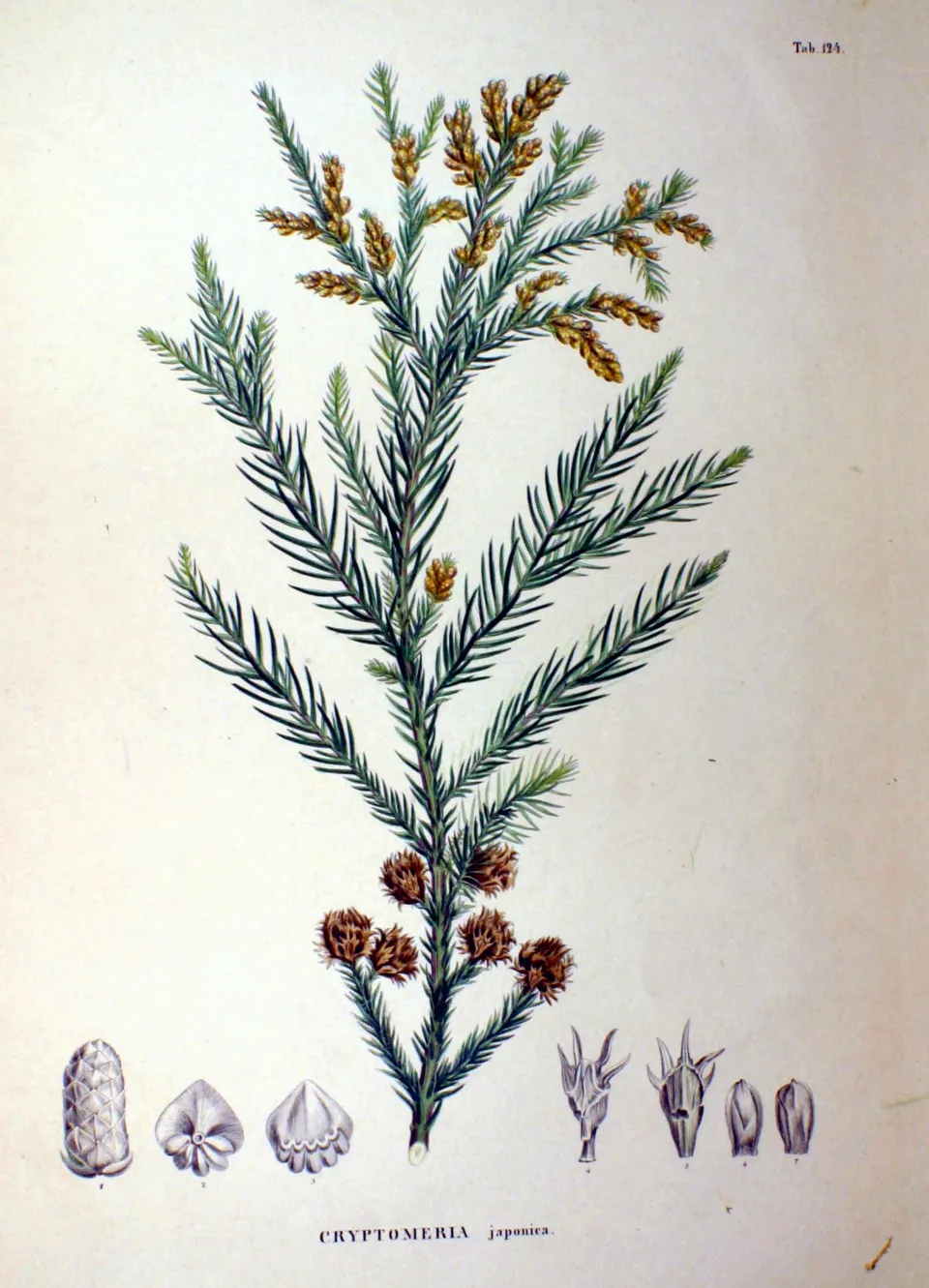
Cryptomeria japonica 'Globosa Nana', widely recognized as 'Cryptomeria Indoor' for its adaptability to container cultivation, is a highly esteemed dwarf, rounded cultivar of the Japanese Cedar. This coniferous shrub originates from the broader species, Cryptomeria japonica, a towering evergreen tree native to the temperate forests of Japan and China, where it holds profound cultural and ecological significance. The 'Globosa Nana' cultivar was meticulously developed to exhibit a distinctively compact, globe-like growth habit, rendering it an exemplary choice for diverse ornamental applications, including elegant rock gardens, defined borders, and increasingly, as a sophisticated indoor specimen or a meticulously shaped bonsai, particularly in regions with suitable climates.
While its parent species can ascend to majestic heights of 50-70 meters in its natural environment, 'Globosa Nana' maintains a modest stature, typically remaining under 1.5 meters in both height and spread, even after many years of maturation. Its prominent botanical characteristics include dense, vibrant emerald-green foliage, composed of short, awl-shaped needles arranged spirally along the stems. These needles undergo a captivating transformation in colder temperatures, adopting a rich bronzy-purple or rusty-red hue, which significantly enhances its seasonal aesthetic appeal.
Unlike the mature species, 'Globosa Nana' rarely produces prominent cones, often a characteristic of its dwarf cultivation and its typically immature state when maintained in containers. The genus name, Cryptomeria, derives from the Greek 'krypto' (to hide) and 'meris' (a part), referencing the concealed reproductive organs of the species.
Trusted Scientific References
1. Authoritative external sources for Cryptomeria japonica Globosa Nana
1.1 Wikipedia — Cryptomeria japonica Globosa Nana
1.2 Kew POWO (Plants of the World Online)
1.3 PubMed — peer-reviewed research
1.4 NCBI Taxonomy Browser
1.5 GBIF — Global Biodiversity
1.6Cryptomeria Indoor should be interpreted through verified botanical identity, practical care, and responsible safety language. This recovery note adds the missing context needed for a complete profile: match light to the plant's habit, use well-drained soil, water according to season, and avoid unsupported medicinal or edible claims. For publishing, the plant can be presented as a source-backed indoor plant with clear care guidance, common problem diagnosis, and conservative safety wording.
1.1.Cryptomeria Indoor — Key Features
- ✓ <strong>Dwarf Cultivar</strong> — Compact, globe-like growth habit, typically under 1.5 meters.
- ✓ <strong>Evergreen Foliage</strong> — Retains vibrant emerald-green needles throughout the year.
- ✓ <strong>Seasonal Color Change</strong> — Foliage softens to bronzy-purple or rusty-red in colder months.
- ✓ <strong>Low Maintenance</strong> — Requires minimal pruning and is generally pest and disease resistant.
- ✓ <strong>Versatile Use</strong> — Excellent for rock gardens, borders, containers, and bonsai.
- ✓ <strong>Drought Tolerant</strong> — Once established, it shows good resistance to dry conditions.
- ✓ <strong>Heat Tolerant</strong> — Performs well in warmer climates within its hardiness zones.
- ✓ <strong>Aromatic Qualities</strong> — Subtle conifer scent, characteristic of the Cryptomeria species.
- ✓ <strong>Cultural Significance</strong> — Parent species deeply rooted in Japanese landscaping and traditional practices.
- ✓ <strong>Air Purifying Potential</strong> — Like many plants, it contributes to cleaner indoor air when grown indoors.
1.2.Cryptomeria Indoor — Quick Summary
- ✓ Dwarf, rounded evergreen conifer, 'Cryptomeria japonica 'Globosa Nana'.
- ✓ Ideal for container growth, small gardens, and bonsai due to compact size.
- ✓ Features dense, emerald-green foliage that turns bronzy-purple in winter.
- ✓ Parent species, Cryptomeria japonica, has traditional uses for its aromatic and anti-inflammatory properties.
- ✓ Low maintenance, disease-resistant, and adaptable to various growing conditions.
- ✓ Offers year-round aesthetic appeal and contributes to indoor air quality.
2.Cryptomeria Indoor — Scientific Identity
3.Cryptomeria Indoor — Quick Facts
4.Cryptomeria Indoor — Appearance & Identification
5.Cryptomeria Indoor — Native Habitat
6.Cryptomeria Indoor — Water Requirements
- ✓ Light Requirements — Provide full sun to partial shade for optimal growth; at least 6 hours of direct sunlight is ideal, especially for container-grown specimens.
- ✓ Soil Composition — Thrives in moist, well-drained soil with a slightly acidic to neutral pH (6.0-7.0). Amend heavy clay soils with organic matter to improve drainage.
- ✓ Watering Schedule — Maintain consistent soil moisture, particularly during dry spells and for plants in containers. Allow the top inch of soil to dry slightly between waterings, but avoid waterlogging.
- ✓ Temperature & Humidity — Hardy in USDA Zones 6a-9b, tolerating a wide range of temperatures. Prefers moderate humidity but is adaptable to various conditions, showing winter bronzing in colder zones.
- ✓ Fertilization — Generally low-feeders. Apply a balanced, slow-release granular fertilizer in early spring, especially for container plants, to support healthy foliage growth.
- ✓ Pruning & Shaping — 'Globosa Nana' naturally forms a dense, rounded shape, requiring minimal pruning. Remove any dead or damaged branches to maintain its attractive form. For bonsai, specific shaping techniques apply.
- ✓ Pest & Disease Resistance — Highly resistant to most common insect pests and diseases, making it a low-maintenance choice for gardeners.
- ✓ Container Growing — Select a pot with adequate drainage holes. Repot every 2-3 years to refresh soil and accommodate root growth, using a good quality potting mix designed for evergreens.
Reviewed by the Flora Medical Global Botanical Review Panel
Multi-disciplinary editorial group · Botany · Ethnobotany · Herbal-medicine literature
Who reviewed this: This page was checked by the Flora Medical Global Botanical Review Panel — an in-house editorial group of botany graduates, ethnobotany researchers, and horticulture practitioners who collectively maintain our 7,000+ plant encyclopedia. Meet the team.
Our 4-step verification process
1. Taxonomic verification
Scientific names and synonyms cross-checked against Kew POWO, World Flora Online, and The Plant List.
2. Phytochemical & medicinal cross-reference
Active compounds, traditional uses, and reported activities are cross-referenced with PubMed, USDA Dr. Duke's database, and peer-reviewed ethnobotanical literature.
3. Conservation & distribution check
Distribution, ecology, and conservation status confirmed against GBIF occurrence records and the IUCN Red List.
4. Editorial & safety review
Every entry passes an editorial pass for clarity, originality, and safety notices (toxicity, contraindications, dosage caveats) before publication.
Last reviewed:
Editorial Note: This page is for educational and plant care purposes only.
Written by: Flora Medical Global Editorial Team
Reviewed by: Flora Medical Global Botanical Review Panel
Last Updated: June 15, 2026







Cryptomeria Indoor — Comments & Community Reviews
Rate this plant