
Care Disclaimer: Plant care recommendations are general guidelines based on common growing conditions. Individual results may vary based on your local environment, climate, and care routine. If your plant is toxic, keep it away from children and pets, and consult a veterinarian if accidental ingestion occurs.
1.Ctenanthe Oppenheimiana — Overview
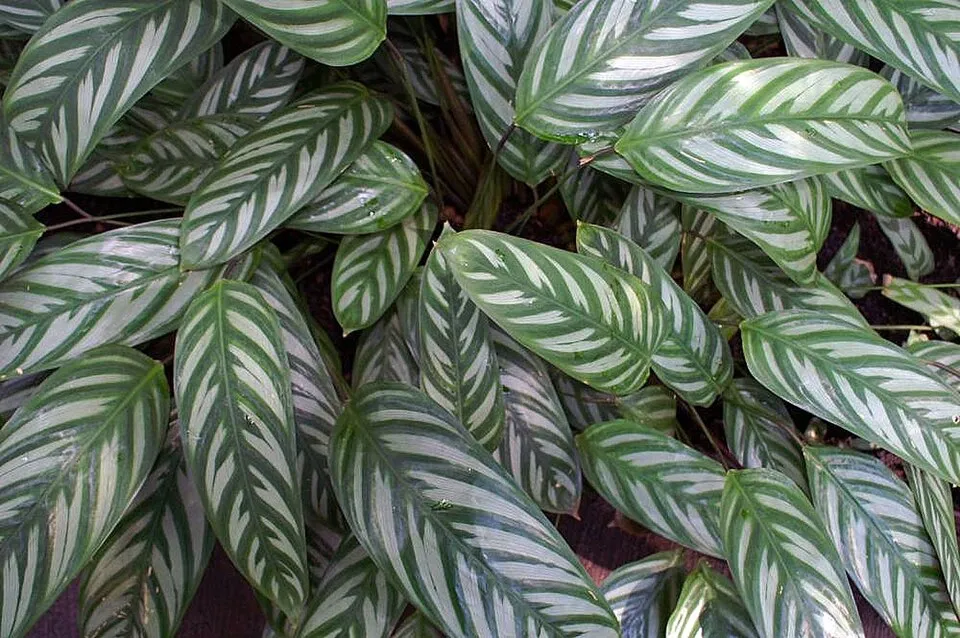
Ctenanthe oppenheimiana, widely recognized as the 'Never-Never Plant' or 'Oppenheim's Ctenanthe,' is a captivating tropical evergreen perennial indigenous to the humid, shaded understories of the Brazilian rainforests, particularly in regions such as Bahia. As a prominent member of the Marantaceae family, often called the 'prayer plant' family, it is celebrated for its striking foliage and remarkable phototropic leaf movements.
The plant's leaves exhibit a distinct diurnal rhythm, folding upwards at night, akin to praying hands, and unfurling during the day to optimize light absorption. This fascinating behavior is orchestrated by specialized motor organs known as pulvini, located at the leaf base, which respond to light cycles and internal circadian rhythms by altering turgor pressure.
Botanically, Ctenanthe oppenheimiana is characterized by its lanceolate leaves that can reach up to 3 feet in height in its bushy growth habit. The adaxial (upper) surface of the leaves features a vibrant pattern of dark green with prominent cream or silvery stripes, while the abaxial (lower) surface boasts a rich purplish-red hue, offering a stunning contrast. These variegated patterns are especially pronounced in popular cultivars like 'Tricolor.' Its inconspicuous flowers may bloom throughout the year but are not the primary ornamental feature.
The genus name 'Ctenanthe' is derived from Greek words 'ktenos' (comb) and 'anthera' (anther), though the exact etymological link to the plant's morphology is debated. Historically, the plant has been known by several synonyms, including Calathea oppenheimiana and Maranta oppenheimiana, reflecting its close botanical relationships within the Marantaceae family. While its primary significance in modern times is ornamental, its unique physiological adaptations continue to be a subject of botanical interest.
Trusted Scientific References
1. Authoritative external sources for Ctenanthe oppenheimiana
1.1 Wikipedia — Ctenanthe oppenheimiana
1.2 Kew POWO (Plants of the World Online)
1.3 PubMed — peer-reviewed research
1.4 NCBI Taxonomy Browser
1.5 GBIF — Global Biodiversity
1.1.Ctenanthe Oppenheimiana — Key Features
- ✓ <strong>Distinctive Variegated Foliage</strong> — Dark green leaves with creamy white/silver stripes, complemented by a rich purplish-red underside.
- ✓ <strong>Phototropic Leaf Movement</strong> — Leaves rhythmically fold upwards at night and flatten during the day, earning it the 'prayer plant' moniker.
- ✓ <strong>Tropical Evergreen Perennial</strong> — Maintains lush foliage year-round in its preferred warm, humid conditions.
- ✓ <strong>Marantaceae Family Member</strong> — Belongs to a botanical family renowned for its decorative and often moving foliage.
- ✓ <strong>Native to Brazilian Rainforests</strong> — Thrives in conditions mimicking its natural understory habitat: shaded, warm, and moist.
- ✓ <strong>Bushy Growth Habit</strong> — Grows up to 3 feet tall, forming an attractive, dense clump ideal for container growing.
- ✓ <strong>Non</strong> — Toxic to Pets and Humans — A safe choice for households with children and animals.
- ✓ <strong>High Humidity Requirement</strong> — Essential for preventing brown leaf edges and maintaining overall plant vigor.
- ✓ <strong>Bright, Indirect Light Preference</strong> — Optimal growth occurs away from harsh, direct sunlight.
- ✓ <strong>Ornamental Houseplant</strong> — Cultivated almost exclusively for its aesthetic contribution to indoor spaces.
1.2.Ctenanthe Oppenheimiana — Quick Summary
- ✓ Ornamental 'Prayer Plant' with striking variegated foliage.
- ✓ Native to Brazilian rainforests, favoring warm, humid, indirect light.
- ✓ Exhibits unique phototropic leaf movements, folding at night.
- ✓ Primarily valued for its aesthetic appeal in indoor environments.
- ✓ Considered non-toxic to humans and household pets.
- ✓ Requires consistent care and high humidity, often challenging for beginners.
2.Ctenanthe Oppenheimiana — Scientific Identity
3.Ctenanthe Oppenheimiana — Quick Facts
4.Ctenanthe Oppenheimiana — Appearance & Identification
5.Ctenanthe Oppenheimiana — Native Habitat
6.Ctenanthe Oppenheimiana — Water Requirements
- ✓ Light — Provide bright, indirect sunlight; direct sun can scorch the delicate leaves and dull their vibrant coloration.
- ✓ Water — Keep soil consistently moist but not waterlogged; allow the top inch of soil to dry slightly between waterings.
- ✓ Humidity — Requires high humidity, ideally above 60%; regular misting, a pebble tray, or a humidifier is recommended.
- ✓ Soil — Use a well-draining, peat-based potting mix rich in organic matter to retain moisture while preventing root rot.
- ✓ Temperature — Maintain warm temperatures, ideally between 65-80°F (18-27°C); intolerant to temperatures below 60°F (15°C).
- ✓ Fertilization — Fertilize monthly during the growing season (spring and summer) with a balanced liquid fertilizer diluted to half strength.
- ✓ Water Quality — Use distilled, filtered, or rainwater to avoid mineral and salt buildup from tap water, which can cause brown leaf tips.
- ✓ Propagation — Easily propagated by division of the rhizomes during repotting or by stem cuttings with several nodes.
Reviewed by the Flora Medical Global Botanical Review Panel
Multi-disciplinary editorial group · Botany · Ethnobotany · Herbal-medicine literature
Who reviewed this: This page was checked by the Flora Medical Global Botanical Review Panel — an in-house editorial group of botany graduates, ethnobotany researchers, and horticulture practitioners who collectively maintain our 7,000+ plant encyclopedia. Meet the team.
Our 4-step verification process
1. Taxonomic verification
Scientific names and synonyms cross-checked against Kew POWO, World Flora Online, and The Plant List.
2. Phytochemical & medicinal cross-reference
Active compounds, traditional uses, and reported activities are cross-referenced with PubMed, USDA Dr. Duke's database, and peer-reviewed ethnobotanical literature.
3. Conservation & distribution check
Distribution, ecology, and conservation status confirmed against GBIF occurrence records and the IUCN Red List.
4. Editorial & safety review
Every entry passes an editorial pass for clarity, originality, and safety notices (toxicity, contraindications, dosage caveats) before publication.
Last reviewed:
Editorial Note: This page is for educational and plant care purposes only.
Written by: Flora Medical Global Editorial Team
Reviewed by: Flora Medical Global Botanical Review Panel
Last Updated: June 15, 2026







Ctenanthe Oppenheimiana — Comments & Community Reviews
Rate this plant