
Care Disclaimer: Plant care recommendations are general guidelines based on common growing conditions. Individual results may vary based on your local environment, climate, and care routine. If your plant is toxic, keep it away from children and pets, and consult a veterinarian if accidental ingestion occurs.
1.Ctenanthe Setosa — Overview
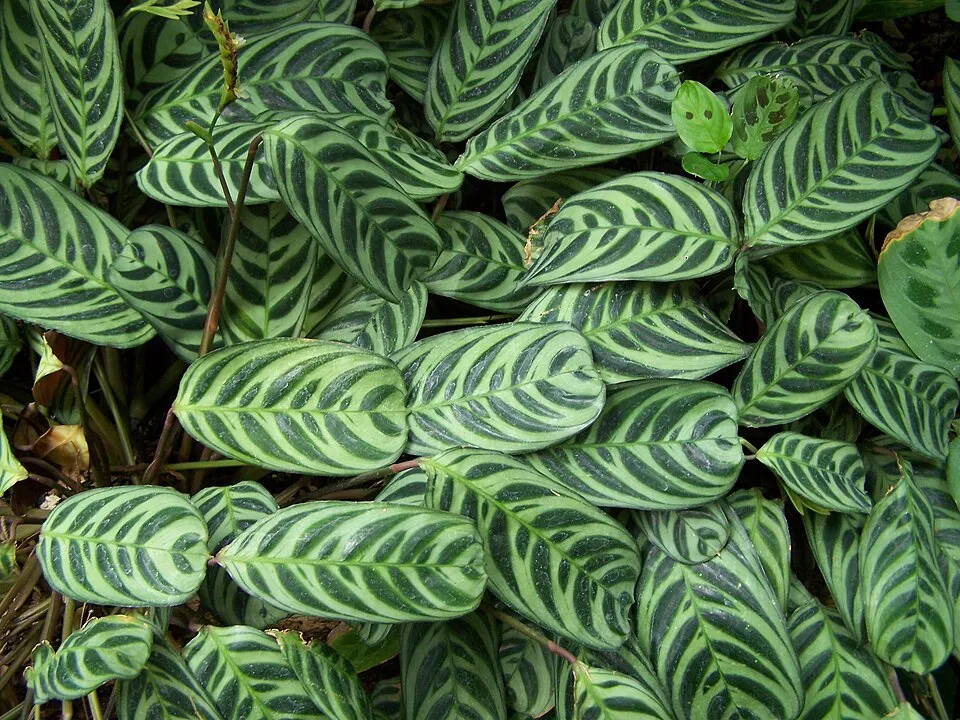
Ctenanthe setosa, affectionately known as the 'Grey Star Prayer Plant' or 'Never Never Plant', is a captivating evergreen herbaceous perennial native to the lush, humid understory of Brazil's tropical rainforests, particularly in regions like Espírito Santo and Rio de Janeiro. This member of the Marantaceae family, known for its striking foliage and distinctive nyctinastic leaf movements, thrives in dappled light and consistently high humidity. The genus name, Ctenanthe, is derived from Greek words 'kteis' (comb) and 'anthos' (flower), referencing the comb-like arrangement of its bracts.
Ctenanthe setosa earns its 'Grey Star' epithet from the prominent silvery-grey central stripe that adorns its elongated, ovate leaves, sharply contrasted by a dark green margin and a rich, velvety purple-red underside. This unique bicolor effect, coupled with a subtly bristly (setose) texture, makes it a highly sought-after ornamental plant. A hallmark characteristic, shared across the Marantaceae, is its diurnal leaf movement: the leaves fold upwards at dusk, resembling praying hands, and unfurl horizontally during daylight hours to maximize light absorption.
This 'prayer plant' phenomenon is orchestrated by specialized motor organs called pulvini, located at the base of the petioles, which respond to circadian rhythms and light changes. While its aesthetic appeal has fostered its global popularity as a houseplant, its specific role in traditional Amazonian pharmacology or documented medicinal systems such as Ayurveda, TCM, Unani, or Siddha remains largely unexplored or absent in mainstream scientific literature, suggesting its primary value has historically been ornamental.
Trusted Scientific References
1. Authoritative external sources for Ctenanthe setosa
1.1 Wikipedia — Ctenanthe setosa
1.2 Kew POWO (Plants of the World Online)
1.3 PubMed — peer-reviewed research
1.4 NCBI Taxonomy Browser
1.5 GBIF — Global Biodiversity
1.6Ctenanthe Setosa should be interpreted through verified botanical identity, practical care, and responsible safety language. This recovery note adds the missing context needed for a complete profile: match light to the plant's habit, use well-drained soil, water according to season, and avoid unsupported medicinal or edible claims. For publishing, the plant can be presented as a source-backed indoor plant with clear care guidance, common problem diagnosis, and conservative safety wording.
1.1.Ctenanthe Setosa — Key Features
- ✓ <strong>Striking Foliage</strong> — Features elongated, ovate leaves with a unique silvery-grey central stripe, dark green margins, and purple-red undersides.
- ✓ <strong>Nyctinastic Movement</strong> — Leaves fold upwards at night and flatten during the day, giving it the 'prayer plant' moniker.
- ✓ <strong>Tropical Origin</strong> — Native to the humid understory of Brazilian rainforests, requiring similar environmental conditions indoors.
- ✓ <strong>Marantaceae Family</strong> — Belongs to the 'prayer plant' family, known for its dramatic and often colorful foliage.
- ✓ <strong>Evergreen Perennial</strong> — Maintains its foliage year-round, offering continuous visual interest.
- ✓ <strong>Clump</strong> — Forming Growth — Grows in a clump, reaching up to 3 feet tall and wide in optimal conditions.
- ✓ <strong>Non</strong> — Toxic — Considered safe for households with pets like cats and dogs.
- ✓ <strong>High Humidity Lover</strong> — Thrives in environments with consistent high humidity, making it ideal for bathrooms or humidifiers.
- ✓ <strong>Indirect Light Preference</strong> — Prefers bright, indirect light, avoiding direct sun which can scorch its delicate leaves.
- ✓ <strong>Ornamental Value</strong> — Highly valued for its aesthetic appeal as an indoor houseplant.
1.2.Ctenanthe Setosa — Quick Summary
- ✓ Ornamental 'Grey Star Prayer Plant' native to Brazilian rainforests.
- ✓ Distinctive silvery-grey and dark green leaves with purple undersides.
- ✓ Exhibits nyctinastic (prayer-like) leaf movements.
- ✓ Requires bright, indirect light, high humidity, and consistent moisture.
- ✓ Generally non-toxic to pets and contributes to indoor aesthetics.
- ✓ No documented traditional or modern medicinal uses for specific ailments.
2.Ctenanthe Setosa — Scientific Identity
3.Ctenanthe Setosa — Quick Facts
4.Ctenanthe Setosa — Appearance & Identification
5.Ctenanthe Setosa — Native Habitat
6.Ctenanthe Setosa — Water Requirements
- ✓ Bright, Indirect Light — Provide a sheltered spot with bright but indirect sunlight; too much direct sun can fade leaf colors, while too much shade reduces variegation.
- ✓ Well-Drained, Moist Soil — Use a rich, well-aerated potting mix with good drainage and moisture retention, ideally slightly acidic to neutral (pH 6.1-7.3); amend with perlite for optimal drainage.
- ✓ Consistent Moisture — Keep the soil consistently moist but never waterlogged during the growing season; allow the top 1-2 inches of soil to dry slightly between waterings, reducing frequency in winter.
- ✓ High Humidity — Ctenanthe setosa thrives in high humidity (60-80%); use a pebble tray, humidifier, or regular misting to maintain adequate moisture in the air.
- ✓ Warm Temperatures — Maintain ideal temperatures between 60-80°F (16-27°C) and protect from sudden temperature changes or cold drafts.
- ✓ Regular Fertilization — Feed monthly during the growing season (spring to early fall) with a weak liquid fertilizer, discontinuing in late fall and winter when growth slows.
- ✓ Repotting — Repot every two years or as needed to provide adequate space for growth, selecting a pot with good drainage holes.
- ✓ Pruning — Only prune to remove damaged or dying older foliage at the base of the plant to redirect energy to new growth.
Reviewed by the Flora Medical Global Botanical Review Panel
Multi-disciplinary editorial group · Botany · Ethnobotany · Herbal-medicine literature
Who reviewed this: This page was checked by the Flora Medical Global Botanical Review Panel — an in-house editorial group of botany graduates, ethnobotany researchers, and horticulture practitioners who collectively maintain our 7,000+ plant encyclopedia. Meet the team.
Our 4-step verification process
1. Taxonomic verification
Scientific names and synonyms cross-checked against Kew POWO, World Flora Online, and The Plant List.
2. Phytochemical & medicinal cross-reference
Active compounds, traditional uses, and reported activities are cross-referenced with PubMed, USDA Dr. Duke's database, and peer-reviewed ethnobotanical literature.
3. Conservation & distribution check
Distribution, ecology, and conservation status confirmed against GBIF occurrence records and the IUCN Red List.
4. Editorial & safety review
Every entry passes an editorial pass for clarity, originality, and safety notices (toxicity, contraindications, dosage caveats) before publication.
Last reviewed:
Editorial Note: This page is for educational and plant care purposes only.
Written by: Flora Medical Global Editorial Team
Reviewed by: Flora Medical Global Botanical Review Panel
Last Updated: June 15, 2026







Ctenanthe Setosa — Comments & Community Reviews
Rate this plant