
Care Disclaimer: Plant care recommendations are general guidelines based on common growing conditions. Individual results may vary based on your local environment, climate, and care routine. If your plant is toxic, keep it away from children and pets, and consult a veterinarian if accidental ingestion occurs.
1.Cyathea Tree Fern — Overview
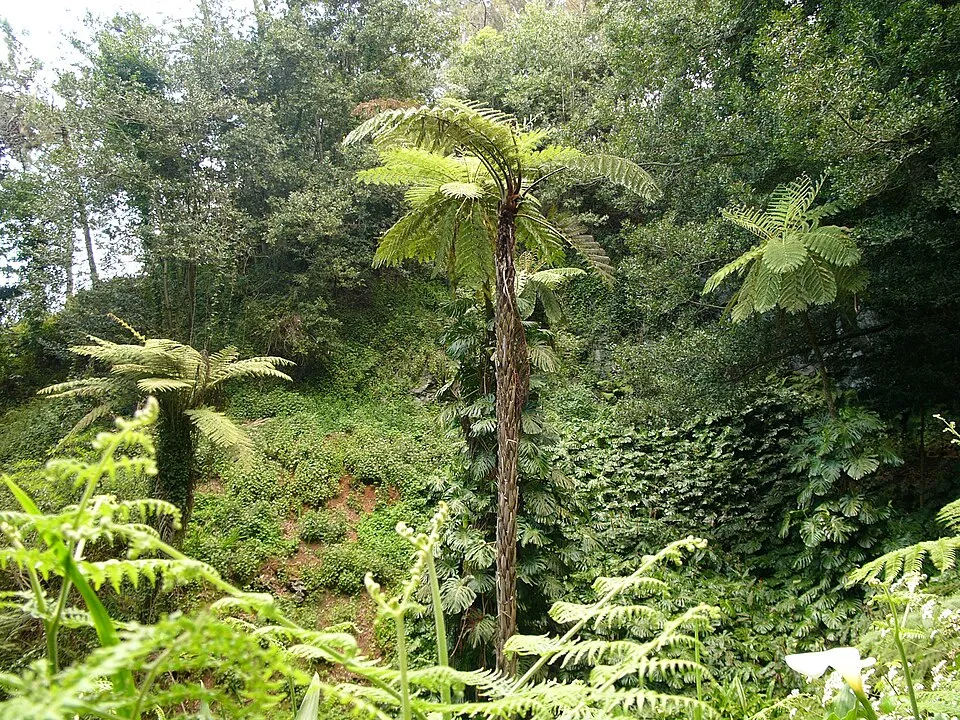
Cyathea cooperi, commonly known as the Lacy Tree Fern, Australian Tree Fern, or Sago Fern, is an elegant and popular ornamental fern indigenous to the subtropical and tropical rainforests of Queensland and New South Wales, Australia. This majestic plant belongs to the ancient family Cyatheaceae, a lineage of primitive vascular plants that have graced Earth's ecosystems for millennia. Characterized by its delicate, lacy, emerald-green fronds and a distinctive, often slender, fibrous trunk, which is actually an erect rhizome formed from coalesced old frond bases, Cyathea cooperi presents a striking architectural presence.
Mature specimens can achieve impressive heights, frequently surpassing 6 meters (20 feet) in optimal growing conditions, making them a stately feature in expansive gardens and conservatories. The fronds, typically bipinnate to tripinnate, unfurl from coiled 'fiddleheads' or croziers that are initially covered in fine, reddish-brown scales. These magnificent fronds can extend up to 3 meters (10 feet) in length, creating a lush, tropical display.
Unlike angiosperms, Cyathea cooperi reproduces via microscopic spores, which are produced in clusters called sori, found on the underside of fertile fronds. Its widespread appeal in cultivation stems from its relatively rapid growth rate compared to other tree ferns and its inherently graceful aesthetic. While its primary value is ornamental, providing a verdant, exotic atmosphere, the broader Cyatheaceae family is a subject of ongoing scientific inquiry into potential bioactive compounds.
Trusted Scientific References
1. Authoritative external sources for Cyathea cooperi
1.1 Wikipedia — Cyathea cooperi
1.2 Kew POWO (Plants of the World Online)
1.3 PubMed — peer-reviewed research
1.4 NCBI Taxonomy Browser
1.5 GBIF — Global Biodiversity
1.6Cyathea Tree Fern should be interpreted through verified botanical identity, practical care, and responsible safety language. This recovery note adds the missing context needed for a complete profile: match light to the plant's habit, use well-drained soil, water according to season, and avoid unsupported medicinal or edible claims. For publishing, the plant can be presented as a source-backed indoor plant with clear care guidance, common problem diagnosis, and conservative safety wording.
1.1.Cyathea Tree Fern — Key Features
- ✓ <strong>Lacy, Emerald</strong> — Green Fronds — Highly decorative, bipinnate to tripinnate fronds.
- ✓ <strong>Fibrous, Slender Trunk</strong> — An erect rhizome formed from old frond bases, reaching significant height.
- ✓ <strong>Fast</strong> — Growing — Relatively quick growth rate compared to other tree ferns.
- ✓ <strong>Architectural Presence</strong> — Creates a strong visual statement in gardens and conservatories.
- ✓ <strong>Fiddleheads (Croziers)</strong> — New fronds unfurl from characteristic coiled, scaled structures.
- ✓ <strong>Spore</strong> — Bearing — Reproduces sexually via sori containing spores on frond undersides.
- ✓ <strong>Evergreen Nature</strong> — Maintains foliage year-round in suitable climates.
- ✓ <strong>Shade</strong> — Loving — Thrives in partial shade, mimicking its natural understory habitat.
- ✓ <strong>Award of Garden Merit</strong> — Recognized for its horticultural excellence by the RHS.
- ✓ <strong>Native Australian Plant</strong> — Integral to the biodiversity of Eastern Australian rainforests.
1.2.Cyathea Tree Fern — Quick Summary
- ✓ Ornamental Tree Fern — Prized for its elegant, lacy fronds and architectural form.
- ✓ Native to Australia — Thrives in subtropical and tropical rainforest understories.
- ✓ Ancient Lineage — Belongs to the primitive fern family Cyatheaceae.
- ✓ Spore Reproduction — Reproduces via spores produced on fertile fronds.
- ✓ Limited Medicinal Use — No widely documented traditional or modern medicinal uses for Cyathea cooperi specifically.
- ✓ Potential Bioactivities — Broader family research suggests potential for antioxidant and anti-inflammatory properties, not specific to this species.
2.Cyathea Tree Fern — Scientific Identity
3.Cyathea Tree Fern — Quick Facts
4.Cyathea Tree Fern — Appearance & Identification
5.Cyathea Tree Fern — Native Habitat
6.Cyathea Tree Fern — Water Requirements
- ✓ Soil Requirements — Thrives in moist, humus-rich, well-drained soils with an acidic to neutral pH, mimicking its natural rainforest understory habitat.
- ✓ Light Conditions — Prefers part shade, especially protection from harsh afternoon sun, which can scorch its delicate fronds.
- ✓ Watering — Requires consistent moisture; water the fibrous trunk regularly, particularly during hot, dry periods, but avoid overwatering the crown in winter.
- ✓ Temperature and Hardiness — Best suited for mild winter temperatures, hardy in USDA Zones 9-11. Frost protection is essential in colder climates.
- ✓ Fertilization — Apply a balanced liquid fertilizer monthly during the active growing season (spring to fall) to support vigorous frond development.
- ✓ Propagation — Easily propagated by sowing spores collected from the undersides of mature fronds as soon as they are ripe.
- ✓ Maintenance — Low maintenance, primarily involving the removal of dead or damaged fronds to maintain aesthetic appeal and plant health.
Reviewed by the Flora Medical Global Botanical Review Panel
Multi-disciplinary editorial group · Botany · Ethnobotany · Herbal-medicine literature
Who reviewed this: This page was checked by the Flora Medical Global Botanical Review Panel — an in-house editorial group of botany graduates, ethnobotany researchers, and horticulture practitioners who collectively maintain our 7,000+ plant encyclopedia. Meet the team.
Our 4-step verification process
1. Taxonomic verification
Scientific names and synonyms cross-checked against Kew POWO, World Flora Online, and The Plant List.
2. Phytochemical & medicinal cross-reference
Active compounds, traditional uses, and reported activities are cross-referenced with PubMed, USDA Dr. Duke's database, and peer-reviewed ethnobotanical literature.
3. Conservation & distribution check
Distribution, ecology, and conservation status confirmed against GBIF occurrence records and the IUCN Red List.
4. Editorial & safety review
Every entry passes an editorial pass for clarity, originality, and safety notices (toxicity, contraindications, dosage caveats) before publication.
Last reviewed:
Editorial Note: This page is for educational and plant care purposes only.
Written by: Flora Medical Global Editorial Team
Reviewed by: Flora Medical Global Botanical Review Panel
Last Updated: June 15, 2026







Cyathea Tree Fern — Comments & Community Reviews
Rate this plant