
Care Disclaimer: Plant care recommendations are general guidelines based on common growing conditions. Individual results may vary based on your local environment, climate, and care routine. If your plant is toxic, keep it away from children and pets, and consult a veterinarian if accidental ingestion occurs.
1.Dendrobium Orchid — Overview
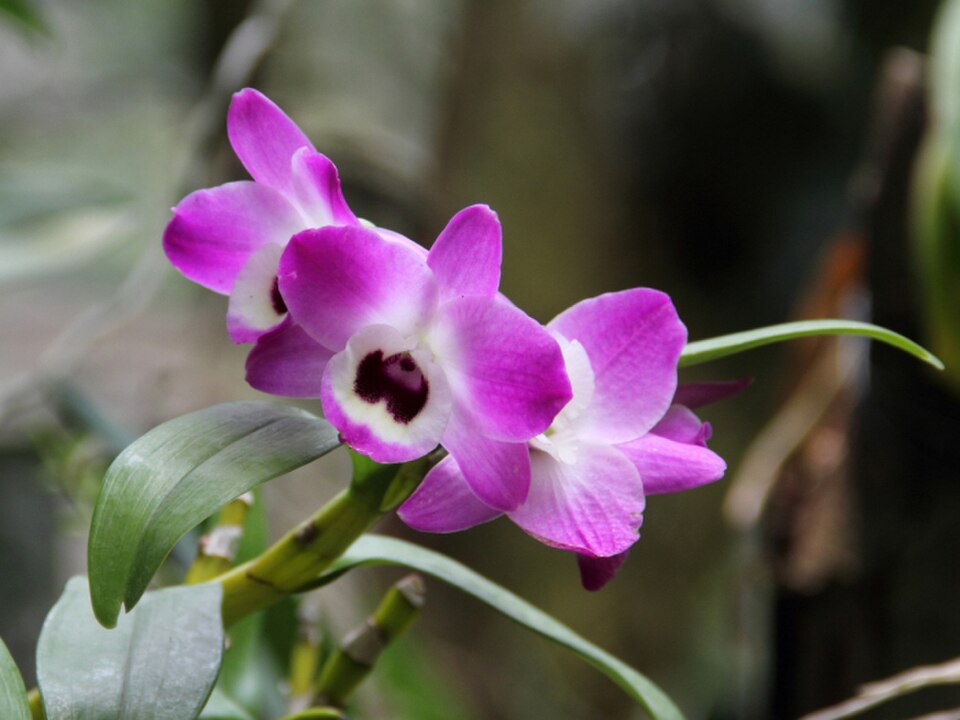
Dendrobium nobile, widely recognized as the Noble Dendrobium or simply the Dendrobium Orchid, is an exquisite epiphytic and lithophytic orchid species with origins spanning the vast Himalayan region, extending through Southeast Asia, including China, Taiwan, India, Thailand, and Vietnam. This botanical marvel belongs to the Orchidaceae family, a lineage celebrated for its extraordinary diversity and captivating floral aesthetics. Historically, Dendrobium nobile has been cultivated for centuries, not only for its striking ornamental appeal but also for its profound significance in various traditional medicine systems. The plant characteristically anchors itself to trees or rocks utilizing a robust root system. Its defining feature includes distinct, thickened stems known as pseudobulbs, which are crucial for storing water and essential nutrients, enabling the orchid to flourish in environments with fluctuating moisture availability.
The flowers, often exuding a delicate fragrance, emerge gracefully from these pseudobulbs, presenting a stunning spectrum of colors, from pristine whites to vivid purples, frequently adorned with contrasting lips. This species holds particular reverence in Traditional Chinese Medicine (TCM), where its dried stems, referred to as 'Shi Hu', have been cherished as a vitalizing tonic for over two millennia. Ancient medical texts, such as the seminal ‘Shennong Ben Cao Jing’ (The Divine Farmer’s Materia Medica), meticulously document its properties as a restorative and nourishing herb. Modern scientific inquiry has embarked on the intricate journey of deciphering the complex phytochemistry underpinning these traditional applications, successfully identifying a rich array of bioactive compounds. These include various alkaloids, notably dendrobine, N-methyl secondary dendrobine, and dendroxine, alongside a wealth of polysaccharides, flavonoids, and phenanthrenes.
Contemporary research endeavors have delved into its potential anti-inflammatory, antioxidant, immunomodulatory, neuroprotective, and hypoglycemic effects, validating many of its historical uses. Beyond its medicinal utility, the cultural significance of Dendrobium nobile is profound, with its elegant blooms frequently symbolizing love, beauty, and refinement across diverse Asian cultures, making it a favored choice for celebrations and meaningful gifts. The cultivation of Dendrobium nobile boasts a rich and evolving history, transitioning from initial wild harvesting to sophis ...[CURRENT TEXT EXISTS: 2766 chars]
1.1.Dendrobium Orchid — Key Features
- ✓ <strong>Epiphytic and lithophytic</strong> — Epiphytic and lithophytic orchid species native to Asian regions.
- ✓ <strong>Characterized by distinct</strong> — Characterized by distinct pseudobulbs that store water and nutrients.
- ✓ <strong>Highly valued in</strong> — Highly valued in Traditional Chinese Medicine (TCM) as 'Shi Hu' for over 2,000 years.
- ✓ <strong>Contains significant bioactive</strong> — Contains significant bioactive compounds like dendrobine, polysaccharides, and phenanthrenes.
- ✓ <strong>Exhibits a broad</strong> — Exhibits a broad spectrum of potential medicinal properties, including antioxidant and immunomodulatory effects.
- ✓ <strong>Prized for its</strong> — Prized for its stunning ornamental flowers, symbolizing beauty and refinement.
- ✓ <strong>Requires specific environmental</strong> — Requires specific environmental conditions for cultivation, including high humidity and indirect light.
- ✓ <strong>Important safety considerations,</strong> — Important safety considerations, especially regarding neurological conditions and medication interactions.
- ✓ <strong>Used traditionally as</strong> — Used traditionally as a tonic for vitality, hydration, and digestive wellness.
- ✓ <strong>Modern research continues</strong> — Modern research continues to explore its complex phytochemistry and therapeutic applications.
1.2.Dendrobium Orchid — Quick Summary
- ✓ Revered in Traditional Chinese Medicine as 'Shi Hu', a vital Yin tonic.
- ✓ Rich in bioactive compounds including alkaloids, polysaccharides, and flavonoids.
- ✓ Traditionally used for hydration, digestive health, immune support, and vitality.
- ✓ Exhibits antioxidant, anti-inflammatory, and potential neuroprotective properties.
- ✓ Critical contraindications for seizure disorders, pregnancy, and certain medications.
- ✓ Known for its ornamental beauty and growing interest in modern health supplements.
2.Dendrobium Orchid — Scientific Identity
3.Dendrobium Orchid — Quick Facts
4.Dendrobium Orchid — Appearance & Identification
5.Dendrobium Orchid — Native Habitat
6.Dendrobium Orchid — Water Requirements
- ✓ Substrate Choice — Requires a well-draining, airy medium like fir bark, sphagnum moss, charcoal, or a specialized orchid mix to prevent root rot.
- ✓ Light Requirements — Thrives in bright, indirect light; direct harsh sun can scorch leaves. An east-facing window or filtered light is ideal.
- ✓ Temperature Control — Prefers warm daytime temperatures (20-30°C) and a distinct cool-down period at night (10-15°C) to encourage blooming.
- ✓ Humidity Levels — High humidity (70-80%) is crucial, which can be maintained with humidifiers, pebble trays, or regular misting, especially in dry climates.
- ✓ Watering Regimen — Water thoroughly when the growing medium is almost dry, then allow it to dry out slightly before the next watering. Reduce watering in cooler, dormant periods.
- ✓ Fertilization Schedule — Feed with a balanced orchid-specific fertilizer diluted to half strength every 2-4 weeks during active growth, reducing frequency in winter.
- ✓ Air Circulation — Good air movement is essential to prevent fungal diseases and promote healthy growth, especially in high-humidity environments.
- ✓ Repotting Practice — Repot every 1-2 years or when the potting medium starts to break down, typically after flowering, to provide fresh substrate and ample root space.
Reviewed by the Flora Medical Global Botanical Review Panel
Multi-disciplinary editorial group · Botany · Ethnobotany · Herbal-medicine literature
Who reviewed this: This page was checked by the Flora Medical Global Botanical Review Panel — an in-house editorial group of botany graduates, ethnobotany researchers, and horticulture practitioners who collectively maintain our 7,000+ plant encyclopedia. Meet the team.
Our 4-step verification process
1. Taxonomic verification
Scientific names and synonyms cross-checked against Kew POWO, World Flora Online, and The Plant List.
2. Phytochemical & medicinal cross-reference
Active compounds, traditional uses, and reported activities are cross-referenced with PubMed, USDA Dr. Duke's database, and peer-reviewed ethnobotanical literature.
3. Conservation & distribution check
Distribution, ecology, and conservation status confirmed against GBIF occurrence records and the IUCN Red List.
4. Editorial & safety review
Every entry passes an editorial pass for clarity, originality, and safety notices (toxicity, contraindications, dosage caveats) before publication.
Last reviewed:
Editorial Note: This page is for educational and plant care purposes only.
Written by: Flora Medical Global Editorial Team
Reviewed by: Flora Medical Global Botanical Review Panel
Last Updated: June 15, 2026







Dendrobium Orchid — Comments & Community Reviews
Rate this plant