
Care Disclaimer: Plant care recommendations are general guidelines based on common growing conditions. Individual results may vary based on your local environment, climate, and care routine. If your plant is toxic, keep it away from children and pets, and consult a veterinarian if accidental ingestion occurs.
1.Dieffenbachia Compacta — Overview
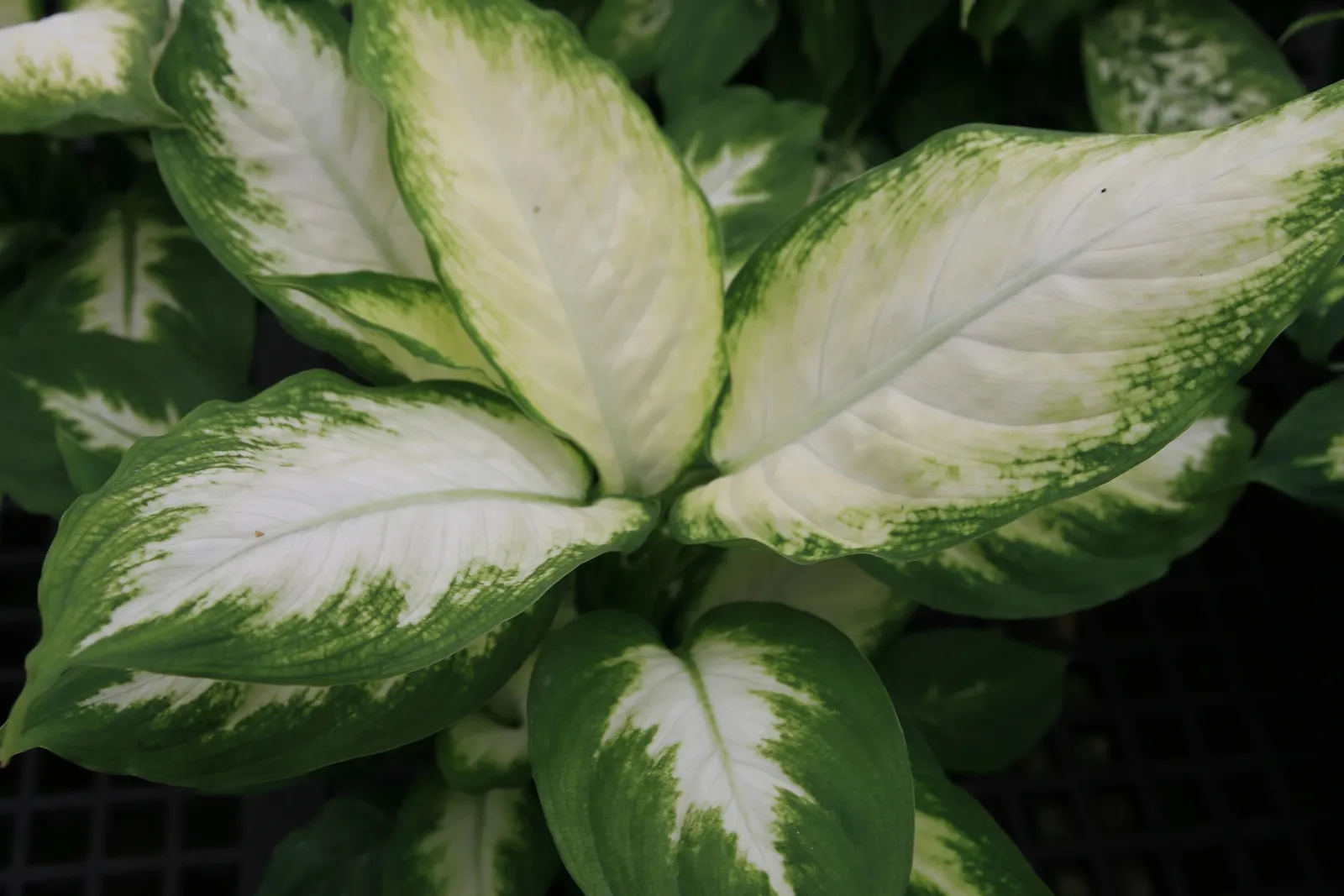
Dieffenbachia compacta, commonly known as Dumb Cane or Leopard Lily, is a striking perennial herbaceous plant native to the humid, tropical understories of the Caribbean and parts of Central and South America. This captivating member of the Araceae family typically forms an upright, bushy growth habit, reaching heights of 0.9 to 1.2 meters (3 to 4 feet) when mature, although some cultivars can be more compact. Its most distinguishing feature is its large, elliptical to ovate leaves, which can extend 25 to 30 centimeters (10 to 12 inches) in length.
Each leaf presents a vibrant tapestry of rich green, boldly variegated with creamy white, pale yellow, or light green patterns that often radiate from the central vein, creating a dramatic visual contrast. The leaf texture is typically thick, somewhat leathery, and possesses a glossy sheen that enhances its ornamental appeal. Stems are robust, erect, and can develop a textured appearance as the plant ages, effectively supporting the dense canopy of foliage.
While primarily cultivated for its aesthetic foliage, Dieffenbachia compacta can produce spathe-and-spadix inflorescences, characteristic of the Araceae family, which are generally inconspicuous greenish-white structures that rarely appear in indoor settings. It thrives in conditions mimicking its natural habitat—warm temperatures, high humidity, and indirect light, making it a popular and adaptable houseplant.
Trusted Scientific References
1. Authoritative external sources for Dieffenbachia compacta
1.1 Wikipedia — Dieffenbachia compacta
1.2 Kew POWO (Plants of the World Online)
1.3 PubMed — peer-reviewed research
1.4 NCBI Taxonomy Browser
1.5 GBIF — Global Biodiversity
1.6Dieffenbachia Compacta should be interpreted through verified botanical identity, practical care, and responsible safety language. This recovery note adds the missing context needed for a complete profile: match light to the plant's habit, use well-drained soil, water according to season, and avoid unsupported medicinal or edible claims. For publishing, the plant can be presented as a source-backed indoor plant with clear care guidance, common problem diagnosis, and conservative safety wording.
1.1.Dieffenbachia Compacta — Key Features
- ✓ <strong>Striking Variegated Foliage</strong> — Large, elliptical leaves with patterns of green, cream, and yellow.
- ✓ <strong>Ornamental Houseplant</strong> — Highly valued for its aesthetic appeal in indoor environments.
- ✓ <strong>High Toxicity</strong> — Contains calcium oxalate crystals, making all parts poisonous if ingested.
- ✓ <strong>Tropical Origin</strong> — Native to humid regions of the Caribbean and Central/South America.
- ✓ <strong>Adaptable Indoor Plant</strong> — Tolerates a range of indoor conditions, particularly indirect light.
- ✓ <strong>Air Purifying Qualities (Minor)</strong> — Contributes minimally to indoor air quality improvement, like many houseplants.
- ✓ <strong>Low Maintenance (with care)</strong> — Relatively easy to grow once its basic needs are met.
- ✓ <strong>Distinctive Araceae Family Flower</strong> — Produces a spathe and spadix, though rarely indoors.
- ✓ <strong>Rapid Growth Potential</strong> — Can grow quite quickly under optimal conditions.
- ✓ <strong>Stem Propagation</strong> — Easily propagated from stem cuttings, allowing for new plant generation.
1.2.Dieffenbachia Compacta — Quick Summary
- ✓ Dieffenbachia compacta is a popular ornamental houseplant known for its variegated foliage.
- ✓ All parts of the plant are highly toxic due to calcium oxalate crystals, causing severe irritation upon contact or ingestion.
- ✓ Traditional medicinal uses are limited to highly cautious external applications, never internal.
- ✓ Symptoms of exposure include oral burning, swelling, difficulty speaking, skin irritation, and gastrointestinal upset.
- ✓ Requires careful handling; keep away from children and pets.
- ✓ Thrives in indirect light and high humidity, making it an adaptable indoor plant.
2.Dieffenbachia Compacta — Scientific Identity
3.Dieffenbachia Compacta — Quick Facts
4.Dieffenbachia Compacta — Appearance & Identification
5.Dieffenbachia Compacta — Native Habitat
6.Dieffenbachia Compacta — Water Requirements
- ✓ Light — Provide bright, indirect light; direct sunlight can scorch leaves, while too little light diminishes variegation.
- ✓ Watering — Water thoroughly when the top 2-3 cm (1 inch) of soil feels dry to the touch; ensure good drainage and avoid waterlogging.
- ✓ Humidity — Prefers high humidity (above 60%); mist regularly, use a pebble tray, or place near a humidifier.
- ✓ Temperature — Maintain consistent temperatures between 18-24°C (65-75°F); sensitive to cold drafts and temperatures below 15°C (59°F).
- ✓ Soil — Use a well-draining, peat-based potting mix rich in organic matter to support healthy growth.
- ✓ Fertilization — Feed with a balanced liquid fertilizer every 2-4 weeks during the growing season (spring to early autumn), reducing frequency in winter.
- ✓ Pruning — Prune to maintain shape, remove yellowing lower leaves, or rejuvenate leggy plants by cutting back stems; always wear gloves due to toxic sap.
- ✓ Propagation — Easily propagated from stem cuttings, allowing cut ends to callus for a day or two before planting in moist soil or water.
Reviewed by the Flora Medical Global Botanical Review Panel
Multi-disciplinary editorial group · Botany · Ethnobotany · Herbal-medicine literature
Who reviewed this: This page was checked by the Flora Medical Global Botanical Review Panel — an in-house editorial group of botany graduates, ethnobotany researchers, and horticulture practitioners who collectively maintain our 7,000+ plant encyclopedia. Meet the team.
Our 4-step verification process
1. Taxonomic verification
Scientific names and synonyms cross-checked against Kew POWO, World Flora Online, and The Plant List.
2. Phytochemical & medicinal cross-reference
Active compounds, traditional uses, and reported activities are cross-referenced with PubMed, USDA Dr. Duke's database, and peer-reviewed ethnobotanical literature.
3. Conservation & distribution check
Distribution, ecology, and conservation status confirmed against GBIF occurrence records and the IUCN Red List.
4. Editorial & safety review
Every entry passes an editorial pass for clarity, originality, and safety notices (toxicity, contraindications, dosage caveats) before publication.
Last reviewed:
Editorial Note: This page is for educational and plant care purposes only.
Written by: Flora Medical Global Editorial Team
Reviewed by: Flora Medical Global Botanical Review Panel
Last Updated: June 15, 2026







Dieffenbachia Compacta — Comments & Community Reviews
Rate this plant