

Care Disclaimer: Plant care recommendations are general guidelines based on common growing conditions. Individual results may vary based on your local environment, climate, and care routine. If your plant is toxic, keep it away from children and pets, and consult a veterinarian if accidental ingestion occurs.
1.Dieffenbachia Tropic Snow — Overview
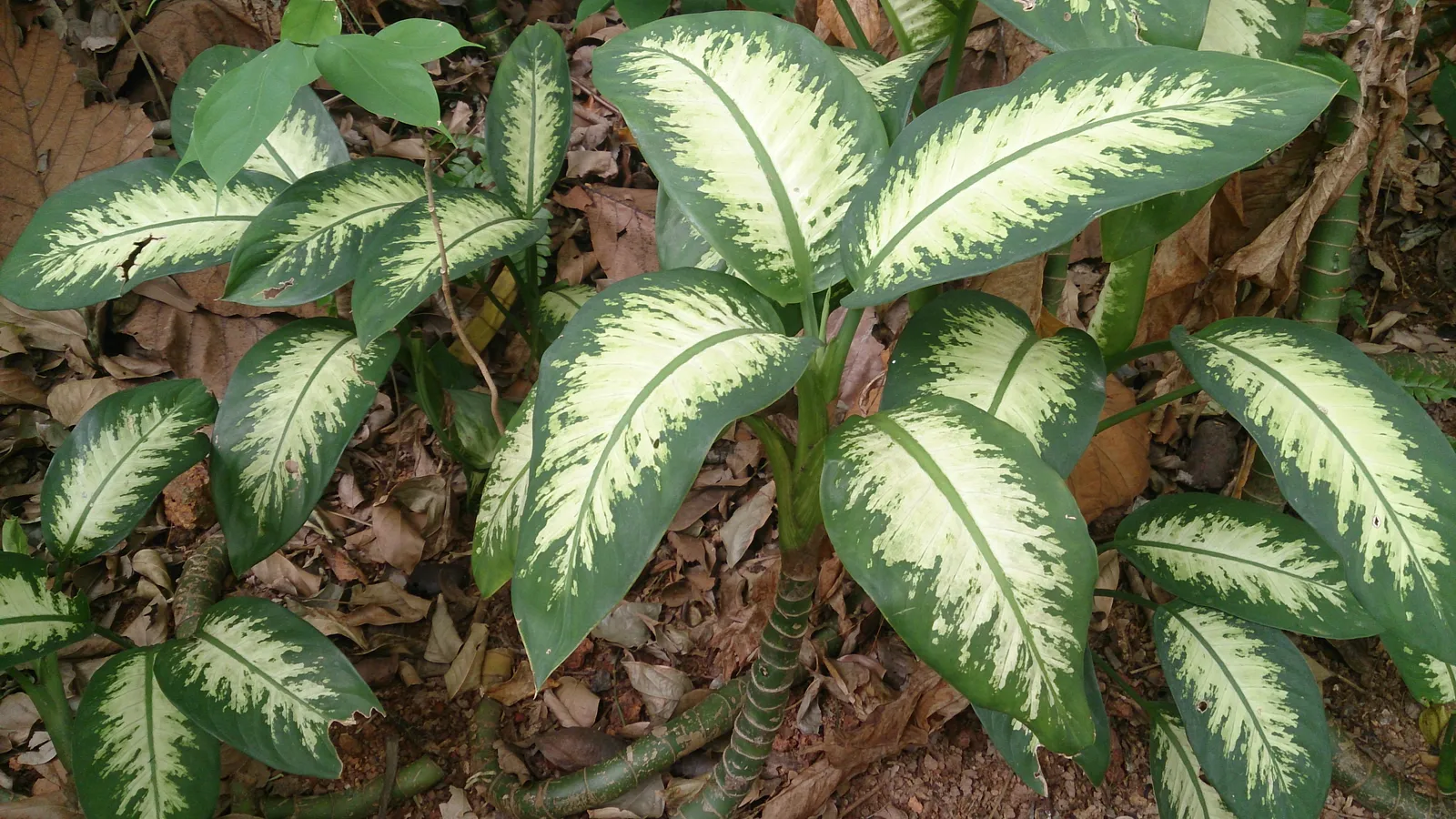
Dieffenbachia Tropic Snow, commonly known as the dumb cane, is a distinguished cultivar of the Dieffenbachia genus, celebrated for its exceptionally ornamental foliage. This robust herbaceous perennial typically achieves an indoor height of 3 to 4 feet, though some specimens can reach up to 10 feet in optimal conditions, forming a prominent vertical accent in any space. Its large, captivating leaves are the plant's defining feature, often growing up to 12 inches long and 6 inches wide. They exhibit a striking variegation of deep emerald green adorned with irregular, creamy white or pale yellow spots and streaks, resembling a painter's artistic splashes.
The leaves are typically oval to lanceolate in shape, supported by thick, succulent petioles that contribute to the plant's sturdy and upright posture. The stem itself is generally erect, smooth, and pale green. While Dieffenbachia Tropic Snow can occasionally produce an inconspicuous spathe and spadix inflorescence, typically white to light-green, it is overwhelmingly cultivated for its dramatic foliar display rather than its flowers. Native to the humid, shaded understories of tropical forests in Central and South America, this plant thrives in warm, consistently moist environments that mimic its natural habitat.
Taxonomically, it belongs to the Araceae family, a diverse group known for many popular ornamental plants, underscoring its aesthetic appeal. Despite its visual charm, it is crucial to note its inherent toxicity, a characteristic that also gives rise to its common name, 'dumb cane,' due to the temporary speech impairment it can cause upon ingestion.
Trusted Scientific References
1. Authoritative external sources for Dieffenbachia Tropic Snow
1.1 Wikipedia — Dieffenbachia Tropic Snow
1.2 Kew POWO (Plants of the World Online)
1.3 PubMed — peer-reviewed research
1.4 NCBI Taxonomy Browser
1.5 GBIF — Global Biodiversity
1.6Dieffenbachia Tropic Snow should be interpreted through verified botanical identity, practical care, and responsible safety language. This recovery note adds the missing context needed for a complete profile: match light to the plant's habit, use well-drained soil, water according to season, and avoid unsupported medicinal or edible claims. For publishing, the plant can be presented as a source-backed indoor plant with clear care guidance, common problem diagnosis, and conservative safety wording.
1.1.Dieffenbachia Tropic Snow — Key Features
- ✓ <strong>Striking Variegated Foliage</strong> — Large, oval to lanceolate leaves with dramatic patterns of deep green and creamy white.
- ✓ <strong>Robust Indoor Plant</strong> — Sturdy, erect stems support lush, dense foliage, making it a prominent indoor specimen.
- ✓ <strong>Tropical Aesthetic</strong> — Instantly adds an exotic, vibrant, and luxurious feel to any indoor environment.
- ✓ <strong>Air Purifying Qualities</strong> — Contributes to indoor air quality by filtering some volatile organic compounds, albeit modestly.
- ✓ <strong>High Toxicity</strong> — Contains calcium oxalate raphides, making it highly irritating and toxic if ingested or contacted.
- ✓ <strong>Relatively Easy to Grow</strong> — Considered low-to-moderate maintenance for those familiar with tropical houseplants.
- ✓ <strong>Prefers Indirect Light</strong> — Thrives in bright, filtered light, mimicking its natural understory habitat.
- ✓ <strong>Requires Warmth and Humidity</strong> — Best suited for consistent warm temperatures and higher ambient humidity.
- ✓ <strong>Common Name Origin</strong> — 'Dumb cane' reflects the temporary speech impairment caused by ingestion-induced swelling.
- ✓ <strong>Non</strong> — Medicinal Plant — Solely cultivated for its decorative value, with no safe or recognized medicinal applications.
1.2.Dieffenbachia Tropic Snow — Quick Summary
- ✓ Highly ornamental foliage plant with striking green and creamy white variegation.
- ✓ Native to tropical Central and South American rainforests.
- ✓ Contains toxic calcium oxalate crystals and proteolytic enzymes, causing severe irritation.
- ✓ Known as 'dumb cane' due to the temporary speech loss caused by oral swelling if ingested.
- ✓ Requires bright, indirect light, warm temperatures, and consistent soil moisture.
- ✓ Strictly an ornamental plant; never ingest and keep strictly out of reach of children and pets.
2.Dieffenbachia Tropic Snow — Scientific Identity
3.Dieffenbachia Tropic Snow — Quick Facts
4.Dieffenbachia Tropic Snow — Appearance & Identification
5.Dieffenbachia Tropic Snow — Native Habitat
6.Dieffenbachia Tropic Snow — Water Requirements
- ✓ Bright, Indirect Light — Place in a location receiving ample bright, filtered light; direct sunlight can scorch its delicate leaves.
- ✓ Well-Draining Potting Mix — Use a fertile, peat-based or coco coir-rich potting mix with added perlite to ensure excellent drainage and aeration.
- ✓ Consistent Moisture — Water thoroughly when the top 1-2 inches of soil feel dry to the touch; reduce watering frequency during winter.
- ✓ Warm Temperatures — Maintain temperatures between 65-75°F (18-24°C) and protect from cold drafts or temperatures below 60°F (15°C).
- ✓ High Humidity — Prefers high humidity; consider misting, using a pebble tray, or placing it in a naturally humid room like a bathroom.
- ✓ Regular Fertilization — Feed every 4-6 weeks during the spring and summer growing season with a balanced liquid fertilizer diluted to half strength.
- ✓ Rotate Periodically — Turn the plant every few weeks to ensure even growth and prevent it from leaning towards the light source.
- ✓ Repot When Root-Bound — Repot into a slightly larger container every 1-2 years or when roots begin to emerge from drainage holes, always wearing gloves.
Reviewed by the Flora Medical Global Botanical Review Panel
Multi-disciplinary editorial group · Botany · Ethnobotany · Herbal-medicine literature
Who reviewed this: This page was checked by the Flora Medical Global Botanical Review Panel — an in-house editorial group of botany graduates, ethnobotany researchers, and horticulture practitioners who collectively maintain our 7,000+ plant encyclopedia. Meet the team.
Our 4-step verification process
1. Taxonomic verification
Scientific names and synonyms cross-checked against Kew POWO, World Flora Online, and The Plant List.
2. Phytochemical & medicinal cross-reference
Active compounds, traditional uses, and reported activities are cross-referenced with PubMed, USDA Dr. Duke's database, and peer-reviewed ethnobotanical literature.
3. Conservation & distribution check
Distribution, ecology, and conservation status confirmed against GBIF occurrence records and the IUCN Red List.
4. Editorial & safety review
Every entry passes an editorial pass for clarity, originality, and safety notices (toxicity, contraindications, dosage caveats) before publication.
Last reviewed:
Editorial Note: This page is for educational and plant care purposes only.
Written by: Flora Medical Global Editorial Team
Reviewed by: Flora Medical Global Botanical Review Panel
Last Updated: June 15, 2026







Dieffenbachia Tropic Snow — Comments & Community Reviews
Rate this plant