

Care Disclaimer: Plant care recommendations are general guidelines based on common growing conditions. Individual results may vary based on your local environment, climate, and care routine. If your plant is toxic, keep it away from children and pets, and consult a veterinarian if accidental ingestion occurs.
1.Dionaea Muscipula — Overview
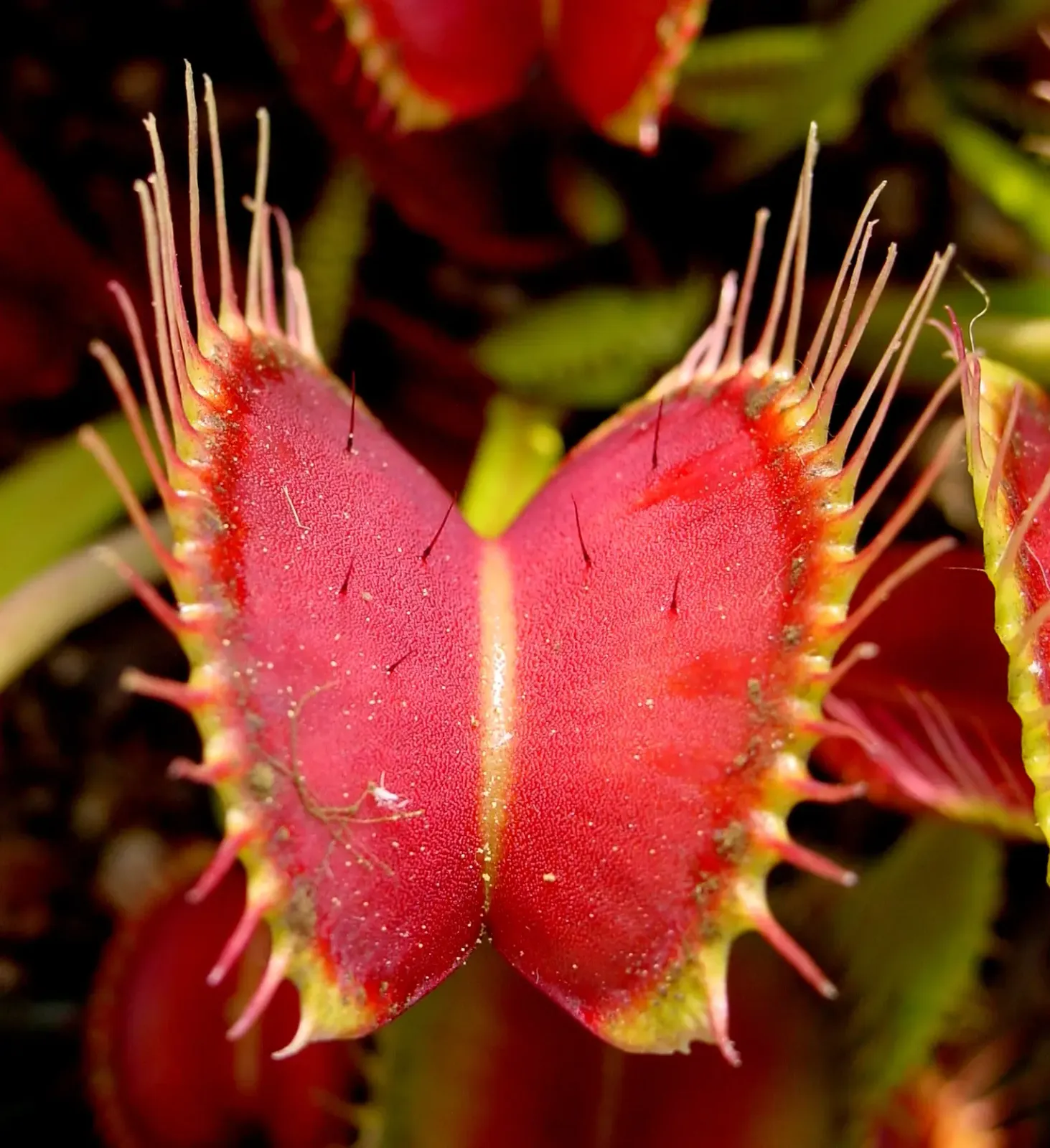
Dionaea muscipula, commonly known as the Venus flytrap, is a remarkable carnivorous plant distinguished by its unique trapping mechanism. It typically forms rosettes of specialized leaves that can reach lengths of up to 25 centimeters (10 inches), with the entire plant growing to about 15 centimeters (6 inches) in height.
Each leaf terminates in a distinctive trap comprising two hinged lobes, fringed with tooth-like cilia, which snap shut rapidly upon stimulation of sensitive trigger hairs located on their inner surfaces. This adaptation allows the plant to capture and digest insects and arachnids, supplementing nutrients from its impoverished natural habitat.
Small, white or pale pink flowers, measuring approximately 5-10 millimeters (0.2-0.4 inches) in diameter, are borne on elongated stalks that rise well above the foliage, typically blooming from late spring to early summer. This elevated position helps prevent pollinators from being inadvertently caught in the traps. The Venus flytrap thrives in nutrient-poor, acidic, and boggy soils characteristic of subtropical wetlands along the East Coast of the United States, primarily found in North Carolina and South Carolina.
It belongs to the Droseraceae family, within the order Caryophyllales, showcasing a fascinating evolutionary path of carnivory among flowering plants. Beyond its ecological significance, Dionaea muscipula is a popular ornamental plant, captivating enthusiasts worldwide with its exotic beauty and interactive predatory behavior, making it a beloved addition to diverse plant collections.
Trusted Scientific References
1. Authoritative external sources for Dionaea muscipula
1.1 Wikipedia — Dionaea muscipula
1.2 Kew POWO (Plants of the World Online)
1.3 PubMed — peer-reviewed research
1.4 NCBI Taxonomy Browser
1.5 GBIF — Global Biodiversity
1.6Dionaea Muscipula should be interpreted through verified botanical identity, practical care, and responsible safety language. This recovery note adds the missing context needed for a complete profile: match light to the plant's habit, use well-drained soil, water according to season, and avoid unsupported medicinal or edible claims. For publishing, the plant can be presented as a source-backed indoor plant with clear care guidance, common problem diagnosis, and conservative safety wording.
1.1.Dionaea Muscipula — Key Features
- ✓ <strong>Iconic Carnivorous Plant</strong> — Recognizable for its unique active snap-trapping mechanism to catch insects.
- ✓ <strong>Native to US East Coast</strong> — Indigenous to subtropical wetlands of North and South Carolina.
- ✓ <strong>Nutrient</strong> — Poor Soil Adaptations — Thrives in acidic, low-nutrient environments by supplementing its diet with captured prey.
- ✓ <strong>Rosette Growth Habit</strong> — Forms a basal rosette of specialized, modified leaves that serve as traps.
- ✓ <strong>White to Pale Pink Flowers</strong> — Borne on tall stalks above the foliage to avoid trapping beneficial pollinators.
- ✓ <strong>Contains Bioactive Secondary Metabolites</strong> — A source of compounds like plumbagin, which are of significant research interest.
- ✓ <strong>Investigated for Chemopreventive Potential</strong> — Explored for its anti-cancer and cell-modulating properties in preclinical studies.
- ✓ <strong>Popular Ornamental Plant</strong> — Widely cultivated globally for its exotic appearance, interactive nature, and educational value.
- ✓ <strong>Requires Specific Cultivation</strong> — Needs distilled water, abundant light, and a crucial dormancy period for long-term health.
1.2.Dionaea Muscipula — Quick Summary
- ✓ Iconic carnivorous wetland plant from the US East Coast.
- ✓ Famous for its active, insect-snapping traps.
- ✓ Primarily valued for its ornamental appeal and unique biology.
- ✓ Emerging research explores its bioactive compounds for potential chemopreventive and anti-cancer properties.
- ✓ Not traditionally used for medicinal purposes and not safe for human consumption.
- ✓ Requires specific cultivation conditions, including high light and purified water.
2.Dionaea Muscipula — Scientific Identity
3.Dionaea Muscipula — Quick Facts
4.Dionaea Muscipula — Appearance & Identification
5.Dionaea Muscipula — Native Habitat
6.Dionaea Muscipula — Water Requirements
- ✓ Soil Requirements — Thrives in nutrient-poor, acidic substrates; a common, recommended mix is a 1:1 ratio of sphagnum peat moss and perlite or coarse sand, strictly avoiding fertilizers.
- ✓ Watering — Requires consistently moist soil, always using distilled water, rainwater, or reverse osmosis water, as minerals in tap water can be detrimental.
- ✓ Light — Needs abundant direct sunlight for at least 4-6 hours daily; indoor cultivation often necessitates strong grow lights to maintain health and vibrant trap coloration.
- ✓ Humidity — Prefers high humidity levels, typical of its native wetland environments, which can be maintained with pebble trays or by growing in a terrarium.
- ✓ Temperature — Tolerates a range but prefers warm conditions during the growing season (20-35°C) and requires a cool dormancy period (0-10°C) in winter.
- ✓ Feeding — While it catches its own prey outdoors, indoor plants may benefit from supplemental feeding of small insects (e.g., crickets, mealworms) 1-2 times a month; avoid excessive manual trap triggering.
- ✓ Dormancy — Essential for long-term health, requiring reduced light, cooler temperatures, and less water for 3-5 months annually to mimic its natural winter rest.
Reviewed by the Flora Medical Global Botanical Review Panel
Multi-disciplinary editorial group · Botany · Ethnobotany · Herbal-medicine literature
Who reviewed this: This page was checked by the Flora Medical Global Botanical Review Panel — an in-house editorial group of botany graduates, ethnobotany researchers, and horticulture practitioners who collectively maintain our 7,000+ plant encyclopedia. Meet the team.
Our 4-step verification process
1. Taxonomic verification
Scientific names and synonyms cross-checked against Kew POWO, World Flora Online, and The Plant List.
2. Phytochemical & medicinal cross-reference
Active compounds, traditional uses, and reported activities are cross-referenced with PubMed, USDA Dr. Duke's database, and peer-reviewed ethnobotanical literature.
3. Conservation & distribution check
Distribution, ecology, and conservation status confirmed against GBIF occurrence records and the IUCN Red List.
4. Editorial & safety review
Every entry passes an editorial pass for clarity, originality, and safety notices (toxicity, contraindications, dosage caveats) before publication.
Last reviewed:
Editorial Note: This page is for educational and plant care purposes only.
Written by: Flora Medical Global Editorial Team
Reviewed by: Flora Medical Global Botanical Review Panel
Last Updated: June 15, 2026







Dionaea Muscipula — Comments & Community Reviews
Rate this plant