
Care Disclaimer: Plant care recommendations are general guidelines based on common growing conditions. Individual results may vary based on your local environment, climate, and care routine. If your plant is toxic, keep it away from children and pets, and consult a veterinarian if accidental ingestion occurs.
1.Dischidia — Overview
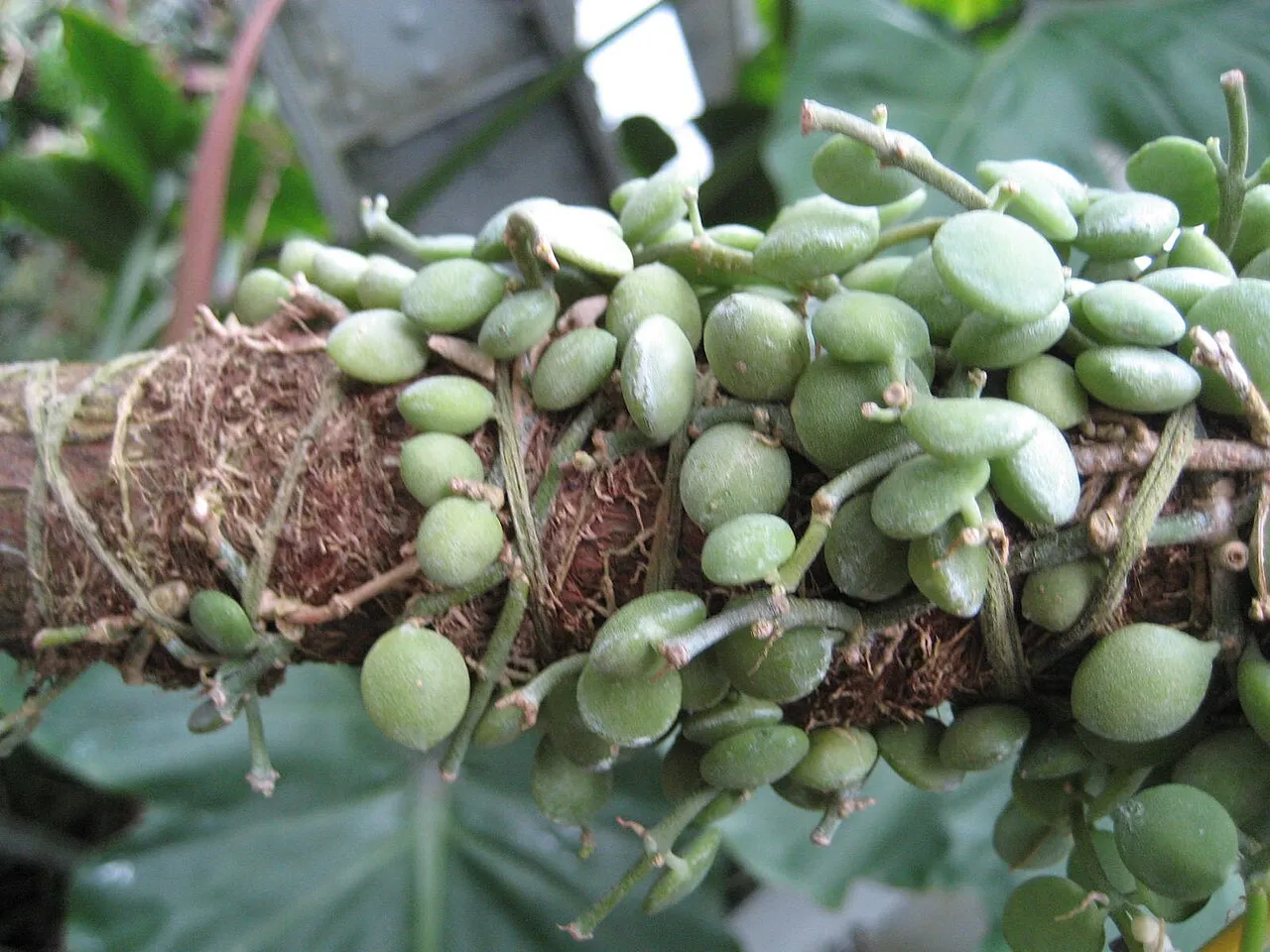
Dischidia nummularia, commonly known as the Pennywort Vine or Button Orchid, is a fascinating epiphytic and perennial climbing plant belonging to the Apocynaceae family. This slender vine typically grows to several meters, gracefully trailing or clinging to trees in its native habitat.
Its most distinctive feature is its abundant, small, coin-shaped leaves, which are opposite, thick, and succulent, usually measuring between 7 to 10 millimeters in diameter. These dull greenish-yellow leaves are crucial for water storage, enabling the plant to thrive in dry periods characteristic of its epiphytic lifestyle.
The stems are slender and flexible, varying in color from green to brown, and possess a smooth texture. Dischidia nummularia produces tiny, white to yellowish-white, tubular flowers, approximately 1 millimeter long, which emerge in small clusters called umbels, typically containing 1 to 5 blossoms.
Following successful pollination, it develops hairless, pale green or yellow follicles that hang from the stem, splitting open to release oblong seeds.
Native to a vast tropical and subtropical range, Dischidia nummularia is found across Southeast Asia, including Singapore, India, Myanmar, Peninsular Malaysia, Sumatra, Java, Borneo, the Philippines, Sulawesi, Moluccas, New Guinea, the Solomon Islands, and Australia. It naturally inhabits diverse environments such as humid primary and secondary rainforests, coastal forests, mangrove areas, and even limestone hills up to 550 meters altitude.
Its adaptability also allows it to colonize roadside trees and plantations, underscoring its resilience. The genus name 'Dischidia' alludes to the two-part, pitcher-like leaves found in some species, while 'nummularia' is derived from Latin, meaning 'resembling a coin,' a direct reference to its characteristic foliage.
Trusted Scientific References
1. Authoritative external sources for Dischidia nummularia
1.1 Wikipedia — Dischidia nummularia
1.2 Kew POWO (Plants of the World Online)
1.3 PubMed — peer-reviewed research
1.4 NCBI Taxonomy Browser
1.5 GBIF — Global Biodiversity
1.1.Dischidia — Key Features
- ✓ <strong>Epiphytic & Climber</strong> — Adapts to growing on other plants without being parasitic, using host trees for support.
- ✓ <strong>Succulent Foliage</strong> — Unique coin-shaped, thick leaves store water, enhancing its drought resilience.
- ✓ <strong>Ornamental Value</strong> — Highly prized as a decorative houseplant for its attractive trailing habit and distinctive foliage.
- ✓ <strong>Traditional Medicine</strong> — Employed in traditional remedies for skin ailments, infections, and pain relief.
- ✓ <strong>Rich Phytochemistry</strong> — Contains a variety of beneficial compounds including flavonoids, terpenoids, and saponins.
- ✓ <strong>Low Water Needs</strong> — Tolerant of dry periods due to its water-storing leaves, making it relatively low maintenance.
- ✓ <strong>Native to Tropics</strong> — Thrives in warm, humid environments, indicative of its Southeast Asian origins.
- ✓ <strong>Easy Propagation</strong> — Readily grows from herbaceous stem cuttings, making it simple to multiply and share.
- ✓ <strong>Air Purification</strong> — Like many living plants, it contributes to improving indoor air quality.
- ✓ <strong>Evergreen Nature</strong> — Maintains its lush foliage year-round, providing continuous aesthetic appeal.
1.2.Dischidia — Quick Summary
- ✓ Epiphytic vine native to Southeast Asia with distinctive coin-shaped succulent leaves.
- ✓ Traditionally used for treating tropical sores, gonorrhea, and pain from catfish stings.
- ✓ Rich in beneficial phytochemicals including flavonoids, phenolic compounds, triterpenoids, and saponins.
- ✓ Offers antioxidant, anti-inflammatory, and potential antimicrobial and analgesic properties.
- ✓ Requires well-draining, airy substrate, bright indirect light, and high humidity for cultivation.
- ✓ Primarily recommended for external use; internal consumption lacks sufficient safety data.
2.Dischidia — Scientific Identity
3.Dischidia — Quick Facts
4.Dischidia — Appearance & Identification
5.Dischidia — Native Habitat
6.Dischidia — Water Requirements
- ✓ Light — Thrives in bright indirect light to semi-shade conditions; it can tolerate full sun if gradually acclimated, which promotes vibrant foliage color and encourages flowering.
- ✓ Water — Prefers infrequent but thorough watering; allow the substrate to dry out significantly between waterings to prevent root rot, as it is adapted to little water and succulence.
- ✓ Soil — Requires a very well-draining, airy, and coarse epiphytic substrate, typically a mix of orchid bark, perlite, and a small amount of peat or coco coir, mimicking its natural growing medium.
- ✓ Humidity & Temperature — Prefers warm, humid tropical conditions, ideally between 20-30°C (68-86°F) with high ambient humidity, reflecting its native Southeast Asian habitat.
- ✓ Propagation — Easily propagated from herbaceous stem cuttings, which root readily in suitable moist medium or water; seed propagation is also possible but less common for home growers.
- ✓ Support — As a climbing epiphyte, it benefits from a moss pole, trellis, or can be grown in hanging baskets to allow its trailing stems to cascade elegantly.
- ✓ Pests — Generally hardy but can occasionally be susceptible to common houseplant pests like sucking insects (mealybugs, scale), requiring prompt treatment with insecticidal soap or neem oil.
Reviewed by the Flora Medical Global Botanical Review Panel
Multi-disciplinary editorial group · Botany · Ethnobotany · Herbal-medicine literature
Who reviewed this: This page was checked by the Flora Medical Global Botanical Review Panel — an in-house editorial group of botany graduates, ethnobotany researchers, and horticulture practitioners who collectively maintain our 7,000+ plant encyclopedia. Meet the team.
Our 4-step verification process
1. Taxonomic verification
Scientific names and synonyms cross-checked against Kew POWO, World Flora Online, and The Plant List.
2. Phytochemical & medicinal cross-reference
Active compounds, traditional uses, and reported activities are cross-referenced with PubMed, USDA Dr. Duke's database, and peer-reviewed ethnobotanical literature.
3. Conservation & distribution check
Distribution, ecology, and conservation status confirmed against GBIF occurrence records and the IUCN Red List.
4. Editorial & safety review
Every entry passes an editorial pass for clarity, originality, and safety notices (toxicity, contraindications, dosage caveats) before publication.
Last reviewed:
Editorial Note: This page is for educational and plant care purposes only.
Written by: Flora Medical Global Editorial Team
Reviewed by: Flora Medical Global Botanical Review Panel
Last Updated: June 15, 2026







Dischidia — Comments & Community Reviews
Rate this plant