
Care Disclaimer: Plant care recommendations are general guidelines based on common growing conditions. Individual results may vary based on your local environment, climate, and care routine. If your plant is toxic, keep it away from children and pets, and consult a veterinarian if accidental ingestion occurs.
1.Dizygotheca Elegantissima — Overview
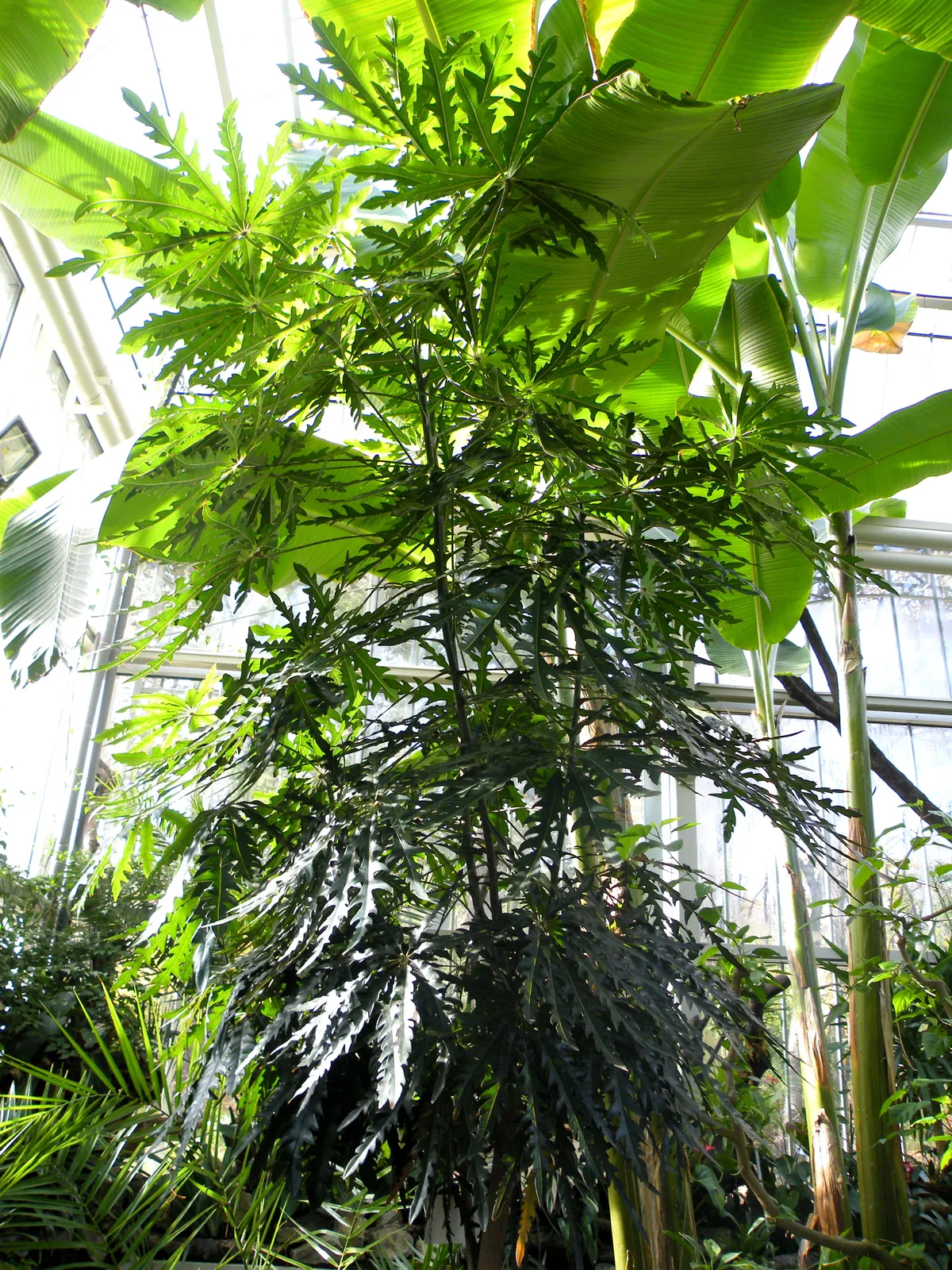
Dizygotheca elegantissima, commonly known as False Aralia or Finger Aralia, is an exquisite evergreen perennial celebrated for its delicate, deeply dissected foliage. This species, belonging to the Araliaceae family, is native to the subtropical islands of the South Pacific, including New Caledonia, where it thrives in humid, shaded understory environments. Typically growing as an upright, slender shrub or small tree, it can reach heights of 3 to 6 feet (0.9 to 1.8 meters) indoors, developing a distinctive woody stem over time.
Its palmate leaves are a striking feature, composed of 7 to 11 narrow, serrated leaflets arranged radially, resembling fingers, hence its common name. The juvenile foliage often exhibits a coppery-brown hue, maturing into a lustrous, dark, blackish-green on the upper surface with a contrasting reddish-purple underside. Each leaflet can extend up to 12 inches (30 cm) in length, contributing to the plant’s airy, lacy appearance.
While primarily cultivated for its ornamental value, producing small, inconspicuous flowers only rarely in highly ideal outdoor conditions, its elegant silhouette and textural leaves make it a popular choice for interior landscaping, adding a sophisticated tropical aesthetic to homes and offices. Its taxonomic classification has seen revisions, sometimes listed under Schefflera elegantissima or Plerandra elegantissima, reflecting its close botanical relationship with other ornamental genera within the Araliaceae family.
Trusted Scientific References
1. Authoritative external sources for Dizygotheca elegantissima
1.1 Wikipedia — Dizygotheca elegantissima
1.2 Kew POWO (Plants of the World Online)
1.3 PubMed — peer-reviewed research
1.4 NCBI Taxonomy Browser
1.5 GBIF — Global Biodiversity
1.6Dizygotheca Elegantissima should be interpreted through verified botanical identity, practical care, and responsible safety language. This recovery note adds the missing context needed for a complete profile: match light to the plant's habit, use well-drained soil, water according to season, and avoid unsupported medicinal or edible claims. For publishing, the plant can be presented as a source-backed indoor plant with clear care guidance, common problem diagnosis, and conservative safety wording.
1.1.Dizygotheca Elegantissima — Key Features
- ✓ <strong>Finely Dissected, Palmate Leaves</strong> — Unique, finger-like leaflets.
- ✓ <strong>Evergreen Perennial</strong> — Maintains foliage year-round.
- ✓ <strong>Upright, Slender Growth Habit</strong> — Architectural form.
- ✓ <strong>Dark Green with Reddish Underside</strong> — Distinctive coloration.
- ✓ <strong>Non</strong> — Toxic — Safe for homes with children and pets.
- ✓ <strong>Subtropical Origin</strong> — Thrives in warm, humid environments.
- ✓ <strong>Low Maintenance</strong> — Relatively easy to care for indoors.
- ✓ <strong>Air Purifying Qualities</strong> — Contributes to indoor air quality.
- ✓ <strong>Slow Growing</strong> — Manageable size for indoor spaces.
- ✓ <strong>Versatile Use</strong> — Suitable for floor plants, dish gardens, terrariums.
1.2.Dizygotheca Elegantissima — Quick Summary
- ✓ Elegant tropical houseplant with finely dissected foliage.
- ✓ Primarily ornamental, adding sophistication to interiors.
- ✓ Generally non-toxic to humans and pets.
- ✓ Prefers bright, indirect light and high humidity.
- ✓ Limited traditional medicinal use, not a primary herbal remedy.
- ✓ Easy to care for with proper indoor conditions.
2.Dizygotheca Elegantissima — Scientific Identity
3.Dizygotheca Elegantissima — Quick Facts
4.Dizygotheca Elegantissima — Appearance & Identification
5.Dizygotheca Elegantissima — Native Habitat
6.Dizygotheca Elegantissima — Water Requirements
- ✓ Light — Provide bright, indirect light; direct sun can scorch the delicate leaves of False Aralia, while insufficient light may lead to leggy growth.
- ✓ Water — Water thoroughly when the top inch (2.5 cm) of soil feels dry, allowing excess water to drain completely to prevent root rot.
- ✓ Humidity — Prefers moderate to high humidity (around 50% or above); misting regularly or using a pebble tray with water can help, especially in dry indoor environments.
- ✓ Temperature — Maintain warm temperatures between 65-85°F (18-29°C) year-round, avoiding exposure to temperatures below 60°F (16°C) which can cause leaf drop.
- ✓ Soil — Use a well-draining, all-purpose houseplant potting mix rich in organic matter to support healthy root development.
- ✓ Fertilizer — Feed every 2-4 weeks during the growing season (spring and summer) with a balanced liquid fertilizer diluted to half strength, reducing to monthly in fall and winter.
- ✓ Pruning — Prune in spring to maintain desired height and shape, or to encourage a bushier growth habit by cutting back stems; it tolerates heavy pruning well.
- ✓ Repotting — Repot only when root-bound, typically every 2-3 years, using a pot only slightly larger than the previous one, as False Aralia prefers slightly confined roots.
Reviewed by the Flora Medical Global Botanical Review Panel
Multi-disciplinary editorial group · Botany · Ethnobotany · Herbal-medicine literature
Who reviewed this: This page was checked by the Flora Medical Global Botanical Review Panel — an in-house editorial group of botany graduates, ethnobotany researchers, and horticulture practitioners who collectively maintain our 7,000+ plant encyclopedia. Meet the team.
Our 4-step verification process
1. Taxonomic verification
Scientific names and synonyms cross-checked against Kew POWO, World Flora Online, and The Plant List.
2. Phytochemical & medicinal cross-reference
Active compounds, traditional uses, and reported activities are cross-referenced with PubMed, USDA Dr. Duke's database, and peer-reviewed ethnobotanical literature.
3. Conservation & distribution check
Distribution, ecology, and conservation status confirmed against GBIF occurrence records and the IUCN Red List.
4. Editorial & safety review
Every entry passes an editorial pass for clarity, originality, and safety notices (toxicity, contraindications, dosage caveats) before publication.
Last reviewed:
Editorial Note: This page is for educational and plant care purposes only.
Written by: Flora Medical Global Editorial Team
Reviewed by: Flora Medical Global Botanical Review Panel
Last Updated: June 15, 2026







Dizygotheca Elegantissima — Comments & Community Reviews
Rate this plant