

Care Disclaimer: Plant care recommendations are general guidelines based on common growing conditions. Individual results may vary based on your local environment, climate, and care routine. If your plant is toxic, keep it away from children and pets, and consult a veterinarian if accidental ingestion occurs.
1.Dracaena Song of Jamaica — Overview
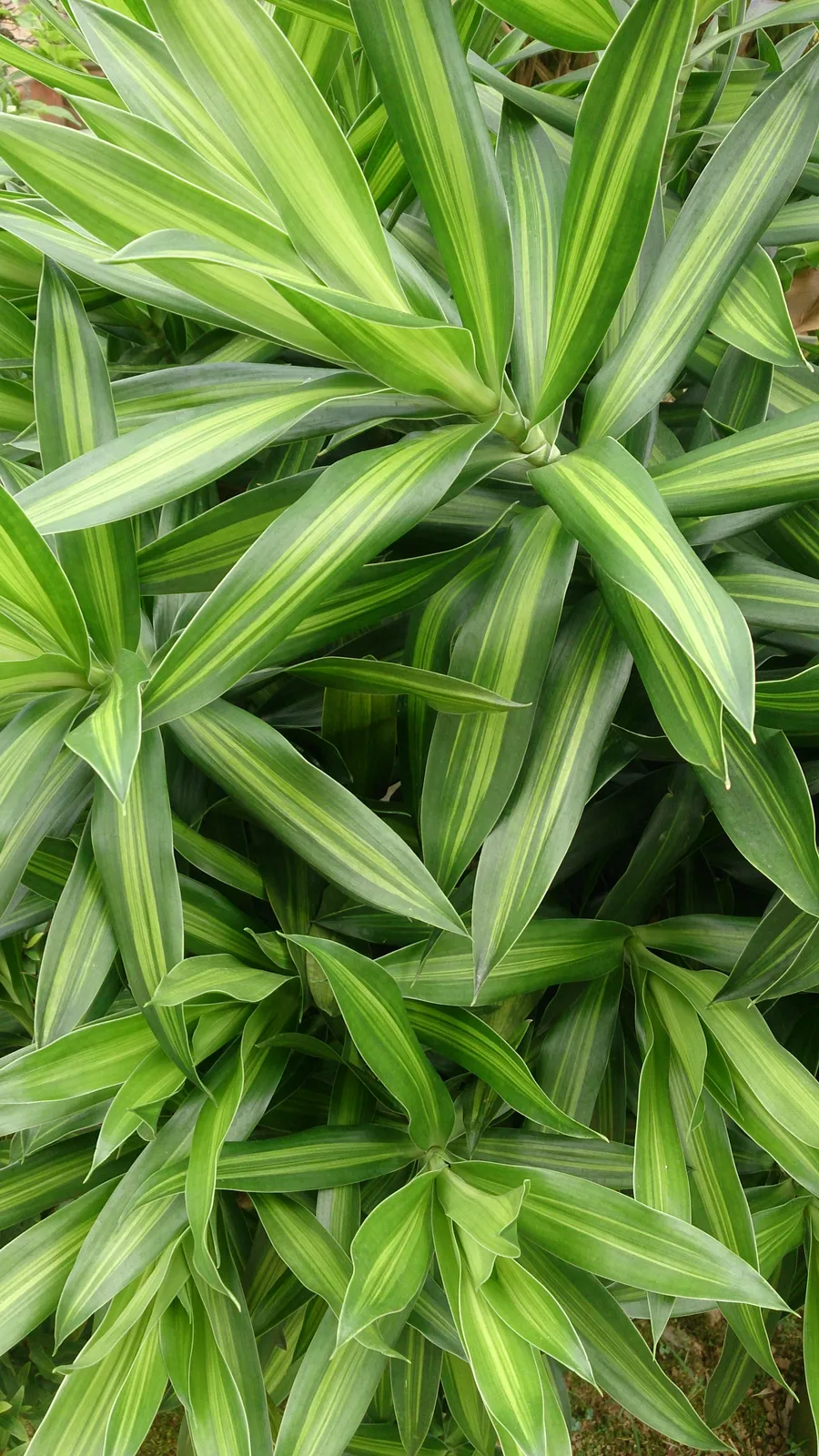
Dracaena 'Song of Jamaica' (Dracaena reflexa 'Song of Jamaica') is a distinguished cultivar within the Asparagaceae family, highly prized for its ornamental value in interior settings. This evergreen perennial typically exhibits an upright, spreading growth habit, reaching heights of 3 to 8 feet (0.9 to 2.4 meters) indoors, with a spread of up to 4 feet (1.2 meters). Its most striking feature is the dense cluster of lanceolate leaves, which can extend up to 20 inches (50 cm) in length, showcasing a vibrant dark green hue strikingly variegated with prominent creamy white or yellow margins.
The stems are robust and dark green, contributing to the plant's overall sturdy and attractive form. While rarely flowering indoors, in its native tropical forest habitats of Madagascar, it produces small, fragrant white blooms in clusters that can attract pollinators. This cultivar is particularly resilient, thriving under conditions ranging from partial shade to strong artificial light, making it exceptionally adaptable to diverse indoor environments.
Its relatively coarse texture distinguishes it from finer-foliaged houseplants, adding a unique structural element to any space. The plant's ability to tolerate lower light conditions and its ease of care contribute to its popularity as a houseplant, enhancing aesthetic appeal with a touch of tropical elegance.
Trusted Scientific References
1. Authoritative external sources for Dracaena reflexa song jamaica
1.1 Wikipedia — Dracaena reflexa song jamaica
1.2 Kew POWO (Plants of the World Online)
1.3 PubMed — peer-reviewed research
1.4 NCBI Taxonomy Browser
1.5 GBIF — Global Biodiversity
1.6Dracaena Song of Jamaica should be interpreted through verified botanical identity, practical care, and responsible safety language. This recovery note adds the missing context needed for a complete profile: match light to the plant's habit, use well-drained soil, water according to season, and avoid unsupported medicinal or edible claims. For publishing, the plant can be presented as a source-backed indoor plant with clear care guidance, common problem diagnosis, and conservative safety wording.
1.1.Dracaena Song of Jamaica — Key Features
- ✓ <strong>Vibrant green leaves</strong> — Vibrant green leaves with prominent creamy yellow margins.
- ✓ <strong>Upright, bushy growth</strong> — Upright, bushy growth habit, ideal for interior decoration.
- ✓ <strong>Exceptional tolerance to</strong> — Exceptional tolerance to lower light and varied indoor conditions.
- ✓ <strong>Contributes to indoor</strong> — Contributes to indoor air purification, filtering common toxins.
- ✓ <strong>Low maintenance requirements,</strong> — Low maintenance requirements, suitable for busy lifestyles.
- ✓ <strong>Adds a distinct</strong> — Adds a distinct tropical and elegant aesthetic to any space.
- ✓ <strong>Evergreen foliage provides year</strong> — round visual appeal.
- ✓ <strong>Moderate growth rate,</strong> — Moderate growth rate, reaching manageable indoor heights.
- ✓ <strong>Attractive dark green</strong> — Attractive dark green stems complement the variegated leaves.
- ✓ <strong>Relatively coarse leaf</strong> — Relatively coarse leaf texture distinguishes it visually.
1.2.Dracaena Song of Jamaica — Quick Summary
- ✓ Ornamental indoor plant with striking green and yellow variegated foliage.
- ✓ Known for contributing to improved indoor air quality and aesthetic well-being.
- ✓ Easy to care for, tolerates low light conditions, and adds tropical flair.
- ✓ Contains saponins, making it mildly toxic if ingested by humans and pets.
- ✓ Requires minimal maintenance, ideal for beginners and busy individuals.
- ✓ Native to Madagascar, thriving in tropical forest undergrowth.
2.Dracaena Song of Jamaica — Scientific Identity
3.Dracaena Song of Jamaica — Quick Facts
4.Dracaena Song of Jamaica — Appearance & Identification
5.Dracaena Song of Jamaica — Native Habitat
6.Dracaena Song of Jamaica — Water Requirements
- ✓ Light Requirements — Prefers bright, indirect light but tolerates partial shade and strong artificial light; direct sun can scorch leaves.
- ✓ Watering Schedule — Water thoroughly when the top inch of soil feels dry, typically once or twice a week, allowing excess water to drain to prevent root rot.
- ✓ Soil Composition — Thrives in a well-draining, general-purpose potting mix that retains some moisture without becoming waterlogged; average pH is suitable.
- ✓ Temperature and Humidity — Best grown in average indoor temperatures between 65-80°F (18-27°C) and appreciates moderate to high humidity; misting can be beneficial.
- ✓ Fertilization — Feed with a balanced liquid fertilizer every 2-4 weeks during the active growing season (spring and summer), reducing frequency in fall and winter.
- ✓ Pruning and Maintenance — Prune occasionally to remove yellowing leaves, maintain desired shape, or encourage bushier growth; wipe leaves to remove dust.
- ✓ Repotting — Repot every 2-3 years or when the plant becomes root-bound, moving to a pot one size larger to accommodate growth.
- ✓ Pest Management — Generally resilient, but monitor for common indoor pests like spider mites or mealybugs; treat promptly with insecticidal soap if detected.
Reviewed by the Flora Medical Global Botanical Review Panel
Multi-disciplinary editorial group · Botany · Ethnobotany · Herbal-medicine literature
Who reviewed this: This page was checked by the Flora Medical Global Botanical Review Panel — an in-house editorial group of botany graduates, ethnobotany researchers, and horticulture practitioners who collectively maintain our 7,000+ plant encyclopedia. Meet the team.
Our 4-step verification process
1. Taxonomic verification
Scientific names and synonyms cross-checked against Kew POWO, World Flora Online, and The Plant List.
2. Phytochemical & medicinal cross-reference
Active compounds, traditional uses, and reported activities are cross-referenced with PubMed, USDA Dr. Duke's database, and peer-reviewed ethnobotanical literature.
3. Conservation & distribution check
Distribution, ecology, and conservation status confirmed against GBIF occurrence records and the IUCN Red List.
4. Editorial & safety review
Every entry passes an editorial pass for clarity, originality, and safety notices (toxicity, contraindications, dosage caveats) before publication.
Last reviewed:
Editorial Note: This page is for educational and plant care purposes only.
Written by: Flora Medical Global Editorial Team
Reviewed by: Flora Medical Global Botanical Review Panel
Last Updated: June 15, 2026







Dracaena Song of Jamaica — Comments & Community Reviews
Rate this plant