

Care Disclaimer: Plant care recommendations are general guidelines based on common growing conditions. Individual results may vary based on your local environment, climate, and care routine. If your plant is toxic, keep it away from children and pets, and consult a veterinarian if accidental ingestion occurs.
1.Draceana Tornado — Overview
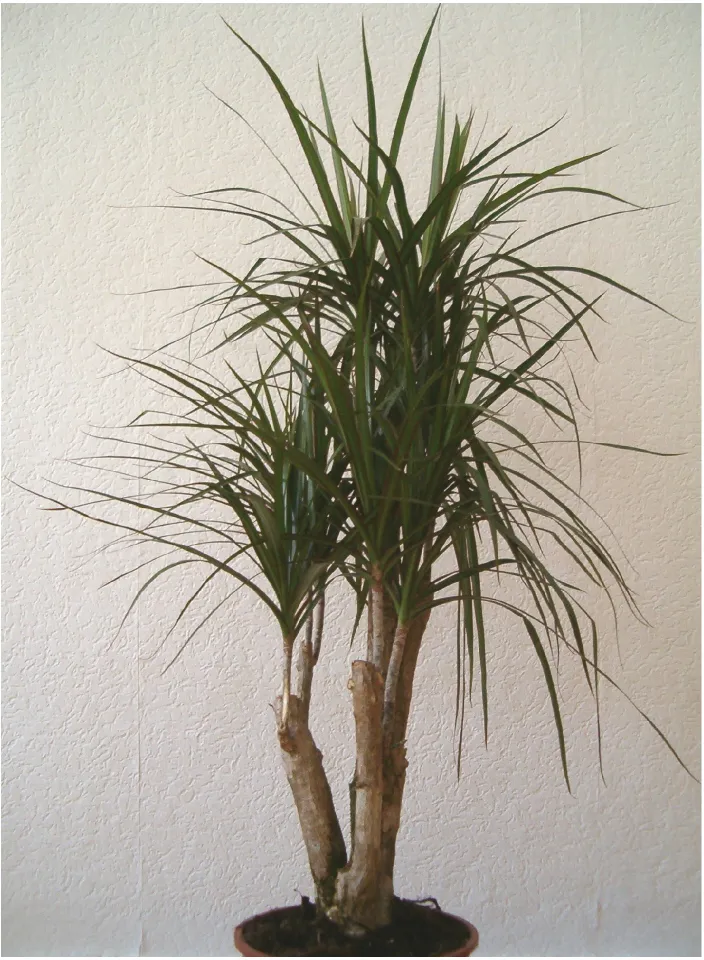
Dracaena marginata 'Tornado' is a captivating cultivar within the diverse Dracaena genus, renowned for its distinctly twisted, corkscrew-like foliage. Each slender leaf can reach up to 30 inches in length and 1 inch in width, emerging in a dense, spiral arrangement from the apex of its graceful stems. The leaves typically present a striking dark green hue, beautifully contrasted by vibrant red margins, while the stems mature into a smooth, grayish-brown bark.
This ornamental plant can attain an indoor height of up to 6 feet, forming an eye-catching vertical element in any space. Native to Madagascar, Dracaena marginata thrives in subtropical climates, adapting remarkably well to indoor environments. In its natural habitat, it demonstrates resilience across various conditions, including humid rainforest settings.
While indoor flowering is rare, under optimal conditions, it may produce small, delicately fragrant white flowers clustered in panicles. Taxonomically, Dracaena marginata belongs to the Asparagaceae family, a classification supported by recent molecular genetic research that has also reclassified former Sansevieria species into the Dracaena genus. Its notable tolerance for lower light conditions makes it a highly popular and versatile choice for interior landscaping and home decoration.
Trusted Scientific References
1. Authoritative external sources for Dracaena marginata tornado
1.1 Wikipedia — Dracaena marginata tornado
1.2 Kew POWO (Plants of the World Online)
1.3 PubMed — peer-reviewed research
1.4 NCBI Taxonomy Browser
1.5 GBIF — Global Biodiversity
1.6Draceana Tornado should be interpreted through verified botanical identity, practical care, and responsible safety language. This recovery note adds the missing context needed for a complete profile: match light to the plant's habit, use well-drained soil, water according to season, and avoid unsupported medicinal or edible claims. For publishing, the plant can be presented as a source-backed indoor plant with clear care guidance, common problem diagnosis, and conservative safety wording.
1.1.Draceana Tornado — Key Features
- ✓ <strong>Unique Twisted Foliage</strong> — Distinctive corkscrew leaves with vibrant red margins.
- ✓ <strong>Air</strong> — Purifying Properties — Efficiently removes indoor air pollutants like formaldehyde and benzene.
- ✓ <strong>Low Light Tolerance</strong> — Adaptable to various indoor lighting conditions, though prefers bright indirect light.
- ✓ <strong>Striking Ornamental Plant</strong> — Serves as a beautiful and unique decorative element for interiors.
- ✓ <strong>Easy to Care For</strong> — Considered a low-maintenance plant, suitable for novice and experienced plant enthusiasts.
- ✓ <strong>Evergreen Perennial</strong> — Provides consistent greenery and visual interest throughout the year.
- ✓ <strong>Native to Madagascar</strong> — Th Thrives in subtropical environments, well-suited for indoor climates.
- ✓ <strong>Pet Toxicity</strong> — Contains saponins, making it mildly poisonous to cats and dogs if consumed.
- ✓ <strong>Indirect Well</strong> — being Benefits — Enhances mood, reduces stress, and improves focus through biophilic design.
1.2.Draceana Tornado — Quick Summary
- ✓ Dracaena marginata 'Tornado' is an ornamental houseplant celebrated for its unique twisted, red-edged foliage.
- ✓ It significantly enhances indoor air quality by effectively purifying common airborne toxins.
- ✓ This plant contributes to a calming and aesthetically pleasing environment, promoting well-being.
- ✓ Requires bright, indirect light, well-drained soil, and careful watering with filtered water.
- ✓ Mildly toxic to cats and dogs if ingested, necessitating strategic placement away from pets.
- ✓ A low-maintenance, adaptable plant, ideal for adding a touch of natural elegance to any indoor space.
2.Draceana Tornado — Scientific Identity
3.Draceana Tornado — Quick Facts
4.Draceana Tornado — Appearance & Identification
5.Draceana Tornado — Native Habitat
6.Draceana Tornado — Water Requirements
- ✓ Light — Provide bright, indirect sunlight; direct sun can scorch the unique foliage, while too little light may reduce the vibrancy of its red margins.
- ✓ Watering — Water thoroughly when the top inch of soil feels dry; allow excess water to drain completely to prevent root rot.
- ✓ Water Quality — Use filtered, distilled, or rainwater as Dracaena is sensitive to fluoride, chlorine, and salts commonly found in tap water, which can cause leaf tip burn.
- ✓ Soil — Plant in a well-draining, slightly acidic potting mix, ideally one formulated for tropical houseplants or palms.
- ✓ Temperature — Maintain indoor temperatures between 60-75°F (15-24°C); protect the plant from cold drafts and temperatures below 55°F (13°C).
- ✓ Humidity — Prefers moderate to high humidity; consider misting regularly or placing near a humidifier, especially in dry indoor environments.
- ✓ Fertilization — Feed with a balanced liquid houseplant fertilizer every 2-4 weeks during the active growing season (spring and summer), reducing to once every 1-2 months in fall and winter.
- ✓ Propagation — Easily propagated from stem cuttings; allow cuttings to callus for a day or two before planting in moist soil or water.
Reviewed by the Flora Medical Global Botanical Review Panel
Multi-disciplinary editorial group · Botany · Ethnobotany · Herbal-medicine literature
Who reviewed this: This page was checked by the Flora Medical Global Botanical Review Panel — an in-house editorial group of botany graduates, ethnobotany researchers, and horticulture practitioners who collectively maintain our 7,000+ plant encyclopedia. Meet the team.
Our 4-step verification process
1. Taxonomic verification
Scientific names and synonyms cross-checked against Kew POWO, World Flora Online, and The Plant List.
2. Phytochemical & medicinal cross-reference
Active compounds, traditional uses, and reported activities are cross-referenced with PubMed, USDA Dr. Duke's database, and peer-reviewed ethnobotanical literature.
3. Conservation & distribution check
Distribution, ecology, and conservation status confirmed against GBIF occurrence records and the IUCN Red List.
4. Editorial & safety review
Every entry passes an editorial pass for clarity, originality, and safety notices (toxicity, contraindications, dosage caveats) before publication.
Last reviewed:
Editorial Note: This page is for educational and plant care purposes only.
Written by: Flora Medical Global Editorial Team
Reviewed by: Flora Medical Global Botanical Review Panel
Last Updated: June 15, 2026







Draceana Tornado — Comments & Community Reviews
Rate this plant