
Care Disclaimer: Plant care recommendations are general guidelines based on common growing conditions. Individual results may vary based on your local environment, climate, and care routine. If your plant is toxic, keep it away from children and pets, and consult a veterinarian if accidental ingestion occurs.
1.Dragon Scale Alocasia — Overview
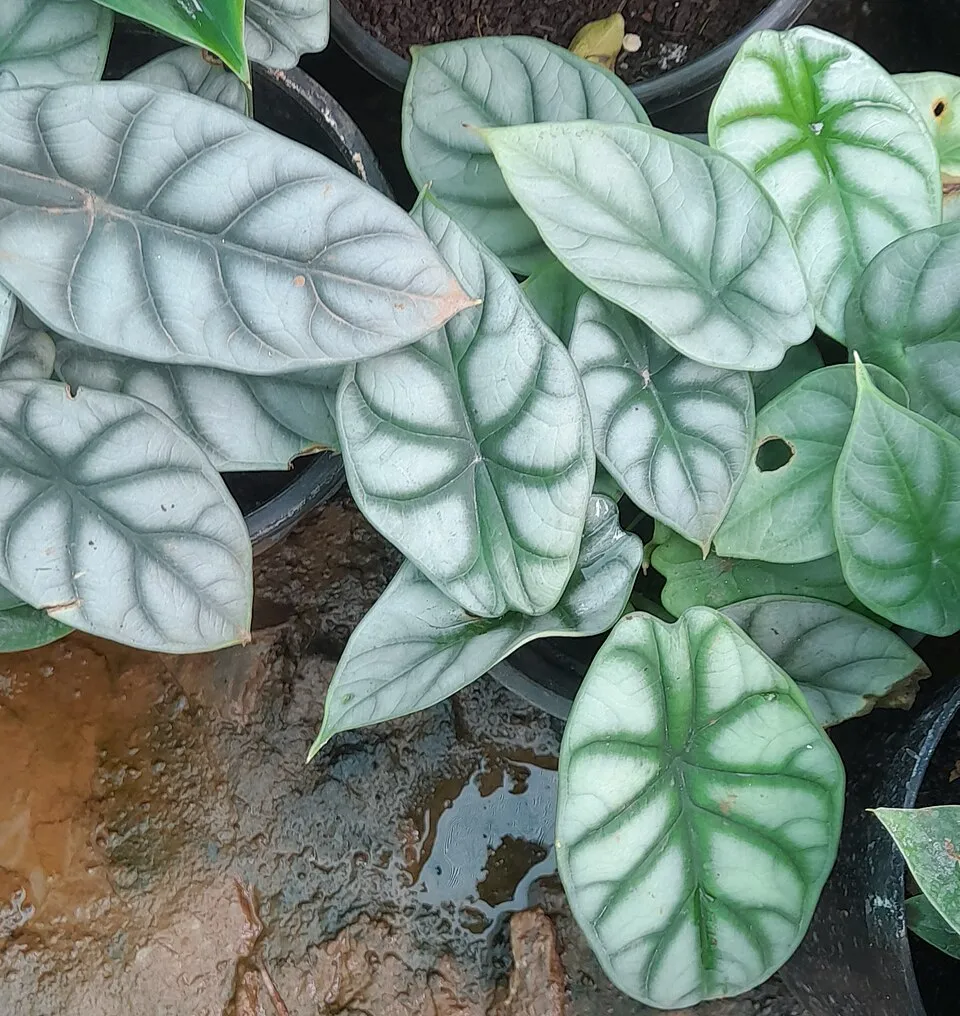
Alocasia baginda, commonly celebrated as Dragon Scale Alocasia, is an exquisite perennial herb belonging to the Araceae family, renowned for its captivating foliage. This species typically reaches a height of up to 3 feet, presenting a majestic and intricate presence ideal for indoor cultivation. Its leaves are a vibrant emerald green, distinguished by a unique, almost reptilian texture that evokes the scales of a dragon, further accentuated by deep, prominent veining.
Each paddle-shaped leaf can extend up to 18 inches in length, culminating in pointed tips, showcasing a remarkable blend of form and color. While primarily cultivated for its ornamental leaves, under optimal conditions, Alocasia baginda can produce a subtle inflorescence consisting of a white or light green spadix enveloped by a spathe. The plant's upright, moderately thick stems provide robust structural support for its striking canopy.
Native to the tropical moist regions of Southeast Asia, particularly eastern Indonesia, this species naturally thrives in the shaded understory of forest environments, indicating its preference for lower light intensities. Taxonomically, Alocasia baginda is a member of the diverse Alocasia genus, which encompasses approximately 70 species, and shares close botanical kinship with other popular aroids such as Alocasia zebrina and Alocasia macrorrhiza.
Trusted Scientific References
1. Authoritative external sources for Alocasia baginda
1.1 Wikipedia — Alocasia baginda
1.2 Kew POWO (Plants of the World Online)
1.3 PubMed — peer-reviewed research
1.4 NCBI Taxonomy Browser
1.5 GBIF — Global Biodiversity
1.6Dragon Scale Alocasia should be interpreted through verified botanical identity, practical care, and responsible safety language. This recovery note adds the missing context needed for a complete profile: match light to the plant's habit, use well-drained soil, water according to season, and avoid unsupported medicinal or edible claims. For publishing, the plant can be presented as a source-backed indoor plant with clear care guidance, common problem diagnosis, and conservative safety wording.
1.1.Dragon Scale Alocasia — Key Features
- ✓ <strong>Distinctive 'Dragon Scale' Foliage</strong> — Unique texture and prominent, deep green veining.
- ✓ <strong>Emerald Green Leaves</strong> — Rich, vibrant coloration enhancing its visual appeal.
- ✓ <strong>Tropical Perennial Herb</strong> — Grows up to 3 feet tall, forming an upright clump.
- ✓ <strong>Native to Southeast Asia</strong> — Thrives in warm, humid, shaded forest understories.
- ✓ <strong>Calcium Oxalate Toxicity</strong> — Contains irritant needle-like crystals in all plant parts.
- ✓ <strong>Primarily Ornamental</strong> — Valued exclusively for its aesthetic beauty in indoor settings.
- ✓ <strong>Moderate to Difficult Care</strong> — Requires specific conditions for optimal growth and health.
- ✓ <strong>Spadix and Spathe</strong> — Can produce subtle, often white or light green, inflorescences in ideal conditions.
- ✓ <strong>Araceae Family Member</strong> — Part of a diverse genus of aroid plants.
- ✓ <strong>High Humidity Lover</strong> — Benefits significantly from consistent ambient moisture to prevent leaf browning.
1.2.Dragon Scale Alocasia — Quick Summary
- ✓ Ornamental plant with striking 'dragon scale' textured foliage.
- ✓ Native to tropical Southeast Asia, thriving in shaded forest environments.
- ✓ Contains toxic calcium oxalate crystals; not for internal or external medicinal use.
- ✓ Requires moderate to difficult care: bright indirect light, moist soil, high humidity.
- ✓ Ingestion causes severe oral irritation, gastrointestinal distress, and potential respiratory issues.
- ✓ Keep away from children and pets; handle with gloves to prevent skin irritation.
2.Dragon Scale Alocasia — Scientific Identity
3.Dragon Scale Alocasia — Quick Facts
4.Dragon Scale Alocasia — Appearance & Identification
5.Dragon Scale Alocasia — Native Habitat
6.Dragon Scale Alocasia — Water Requirements
- ✓ Light — Provide bright, indirect light; an hour or two of winter sunlight is beneficial, but avoid strong, direct sun exposure for prolonged periods.
- ✓ Water — Keep soil consistently moist, allowing the top third to dry out between waterings during active growth, reducing frequency in cooler months; use lukewarm, dechlorinated water.
- ✓ Humidity — Maintain high humidity, ideally above 60%, through frequent misting, using a humidity tray, or placing near a humidifier, especially in dry indoor environments.
- ✓ Fertilization — Feed every four waterings during spring and summer with a balanced liquid houseplant fertilizer, reducing to every six waterings in autumn and winter after pre-watering.
- ✓ Soil — Use a well-draining, aerated potting mix rich in organic matter, such as a blend of coco coir, perlite, and orchid bark, to prevent root rot.
- ✓ Repotting — Repot every two years or when root-bound, using fresh potting mix and being careful not to disturb the root ball excessively to avoid 'Transplant Shock'.
- ✓ Pest Management — Regularly inspect foliage for common pests like spider mites and mealybugs; wipe leaves monthly to remove dust and deter infestations.
- ✓ Temperature — Maintain consistent temperatures between 65-80°F (18-27°C) and avoid sudden drops or cold drafts, as Alocasia baginda is sensitive to chill.
Reviewed by the Flora Medical Global Botanical Review Panel
Multi-disciplinary editorial group · Botany · Ethnobotany · Herbal-medicine literature
Who reviewed this: This page was checked by the Flora Medical Global Botanical Review Panel — an in-house editorial group of botany graduates, ethnobotany researchers, and horticulture practitioners who collectively maintain our 7,000+ plant encyclopedia. Meet the team.
Our 4-step verification process
1. Taxonomic verification
Scientific names and synonyms cross-checked against Kew POWO, World Flora Online, and The Plant List.
2. Phytochemical & medicinal cross-reference
Active compounds, traditional uses, and reported activities are cross-referenced with PubMed, USDA Dr. Duke's database, and peer-reviewed ethnobotanical literature.
3. Conservation & distribution check
Distribution, ecology, and conservation status confirmed against GBIF occurrence records and the IUCN Red List.
4. Editorial & safety review
Every entry passes an editorial pass for clarity, originality, and safety notices (toxicity, contraindications, dosage caveats) before publication.
Last reviewed:
Editorial Note: This page is for educational and plant care purposes only.
Written by: Flora Medical Global Editorial Team
Reviewed by: Flora Medical Global Botanical Review Panel
Last Updated: June 15, 2026







Dragon Scale Alocasia — Comments & Community Reviews
Rate this plant